2026 Best Types of Frameless Sliding Doors for Buyers
Choosing Frameless Sliding Doors in 2026 is not only about creating a clean, open look. The right system must suit the room, opening size, daily use, and installation conditions. A glass panel that glides quietly in a showroom may behave differently in a busy home with a narrow track and frequent use. Small details matter.
Architect Ludwig Mies van der Rohe’s famous phrase, “Less is more,” offers a useful design lens. It is not a door specification, though. Frameless systems still depend on carefully selected glass, reliable rollers, and accurate alignment. A minimal frame does not mean minimal planning.
This guide compares practical options, including single-panel, bypass, and corner configurations. It also considers where each style works best, from a compact ensuite to a wide living-room opening. Look closely at track placement, handle clearance, cleaning access, and how the door meets the floor. These details can shape everyday comfort more than a dramatic product photo.
Looks matter. So does maintenance. Not every opening suits a frameless design, and a sleek panel may reveal uneven walls or imperfect installation. That is worth admitting before buying. Use the comparisons ahead to weigh appearance against function, ask installers specific questions, and identify the system that fits your space rather than simply following a trend.
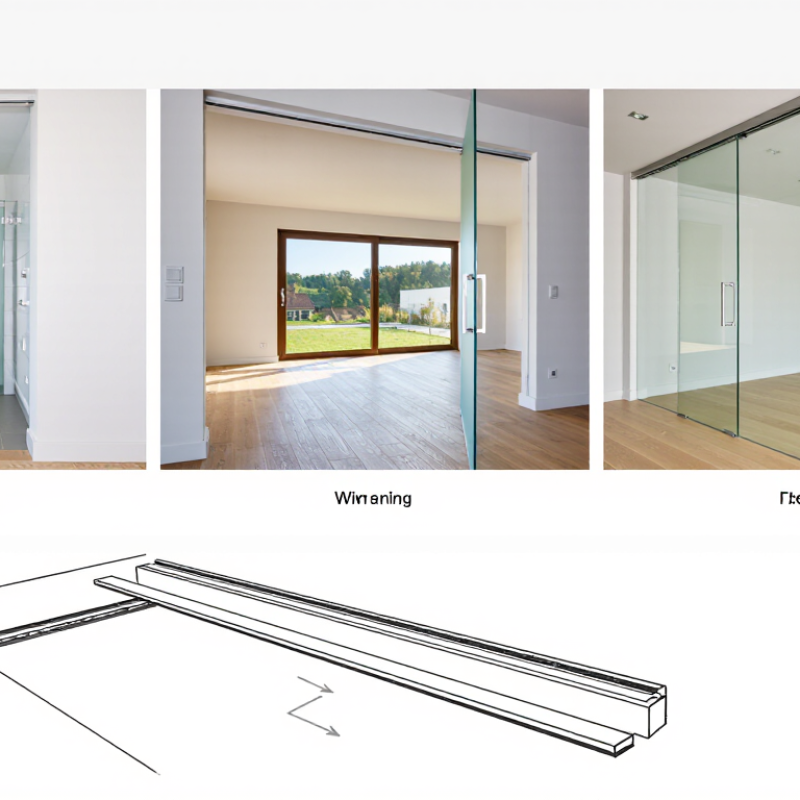
How Frameless Sliding Doors Work and What Defines Their Design
A frameless sliding door relies on glass panels and discreet hardware rather than a bulky surrounding frame. In many systems, rollers travel inside a track fixed above the opening, while a small floor guide keeps each panel from swinging. The panels slide past one another or stack beside a wall. That is the basic action.
The word “frameless” can overpromise. Most doors still need visible handles, tracks, seals, and panel edges. The glass appears visually light, but the overhead track must support its weight and stay accurately aligned. A floor guide helps control movement; soft seals can reduce rattling and drafts, though they do not make every system airtight. Small details matter.
Design choices shape both appearance and daily use. Clear glass keeps sightlines open, while frosted glass adds privacy but softens the view. Panel overlap, opening width, and handle placement affect how comfortably people pass through. Buyers should check how the door moves, where panels park, and whether the opening has enough clearance. Measurements and installation conditions matter, and a slightly uneven floor can complicate smooth operation. Frameless doors look simple; the hardware behind that simplicity deserves careful attention.
Which Types of Frameless Sliding Doors Are Available in 2026
Frameless sliding doors in 2026 come in several configurations, and the right choice depends on the opening and how often it is used. Bypass doors use two or more panels that slide past each other. They suit shower enclosures and tight spaces where a swinging door would hit a fixture. A single sliding panel is simpler, but it needs clear wall space beside the opening.
Pocket doors slide into a cavity inside the wall, leaving the opening unobstructed when open. They create a clean look, though installation requires a suitable wall and careful planning for plumbing or wiring. Barn-style glass sliders move along an exposed upper track. The hardware remains visible, so this option is not as visually minimal as its name may suggest. Small detail. Check the track’s rated load before choosing heavy glass.
For wider interior openings, multi-panel systems can stack or slide across a fixed panel. Some patio systems also use large glass panels with slim perimeter profiles; fully frameless construction is less common there because panels need structural support and weather sealing. The category is less tidy than product descriptions imply. Ask how the glass is supported, whether it is tempered or laminated, and how the bottom guide is secured. A precise site measurement matters more than a striking showroom display.
How Glass, Hardware, and Opening Styles Differ by Door Type
2026 Best Types of Frameless Sliding Doors for Buyers
How Glass, Hardware, and Opening Styles Differ by Door Type
Frameless sliding doors use exposed glass edges and compact hardware, so each component matters. Clear glass keeps sightlines open, while frosted glass softens views and adds privacy. Low-emissivity coatings can reduce heat transfer, but performance depends on the complete glazing unit, not appearance alone. The U.S. Department of Energy’s Energy Saver guidance estimates that windows account for 25–30% of home heating and cooling energy use. That figure is not specific to sliding doors, but it shows why glass performance deserves attention.
Bypass doors slide one panel past another, making them practical where floor space is tight. Pocket doors disappear into a wall, though installation needs a suitable cavity. Telescoping panels widen the opening but add rollers and alignment points. Hardware changes the feel, too: smooth rollers and a level track help panels move quietly; weak seals may let in drafts or water. Small details matter. Frameless does not mean maintenance-free.
Tips: Match glass and hardware to the opening and exposure. For a shower, check the installer’s guidance on glass thickness, edge clearance, and water control. For exterior use, compare documented U-factor and solar heat gain coefficient ratings; the DOE notes these affect energy performance. Ask how rollers, seals, and tracks can be adjusted or replaced. I would not choose by appearance alone—the quietest-looking system can still be awkward to clean.
How to Compare Safety, Privacy, Space, and Maintenance
Frameless sliding doors suit bathrooms where a swinging panel would hit a vanity or towel rail. They still need enough wall width for the glass to travel. The National Kitchen & Bath Association’s 2024 Bath Planning Guidelines recommend 30 inches of clear floor space in front of bathroom fixtures. Measure that clearance, plus the door’s full slide path, before ordering. Small detail. Big difference.
For safety, ask for documentation that the glass meets applicable safety-glazing impact standards, such as ANSI Z97.1 or CPSC 16 CFR Part 1201. A sturdy handle and smooth, secure rollers matter too; loose hardware can make daily use feel less reassuring. Clear glass keeps a room visually open, while frosted or patterned glass offers more privacy but may show water spots differently. There is no perfect finish.
Tips: Check the track and bottom guide for corners that collect soap and grit. A quick wipe helps, though hard-water deposits may still need extra care. Choose accessible hardware and confirm replacement parts are available. A coating can reduce buildup, but it does not remove the need for cleaning.
Which Frameless Sliding Door Type Best Fits Your Buying Needs
Which Frameless Sliding Door Type Best Fits Your Buying Needs
A bypass system suits compact bathrooms or wardrobes, where panels slide past each other without needing swing clearance. Choose a single-panel slider for a clear, simple opening, but check where the panel parks. A multi-panel system creates a wider passage to a patio, though its tracks need careful alignment and regular cleaning. Pocket-style doors disappear into a wall cavity. They look neat, but installation can involve more wall work. Measure the finished opening, handles, and floor transitions—not just the glass.
Comfort matters, too. Large glass panels can affect heat gain and heat loss, so compare whole-door performance ratings for your climate. The U.S. Department of Energy’s Energy Saver guidance estimates that replacing single-pane windows with efficient rated units can reduce energy bills by 7–15%; that figure is not a guarantee for sliding doors. Ask for tested door-system data. The catch is easy to miss.
For wet or high-traffic areas, ask whether the specified glass is tempered and how its edges are protected. National Glass Association technical guidance notes that tempered glass is about four times as strong as comparable annealed glass, but it can still break. Not invincible. Confirm track capacity, drainage details, and available service access before ordering. A frameless look can feel effortless in a showroom; at home, a slightly exposed track may be easier to keep clean.
2026 Best Types of Frameless Sliding Doors for Buyers
Which frameless sliding door type best fits your buying needs?
Indicative buyer-fit ratings from 1 (lower fit) to 5 (higher fit), based on typical layout characteristics—not standardized product measurements. Bypass designs suit openings where panels can overlap; telescopic systems can create a wider opening with linked panels; pocket doors slide into a wall cavity and require space for that cavity.
