Demand for reliable electrical distribution is rising as factories, buildings, and data centers add new loads. The International Energy Agency’s Electricity 2024 report projects global electricity demand will grow by an average of 3.4% annually from 2024 through 2026. That growth puts more pressure on equipment that safely divides power and supports maintenance. A Power Distribution Cabinet may look like a steel enclosure, but its busbars, breakers, wiring, and protection devices shape real-world uptime.
This guide examines manufacturers to watch in 2026, without treating any list as a universal ranking. Buyers should compare rated voltage and current, short-circuit withstand capability, enclosure protection, temperature rise, service access, and documented testing. IEC 61439-1:2020 provides important requirements for low-voltage switchgear and controlgear assemblies; the relevant assembly standard depends on the product and application. Ask for test evidence, not just a polished brochure. Details matter.
Market presence alone is not enough. A strong supplier should demonstrate consistent quality, clear technical documentation, responsive support, and experience with the intended installation. Regional certification needs and lead times can also change the decision. Some specifications look similar on paper. They may perform differently in a hot electrical room or during expansion. Still, no ranking is perfect: project requirements, local service, and lifecycle costs can shift the best choice. The manufacturers below are therefore starting points for careful comparison, not substitutes for engineering review.
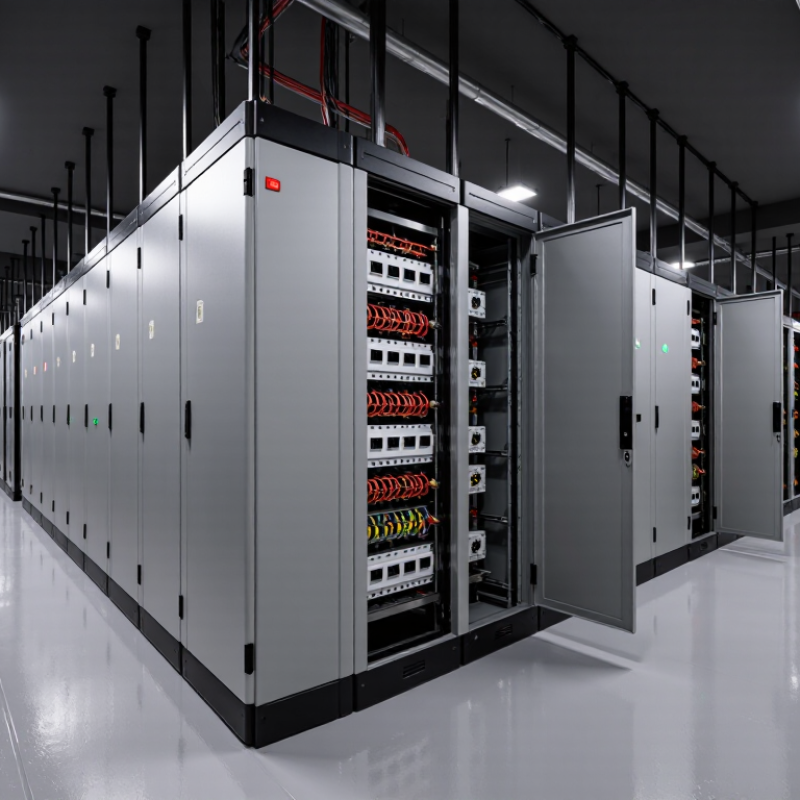
A power distribution cabinet is an enclosed assembly that receives electrical power and routes it to several outgoing circuits. It brings switching, protection, and sometimes monitoring equipment into one organized location. Inside, common components include circuit breakers, busbars, meters, terminals, and a grounding connection. The exact arrangement depends on the supply, load, installation environment, and service needs. In a factory, for example, one cabinet may feed pumps, lighting, and control panels through separate protected circuits. The enclosure helps shield components from accidental contact, dust, and impact, but its rating must match the actual site. Details matter.
A cabinet also supports isolation and fault control. If a circuit draws more current than its design allows, a correctly selected protective device can disconnect that branch, limiting disruption elsewhere. This depends on sound coordination, proper conductor sizing, clear labeling, and installation by qualified personnel. Operators should be able to identify a circuit without guessing. A neat door label can save time during a fault. Yet a tidy cabinet is not automatically a safe one; heat, loose connections, moisture, or poor maintenance may remain hidden. Regular inspection should follow equipment documentation and site procedures. It is worth asking whether every installed meter or indicator helps someone make a better decision. More components can add complexity, not clarity.
A power distribution cabinet receives electricity from an incoming feeder and divides it among outgoing circuits. Its enclosure protects live parts from contact, dust, and impact. Inside, busbars carry current across the cabinet, while circuit breakers or fuses interrupt it when faults occur. Metering devices show voltage, current, and energy use. Protection relays can detect abnormal conditions and signal a breaker to open.
Short sentence. That is the core.
Safe operation depends on sound insulation, secure connections, and a reliable grounding path. Engineers also coordinate protection settings so a branch fault disconnects the affected circuit without unnecessarily shutting down the whole cabinet. Loose terminals can create heat; poor ventilation can make it worse. A cabinet may look orderly and still have a thermal problem, so inspection and temperature checks matter.
The International Energy Agency’s 2023 report, Electricity Grids and Secure Energy Transitions, estimates that 80 million kilometres of grids must be added or refurbished by 2040. That figure describes grid infrastructure, not cabinets, but it underscores the need for dependable distribution equipment.
A single-line diagram helps, yet it cannot replace checking real operating loads.
Power distribution cabinets are not interchangeable boxes. A main distribution cabinet receives power from the supply and feeds major building circuits. It often contains incoming breakers, busbars, and metering equipment. A subdistribution cabinet serves a smaller area, such as one floor, workshop, or production line. Its shorter circuit runs can make faults easier to isolate. Motor distribution cabinets support pumps, fans, and compressors, where starters and overload protection are needed. Outdoor cabinets use sealed enclosures to resist rain, dust, and temperature changes. Conditions vary, so “weather-resistant” alone is not enough.
Applications guide the choice. Offices may need compact floor-level cabinets for lighting and receptacle circuits. Factories often need larger assemblies with room for motor feeders and future circuits. Data rooms require careful circuit separation and clear labeling. Check rated current, short-circuit capacity, enclosure rating, cable entry, and maintenance access against the actual site design. Cabinet terminology can differ between suppliers, which makes comparing specifications a little less straightforward than it should be.
Tips: Leave practical working space in front of the cabinet, and label every outgoing circuit clearly. Confirm heat dissipation and expansion space before installation. A cabinet that fits today may feel cramped after one added feeder. That detail is easy to miss.
When comparing power distribution cabinet manufacturers in 2026, start with evidence, not polished brochures. The International Energy Agency’s Electricity 2024 report projects global electricity demand will grow by an average of 3.4% annually from 2024 to 2026. More demand makes dependable distribution equipment important, but it does not make every cabinet suitable for every site.
Request test documentation for the exact cabinet configuration, including rated current, short-circuit withstand, temperature rise, and enclosure protection. Check that the design follows the applicable IEC 61439 requirements, and ask how any site-specific changes affect verification. Look closely at busbar sizing, clearances, ventilation, and access for maintenance. Small details matter. A crowded wiring duct can make later inspection harder. Ask for material traceability, routine inspection records, and examples of how production defects are handled. These are useful signals of process control, not guarantees.
The IEA’s Electricity Grids and Secure Energy Transitions report estimates that more than 80 million kilometres of grids need to be added or refurbished by 2040 to meet national climate targets. That scale makes supply capacity and spare-parts planning worth discussing alongside price. Request realistic lead times and clarification on replacement components. A low quotation may omit commissioning support or documentation. I would still compare offers line by line; it is easy to overlook a small assumption that becomes a costly site issue.
Notable Power Distribution Cabinet Manufacturers in 2026
Notable power distribution cabinet manufacturers distinguish themselves through verified design, consistent production, and responsive technical support. The IEA’s Electricity 2025 report says global electricity demand grew 4.3% in 2024 and is expected to keep rising. That pressure makes dependable distribution equipment increasingly important. But a polished catalogue alone proves little.
When comparing manufacturers, check whether assemblies are verified against IEC 61439 requirements and whether test documentation matches the proposed configuration. Review short-circuit withstand ratings, temperature-rise results, enclosure protection, and the clarity of wiring diagrams. Ask how the supplier handles custom busbar layouts, replacement parts, and commissioning questions. A cabinet may look robust, yet poor labeling can slow maintenance. I would also check references from projects with similar loads and operating conditions; this step is easy to skip.
Tips: Request a sample inspection checklist and review one completed test report before ordering. Confirm lead times in writing, including spare components. Small details matter.
Manufacturer-selection reference based on verifiable product requirements and standards. This is not a company ranking; ratings and features must be confirmed for each specific assembly.
| Evaluation Dimension | What to Check | Relevant Standard or Reference | Selection Note |
|---|---|---|---|
| Assembly design and verification | Design verification evidence for the complete low-voltage assembly, including temperature rise, dielectric properties, and short-circuit withstand where applicable. | IEC 61439-1: general rules; IEC 61439-2: power switchgear and controlgear assemblies. | IEC 61439-1 is used together with the relevant product part; it is not intended to be used alone. |
| Rated voltage and frequency | Declared rated operational voltage, rated insulation voltage, rated frequency, and system configuration. | IEC 61439-1 and IEC 61439-2; project electrical specifications. | The IEC 61439-2 scope covers assemblies for systems up to 1,000 V AC or 1,500 V DC. These are scope limits, not a product’s guaranteed rating. |
| Current and temperature rise | Rated current of the assembly and circuits, busbar ratings, loading assumptions, and temperature-rise verification. | IEC 61439-1 and IEC 61439-2. | Compare the declared ratings with the site load, ambient conditions, enclosure arrangement, and specified diversity assumptions. |
| Short-circuit performance | Rated short-time withstand current, conditional short-circuit rating where applicable, protective-device coordination, and the stated duration. | IEC 61439-1 and IEC 61439-2; applicable local electrical codes. | Request ratings and supporting verification for the proposed assembly configuration, not just for individual components. |
| Enclosure protection | Declared IP code for the assembled cabinet and the conditions under which it applies, including doors, covers, and cable entries. | IEC 60529. | Choose protection based on the installation environment; an IP code describes enclosure protection and does not by itself establish corrosion resistance. |
| Internal separation | Construction details for separation between busbars, functional units, and terminals, where required by the project. | IEC 61439-2; project specification. | Specify the required form of separation and access needs. Separation form should not be assumed from the product category alone. |
| North American product requirements | For projects in North America, confirm the assembly type, applicable product standard, certification or listing, and local installation requirements. | UL 891 for switchboards; UL 1558 for metal-enclosed low-voltage power circuit breaker switchgear; NFPA 70 (NEC) for electrical installations. | The applicable standard depends on the equipment type and project jurisdiction. NFPA 70 is an installation code, not a product certification standard. |
| Documentation and lifecycle support | General arrangement drawings, single-line diagrams, wiring documentation, component schedules, maintenance instructions, and spare-parts availability. | Project contract, applicable standards, and local regulatory requirements. | Confirm documentation language, revision control, commissioning support, and service coverage before purchase. |