Contact us

What Is the Best 3D Printing Technology for 2026?

Choosing the best 3 d printing technology in 2026 is not a simple race between machine brands. The right choice depends on part function, production volume, material needs, surface quality, and budget. A hobbyist may value an affordable FDM printer, while a dental laboratory may require accurate resin processing. A factory could prefer SLS, MJF, or metal powder bed fusion for demanding production work.

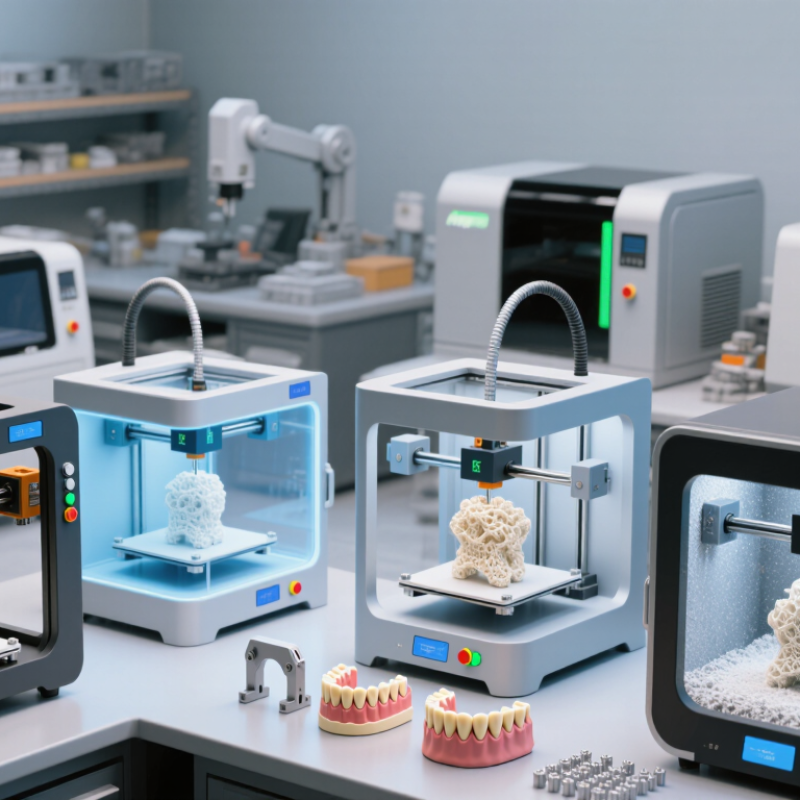
Real workshop experience reveals important differences. FDM handles strong thermoplastic prototypes with accessible maintenance and lower material costs. SLA produces fine details, such as miniature lettering or smooth dental models, but resin handling requires care. SLS creates complex nylon parts without support structures, although powder management can be messy. MJF often delivers consistent batches, while metal systems demand strict process control, skilled operators, and serious safety procedures.

The best option is application-specific. Measure dimensional accuracy, tensile strength, thermal resistance, printing speed, post-processing time, and total ownership cost. Do not trust a dramatic sample print alone. Request verified test data and inspect parts under real conditions. A bracket that looks perfect may crack beside a hot motor. That detail matters.

Some conclusions remain uncertain. Newer systems may improve automation, recyclability, and monitoring, yet published comparisons are not always independent. My practical recommendation is to test representative parts before purchasing. Compare three technologies using the same design, material requirements, and acceptance criteria. The “best” printer is rarely the most impressive machine. It is the one that repeatedly produces reliable parts for your actual workflow.
What Is the Best 3D Printing Technology for 2026?

How 3D Printing Technologies Work in 2026

What Is the Best 3D Printing Technology for 2026?

How 3D Printing Technologies Work in 2026

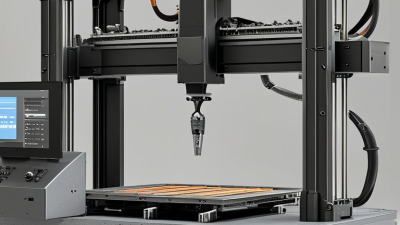
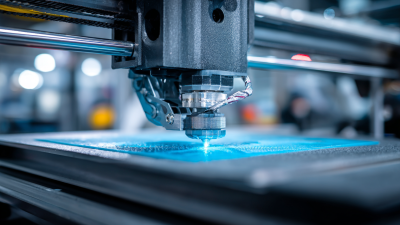
In 2026, the best 3D printing technology depends on the part, material, and required accuracy. No single process wins every job. Fused deposition modeling melts plastic filament and places it in thin, visible layers. It works well for prototypes, brackets, and classroom tools. The surface may show ridges, especially on curved walls.

Resin printing uses light to harden liquid polymer inside a vat. It produces fine details, sharp lettering, and smooth miniature parts. However, uncured resin requires careful handling, washing, and controlled disposal. Selective laser sintering uses heat to fuse powder without traditional support structures. This makes complex nylon components practical, although loose powder demands ventilation and thorough cleaning.

Metal powder bed fusion follows a similar layer-by-layer idea, but a laser or electron beam melts metal powder. Engineers must control heat, distortion, and internal stress.

Material jetting places tiny droplets and cures them quickly with light. It can combine rigid and flexible materials, but its equipment and material costs remain high. Binder jetting deposits a liquid binder onto powder, then uses curing and sintering to strengthen the part. Dimensional shrinkage can complicate final measurements. In real workshops, calibration matters as much as the printing method. I have seen a carefully selected process fail because the build plate was slightly misaligned. Test coupons, measured tolerances, and documented settings improve reliability. The “best” choice still needs honest review.
Which Materials and Applications Each Technology Supports

What Is the Best 3D Printing Technology for 2026?

The best 3D printing technology depends on the material, tolerance, and working environment. Fused filament fabrication handles thermoplastics such as PLA, ABS, nylon, and carbon-fiber blends. It suits prototypes, fixtures, educational models, and replacement parts. A heated chamber can improve nylon results, but warping still appears around sharp corners.

Resin printing uses liquid photopolymers and ultraviolet curing. It produces smooth surfaces and fine details for dental models, jewelry patterns, miniature components, and inspection samples. However, uncured resin requires controlled handling, washing, and post-curing. Small parts may look excellent, yet they can become brittle under repeated impact. I have seen attractive prototypes fail after only a few assembly cycles.

Selective laser sintering works with polymer powders, especially nylon-based materials. It supports complex shapes without traditional support structures, making it useful for ducts, housings, ergonomic tools, and low-volume production. Powder handling and surface texture need careful planning. Powder-bed fusion for metals can produce strong parts from stainless steel, aluminum, titanium, and nickel alloys. These parts serve aerospace fixtures, medical devices, and industrial components, but thermal distortion and internal stress remain serious concerns. Binder-based metal printing can reduce some process demands, though shrinkage must be measured rather than guessed. The “best” choice is often the one that survives testing, not the one that looks most precise on the screen.

What Is the Best 3D Printing Technology for 2026? - Which Materials and Applications Each Technology Supports

The best technology depends on the required material, accuracy, production volume, part size, surface quality, and post-processing requirements.
Technology How It Works Main Materials Typical Accuracy and Finish Best Applications Key Advantages Main Limitations
Material Extrusion
(FDM/FFF)
A heated nozzle deposits thermoplastic filament layer by layer. PLA, ABS, ASA, PETG, nylon, TPU, polycarbonate, PEEK, PEKK, and fiber-reinforced thermoplastics. Generally about 0.1–0.4 mm feature resolution; visible layer lines are common. Surface quality improves with smaller layers and post-processing. Low-cost prototypes, jigs and fixtures, functional housings, educational models, large parts, and short-run components. Broad material selection, accessible equipment, low material cost, and scalable build volumes. Anisotropic strength, visible layers, warping with some materials, and slower production for highly detailed parts.
Vat Photopolymerization
(SLA, DLP, MSLA)
Liquid photopolymer resin is selectively cured using a laser, projector, or masked light source. Standard, tough, flexible, high-temperature, castable, dental, biocompatible, and ceramic-filled photopolymer resins. Commonly achieves fine features around 0.05–0.15 mm, with smooth surfaces and strong visual detail. Detailed prototypes, visual models, dental models, jewelry patterns, miniatures, molds, and small medical or industrial components. Excellent detail, smooth surfaces, and accurate reproduction of small geometries. Resins can be brittle or sensitive to ultraviolet exposure; parts require washing and post-curing, and liquid resin handling requires care.
Selective Laser Sintering
(Polymer Powder Bed Fusion)
A laser selectively fuses polymer powder; surrounding powder supports the part. Nylon 11, nylon 12, flexible TPU, polypropylene, and other qualified polymer powders. Typically about 0.1–0.2 mm layer thickness; textured, slightly grainy surfaces with good geometric freedom. Functional prototypes, ducting, lattices, enclosures, orthotics, footwear components, and low- to medium-volume production. No dedicated support structures, strong functional parts, efficient nesting, and complex internal channels. Higher equipment and powder-handling costs; powder refresh and cooling cycles can affect production economics.
Material Jetting Small droplets of photopolymer or wax are jetted and cured or solidified layer by layer. Rigid, flexible, transparent, colored, biocompatible photopolymers, and casting waxes. Very fine detail, smooth surfaces, and multi-material or full-color capability; properties may vary by material type. High-detail visual prototypes, anatomical models, product design reviews, molds, and investment-casting patterns. Excellent appearance, multi-material capability, and precise small features. Material costs can be high; some photopolymers have limited long-term durability and require support removal.
Metal Powder Bed Fusion
(Laser or Electron Beam)
A thermal energy source selectively melts or fuses layers of metal powder in a controlled atmosphere or vacuum. Stainless steel, aluminum, titanium, nickel alloys, cobalt-chromium, tool steel, and selected copper alloys. Fine features and near-full-density parts are possible; surfaces are usually rougher than machined surfaces and often need finishing. Aerospace and automotive components, medical implants, heat exchangers, lightweight lattices, tooling, and high-performance parts. High material performance, complex internal geometry, lightweight design, and production of difficult-to-machine alloys. High capital cost, powder safety requirements, support removal, residual stress, and substantial inspection or post-processing needs.
Binder Jetting A liquid binder selectively joins powder particles; parts are subsequently cured, depowdered, and often sintered or infiltrated. Metals, stainless steel, ceramics, sand, and selected composite powders. Good detail and high throughput; dimensional change during sintering must be predicted and controlled. Batch production, metal components, sand molds and cores, ceramic parts, and geometries that are difficult to support mechanically. Fast layer deposition, efficient batch production, and no thermal distortion during the initial print stage. Green parts are fragile; sintering introduces shrinkage, and final properties depend strongly on post-processing control.
Directed Energy Deposition
(DED)
Metal wire or powder is fed into a melt pool created by a laser, electron beam, or electric arc. Titanium, stainless steel, nickel alloys, aluminum, cobalt alloys, and other weldable metals. Lower resolution and rougher surfaces than most powder bed systems; machining is commonly required. Repair of high-value components, large metal structures, feature addition, cladding, and hybrid additive-subtractive manufacturing. Suitable for large parts, repairs, material addition to existing components, and multi-metal processing in qualified systems. Lower geometric resolution, heat-affected zones, distortion risk, and frequent need for machining and inspection.
Sheet Lamination Sheets of paper, polymer, or metal foil are bonded, laminated, cut, or locally welded to create a three-dimensional part. Paper, polymer sheets, metal foils, and adhesive-backed laminates. Good visual models and, in some metal processes, high material utilization; edge definition depends on cutting and bonding quality. Concept models, architectural forms, laminated composites, embedded structures, and selected metal components. Low thermal distortion in some variants, relatively low waste, and the ability to combine different sheet materials. Limited material range, layer-bonding constraints, anisotropic properties, and less widespread industrial adoption than other methods.
Quick selection guide: Choose material extrusion for affordable and durable general-purpose parts; vat photopolymerization for fine detail and smooth surfaces; polymer powder bed fusion for functional polymer production; metal powder bed fusion for complex high-performance metal parts; binder jetting for batch production; and directed energy deposition for large components or repairs.

How to Compare Speed, Accuracy, Cost, and Scalability

In 2026, the best 3D printing technology depends on the job, not the machine’s headline speed. A practical comparison should examine speed, accuracy, cost, and scalability together. Fast printing may reduce production time, but it can increase finishing work or dimensional errors. Accuracy matters most when parts must fit, seal, or move reliably. Measure critical features with calibrated tools, rather than trusting promotional specifications.

For prototypes, evaluate the complete workflow. Include setup, material changes, support removal, curing, and inspection. A printer producing a part in two hours may need another hour for cleaning and post-processing. Material cost is also only one part of the budget. Labor, failed builds, maintenance, energy use, and operator training can change the result. Keep a record of at least ten test parts. One successful sample proves very little.

Scalability requires repeatable output, not simply more printers. Check whether multiple machines can maintain similar accuracy, surface quality, and processing times. Centralized scheduling and stable material storage become important as order volume grows. In my experience, a slightly slower system often performs better when it reduces failed builds. Still, this is not universal. Large batches may favor faster production methods, while complex designs may justify slower, highly accurate processes. The honest comparison includes real part data, local labor costs, and the risk of downtime. Forecasts can be wrong. Test before committing.

What Advances Are Shaping 3D Printing in 2026

What Is the Best 3D Printing Technology for 2026?

The best technology in 2026 depends on the part, material, and production volume. The 2025 Wohlers industry report valued global additive manufacturing at about $20.8 billion in 2024, with 9.1% growth. That expansion reflects more than faster machines. It shows stronger demand for repeatable production, digital inspection, and qualified materials.

Artificial intelligence is reshaping process control. New software can study thermal images, layer height, and machine vibration during printing. Operators can detect weak layers before a finished part fails. Metal powder-bed systems are also improving through tighter temperature control and automated quality checks. Polymer printing is moving toward multi-material parts, embedded functions, and recyclable feedstock. The progress is real, but not effortless. A smooth demonstration part may still hide costly post-processing or inconsistent strength.

Tips:

Test the complete workflow, not only the printer. Measure setup time, support removal, surface finishing, material waste, and inspection costs. Ask for traceable data under relevant ISO/ASTM standards. A small pilot batch often reveals more than a polished sales presentation. Sustainability also needs careful measurement. The 2024 Circularity Gap Report indicates that global material circularity remains below 10%, so “recyclable” alone proves little. In my experience, the practical winner is usually the process with stable output, trained operators, and honest failure records. Speed looks impressive. Reliability pays the bills.

How to Choose the Best 3D Printing Technology for Your Needs

Choosing the best 3D printing technology starts with the part, not the machine. Define the material, tolerance, surface finish, production volume, and budget first. A functional nylon component may need powder-bed fusion, while a detailed prototype may suit vat photopolymerization. For large, lower-cost parts, material extrusion can be more practical. It is not always beautiful.

The 2024 Wohlers Report valued the global additive manufacturing industry at approximately $20 billion in 2023, with strong growth across production applications. However, growth does not make every process suitable. Industry reports from AM Research also show rising demand for polymer production, especially where customized parts and shorter supply chains matter. These figures support a useful question: will the technology reduce total cost, including labor, finishing, failed prints, and maintenance?

Test the workflow with a small batch. Measure dimensional accuracy, print time, material waste, post-processing effort, and operator training. A cheaper printer can become expensive when sanding, curing, or support removal takes hours. Safety controls matter too, especially around powders, resins, heat, and ventilation. Choose a process that your team can operate consistently, not one that looks impressive in a demonstration. No selection matrix is perfect. Real production will expose assumptions.