Contact us

Top 10 Best Battery Go Karts to Buy in 2026?

Choosing a Battery Go Kart in 2026 means looking beyond bright colors and advertised top speeds. The right model should suit its rider, available space, and expected use. A kart for smooth backyard paths may not handle grass or uneven ground comfortably. Small details matter: adjustable seats, responsive brakes, tire grip, and controls that are easy to reach.

This guide to the top 10 best battery go karts compares practical features, including age and weight guidance, battery type, estimated runtime, charging time, and safety equipment. Published specifications can help narrow the choices, but they do not tell the whole story. Actual runtime may change with rider weight, terrain, temperature, and driving style. Check current manufacturer information before buying, since specifications and included accessories can change.

The rankings are a starting point, not a promise that one kart fits every family. That matters. Some models prioritize speed, while others offer simpler controls or a more compact design. Consider where the kart will be driven, how it will be stored, and whether replacement batteries or parts are available. I would not choose by speed alone; it is easy to overlook comfort and stopping performance when comparing numbers. A careful match can make every ride more enjoyable—and help avoid an expensive mismatch.
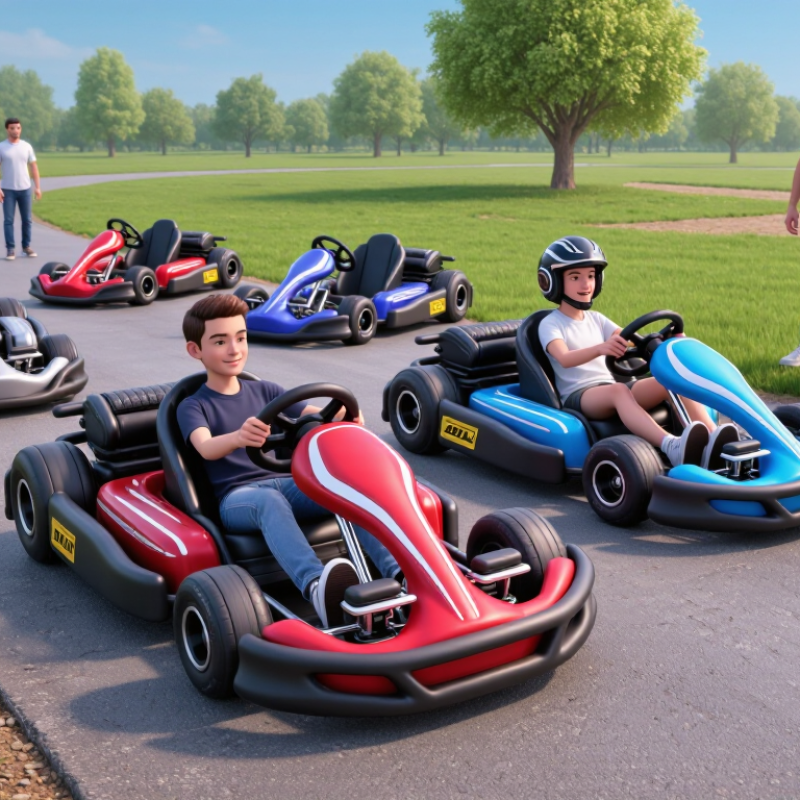
Top 10 Best Battery Go Karts to Buy in 2026?

What Battery-Powered Go-Karts Are and How They Work

A battery-powered go-kart stores electricity in a rechargeable pack, then sends controlled current to an electric motor. Pressing the accelerator signals a controller, which adjusts power rather than opening a fuel valve. The motor turns the rear axle through a chain or direct drive, depending on the design. You can hear the motor and tires, but there is no tailpipe exhaust during operation. Simple, but not effortless.

A battery-management system monitors cell voltage and temperature, helping protect the pack during use and charging. Battery chemistry, capacity, motor output, rider weight, and track surface all affect speed and runtime; advertised figures are not guarantees. The U.S. Department of Energy reports that electric vehicles convert over 77% of grid electricity into power at the wheels, compared with 12–30% for conventional gasoline vehicles. That is a broad vehicle benchmark, not a go-kart test. The International Energy Agency reported that average lithium-ion battery-pack prices fell 14% in 2023, to about $139 per kilowatt-hour. This industry trend can influence component costs, but it does not predict the price or range of any particular kart. For buyers, pack capacity, charging time, and replacement access deserve as much attention as top speed.

How to Evaluate Electric Go-Karts for Different Riders

Choosing a battery go-kart means matching its design to the rider, not just comparing top speeds. Check the manufacturer’s age and weight limits, then see whether the seat and pedals fit comfortably. A child should reach the pedals without stretching and sit securely against the seatback. Fit matters.

For new riders, look for adjustable speed settings, predictable acceleration, and brakes that respond smoothly. Experienced riders may value stronger handling and tires suited to the surfaces they use. A short, supervised test on a flat, open area can reveal whether steering feels twitchy or the kart turns too widely. Specs do not show everything.

Battery claims need context. Ask how runtime changes with rider weight, terrain, and speed; a grassy slope can drain a battery faster than a paved path. Check the stated charging time, battery replacement process, and whether replacement parts are available. Small details count. I would not treat a single runtime number as a promise. It is an estimate, and real rides vary.

Before buying, inspect frame welds, tire condition, belt or chain guards, and the charger’s included safety instructions. Consider storage, too: a heavy kart is awkward to move through a narrow garage doorway. The best choice is one the rider can control comfortably and the household can maintain.

Top 10 Battery-Powered Go-Karts to Consider in 2026

A useful 2026 comparison should weigh more than top speed. The International Energy Agency reported that global electric-car sales exceeded 17 million in 2024, showing how quickly electric transport is expanding. That figure does not prove kart performance, but it signals growing interest in battery-powered driving. The U.S. Department of Energy’s battery-cost estimates show lithium-ion pack costs fell about 90% between 2008 and 2023. Lower costs help, though a cheap kart can still have poor range or uncomfortable seating.

Compare ten options across child, teen, adult, and recreational use. Check the battery’s capacity, not just the advertised run time. A heavier driver, rough grass, cold weather, and repeated acceleration can shorten a session. Ask whether replacement batteries are available and how long charging takes. Small details matter: seat adjustment, pedal reach, tire grip, and accessible charging indicators. Test the steering, too. It can feel twitchy.

For each kart, compare continuous motor power with peak power; peak figures alone can mislead. Look for clear guidance on charging, storage, and battery care. I would treat vague range claims cautiously. Manufacturers may test under ideal conditions, while a real track has turns, slopes, and stops. A sensible shortlist favors stable handling, practical service support, and a battery suited to the rider’s typical session—not the flashiest speed number.

Comparing Models by Speed, Range, Safety, and Price

A useful 2026 comparison should put claimed top speed beside real riding time, not treat either number as a complete buying guide. A kart reaching 15 mph may feel quick on a short track, yet tire grip, rider weight, and surface conditions change how it handles. Check whether the stated range comes from continuous driving or stop-start use. Those are different days out.

For each of the ten models, compare speed, range, braking design, restraint, and total price. Look for a clearly stated rider-weight limit, guarded moving parts, and a brake test procedure. Numbers need context. BloombergNEF’s 2024 Battery Price Survey reported an average lithium-ion battery-pack price of $115 per kilowatt-hour, 20% below 2023. That industry benchmark helps explain battery-market trends, but it does not predict a kart’s retail price; frame, motor, safety features, and warranty also matter.

Treat range as a claim to verify, especially if the kart will carry a heavier rider or run on grass. Ask sellers for test conditions and replacement-battery costs. Then test brakes. On a supervised, level course, note stopping feel, steering stability, and whether the kart slows consistently as charge falls. I would not rank a model on speed alone; a modestly slower kart with clear safety information and accessible parts may prove more useful, though that trade-off depends on the rider and where it will be used.

How to Choose and Maintain the Right Go-Kart

Choosing a battery go-kart starts with the rider, not the top-speed number. Match the seat, controls, and weight limit to the rider, then check runtime, charging time, brake feel, and replacement-battery availability. A child riding short driveway laps needs different capacity from an adult using a kart on a longer track. The International Energy Agency reported that average global battery-pack prices fell about 14% in 2023, to roughly $139 per kilowatt-hour. That figure describes the broader electric-vehicle market, not kart prices, but it shows why comparing battery specifications matters. A big battery is not automatically the better fit.

Tips: Read the battery label and charging instructions before the first ride. Let the pack cool after use, and charge it with the supplied charger in a dry, ventilated area. Keep terminals clean, check cables for cracks, and inspect tires, brakes, and steering regularly. Storage charge requirements differ by battery chemistry, so follow the manual rather than guessing. Small habit, real payoff.

Keep a simple log of ride time, charging time, and any sudden drop in performance. It can help distinguish normal wear from a charger or connection problem. Avoid leaving the kart unused for months with a depleted battery. I’d also leave room in the budget for eventual battery replacement; people often focus on speed and forget the part that powers every lap.