Contact us

China Top 2.8 Inch TFT LCD Display Manufacturer?

China’s TFT LCD industry has become a major global supply base for embedded display products. According to Omdia’s Display long-term demand analysis, small and medium-sized panels continue serving automotive, industrial, medical, and consumer equipment. This demand supports strong competition among Chinese manufacturers. However, identifying the “top” supplier requires more than checking factory size or online visibility.

A reliable 2.8 Inch TFT LCD Display manufacturer should demonstrate stable color performance, consistent brightness, and dependable long-term supply. Typical 2.8-inch modules use a 240 × 320 resolution, SPI or RGB interfaces, and optional resistive or capacitive touch panels. In real projects, engineers also inspect viewing angles, sunlight readability, operating temperature, connector quality, and sample consistency. A bright screen helps. Yet brightness alone proves little.

Market research from Grand View Research and MarketsandMarkets indicates continued growth in display applications, especially across industrial controls, smart devices, and automotive electronics. These reports offer useful market direction, but they do not independently rank individual Chinese factories. That distinction matters. A supplier may advertise advanced production capacity while outsourcing critical processes. Buyers should request factory audit evidence, ISO 9001 certification, RoHS and REACH documentation, optical test reports, and production samples from different batches.

This article compares China’s leading candidates through engineering capability, customization, quality management, delivery performance, and after-sales support. The evaluation is not perfect. Pricing, capacity, and component availability can change quickly. A manufacturer that performs well today may still need closer verification tomorrow. Practical testing remains essential before selecting the best 2.8 Inch TFT LCD Display partner.
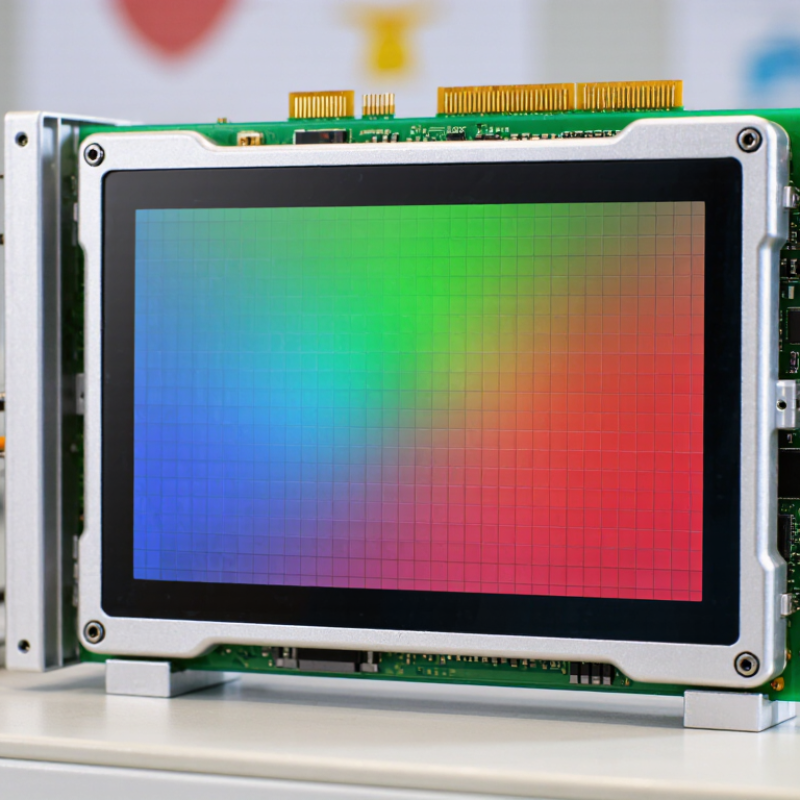
China Top 2.8 Inch TFT LCD Display Manufacturer?

8-Inch TFT LCD Displays: Definition and Core Specifications

An 8-inch TFT LCD display is a flat-panel screen measured diagonally from corner to corner. Its visible area is larger than a compact 2.8-inch module, making it suitable for control panels, medical instruments, and vehicle equipment. The display uses thin-film transistors to control individual pixels, producing stable images and readable text.

Core specifications deserve close attention. Resolution affects sharpness, with 800×480 and 1024×600 being common choices. Brightness is measured in nits, while contrast influences dark and bright image separation. A 500-nit screen may work indoors, but sunlight can demand much more. Viewing angle also matters when operators stand beside the panel. Capacitive touch supports smooth gestures, while resistive touch can work better with gloves.

The interface should match the main control board. RGB, LVDS, MIPI, and HDMI are not interchangeable without suitable hardware. Mechanical drawings must confirm the outer size, active area, mounting holes, and connector position. Operating temperature, response time, backlight life, and power consumption affect long-term reliability. A specification sheet can still mislead.

Testing matters. Check the screen with real cables, intended software, and expected lighting. Slight color variation may appear between batches, so calibration and inspection should be planned. Even a well-designed 8-inch TFT LCD can fail if heat, vibration, or cable routing receives little attention.

Key Applications of 2.8-Inch TFT LCD Modules

China Top 2.8 Inch TFT LCD Display Manufacturer?

Key Applications of 2.8-Inch TFT LCD Modules

A 2.8-inch TFT LCD module fits products where every millimeter matters. Its compact viewing area suits handheld meters, portable medical monitors, payment terminals, and industrial controllers. According to MarketsandMarkets’ 2024 display market analysis, demand for human-machine interfaces is rising across factory automation and connected equipment. Small screens support this trend by showing clear values without enlarging the enclosure.

Portable test instruments often use 240 × 320 or 320 × 240 pixel layouts. These resolutions can display pressure curves, battery status, icons, and warning messages comfortably. In medical equipment, stable brightness and wide viewing angles matter more than decorative graphics. The IEC 60601-1 safety framework also reminds designers that display readability supports safer operation, although the screen itself does not guarantee compliance.

There is more to consider.

Outdoor terminals need high luminance, anti-glare treatment, and reliable touch performance. Industrial devices may require extended temperature testing and stronger connector retention. Omdia’s 2024 display demand research identifies automotive and industrial applications as important growth areas for small and medium displays. Yet a 2.8-inch module can feel cramped when menus contain too much information. Design reviews sometimes expose this late. Clear icons, short labels, and physical controls may work better than adding more pixels. Selection should follow the device’s real environment, not only its panel specifications.

2.8-Inch TFT LCD Modules: Resolution by Key Application

The chart compares common pixel resolutions used in 2.8-inch TFT LCD module designs. Values are calculated from the horizontal and vertical pixel dimensions and are not company or market-share data.

QVGA formats such as 240×320 and 320×240 are widely suited to handheld instruments, industrial controllers, medical devices, and embedded IoT interfaces. Higher-resolution formats such as 480×480 provide greater pixel density for compact vehicle displays and advanced control panels.

How to Evaluate Chinese TFT LCD Display Manufacturers

China Top 2.8 Inch TFT LCD Display Manufacturer?

How to Evaluate Chinese TFT LCD Display Manufacturers

China remains a major LCD production base. Omdia’s 2024 Display Manufacturing and Technology Outlook estimated China held more than 70% of global LCD capacity. That scale helps control cost, but capacity alone does not prove quality. For a 2.8-inch TFT display, check brightness, contrast, viewing angle, touch response, and interface stability. Ask for measured results, not marketing phrases. A clear test report matters.

Request at least three production samples from different batches. Test them at the lowest and highest operating temperatures. Watch for uneven backlighting, dead pixels, slow booting, and loose connectors. TrendForce’s 2024 panel market data highlighted continuing price pressure across LCD supply chains. Cheap parts may reflect efficiency, or hidden compromises. It is worth asking.

Audit the factory’s incoming inspection, aging-test records, calibration process, and traceability system. ISO 9001 certification supports process control, but it cannot replace an on-site audit. Review failure rates, corrective-action records, and warranty terms. The supplier should explain whether the glass, driver IC, backlight, and touch panel have stable sources. Avoid vague answers.

A polished sample can still hide weak production control. I would not trust one golden sample. No audit is perfect. Require a small pilot order, define acceptance limits, and document every change before mass production. That practical evidence is more reliable than a ranking page.

Leading Manufacturer Capabilities and Product Customization Options

China Top 2.8 Inch TFT LCD Display Manufacturer?

A capable 2.8-inch TFT LCD manufacturer must offer more than standard panels. It should control engineering, sourcing, testing, and production quality. According to MarketsandMarkets’ 2024 Display Market report, the global display market may grow from about USD 158 billion in 2024 to over USD 200 billion by 2029. This growth increases demand for compact displays in medical tools, industrial meters, smart devices, and vehicle controls.

Product customization is the real differentiator. Buyers may require SPI, MCU, or RGB interfaces, plus specific brightness levels and viewing angles. A manufacturer should provide drawings, optical samples, and prototype testing before mass production. It should also support custom FPCs, touch panels, cover glass, backlight colors, and connector positions. ISO 9001-based procedures, incoming inspection, aging tests, and shipment traceability improve reliability. Still, no supplier gets every detail right. Early samples can reveal color shifts, weak bonding, or difficult assembly. That is why technical communication matters.

Tips: Confirm the active area, resolution, interface, operating temperature, and lifetime targets. Request a full datasheet and test report. Ask how defects are recorded and corrected. A low price may hide expensive redesign work. Small details matter. Teams should also review the report date, because market forecasts change and may not reflect every application.

China Top 2.8 Inch TFT LCD Display Manufacturer? - Leading Manufacturer Capabilities and Product Customization Options
Capability or Product Dimension Typical 2.8-Inch TFT LCD Specification Available Customization Options Selection Considerations
Display Size 2.8-inch diagonal TFT LCD module; commonly designed for compact handheld and embedded equipment. Custom active-area layout, viewing-window dimensions, cover-lens integration, and mechanical outline. Confirm the required enclosure space, bezel width, active area, and mounting-hole position before tooling.
Resolution 240 × 320 pixels is a common portrait-oriented resolution for this size class. Alternative resolutions may be available depending on the controller, interface, pixel density, and project volume. Higher resolution can improve image detail but may increase controller, memory, bandwidth, and cost requirements.
Panel Technology Thin-film transistor LCD using a-Si technology; TN and IPS configurations are commonly used in small displays. TN or IPS selection, color performance, viewing-angle target, and display-mode optimization. IPS is generally preferred when wider viewing angles and more consistent color are required.
Aspect Orientation Portrait operation is typical for 240 × 320 displays, while landscape operation is supported by software rotation. Portrait, landscape, or 180-degree image rotation; custom graphical user-interface orientation. Define the preferred orientation early to coordinate the FPC, connector position, and enclosure design.
Interface Options Common interfaces include 4-wire SPI, 3-wire SPI, parallel RGB, and 8080-style MCU interfaces, depending on the module design. Interface type, pin assignment, connector pitch, FPC length, contact orientation, and signal mapping. SPI reduces pin count; parallel interfaces can provide higher data throughput for faster screen updates.
Touchscreen Integration Resistive or projected capacitive touch panels can be integrated with a 2.8-inch display module. Touch technology, cover glass thickness, surface treatment, sensor pattern, controller, and bonding method. Projected capacitive touch is suited to multi-touch user interfaces; resistive touch can support stylus or gloved operation.
Brightness Typical small TFT modules are available in approximate brightness ranges of 250–500 cd/m², depending on the backlight design. LED quantity, LED current, backlight brightness, brightness uniformity, and dimming method. Higher brightness improves readability in bright environments but can increase power consumption and heat.
Backlight Control White LED backlights are standard; control may be provided through a power rail, resistor setting, or PWM input. PWM dimming, enable control, LED current specification, connector pinout, and brightness calibration. Check the host system's available voltage, current capacity, PWM frequency, and logic-level compatibility.
Viewing Angle TN panels commonly provide narrower viewing angles; IPS panels typically provide wider horizontal and vertical viewing angles. Panel mode, optical compensation, viewing-angle optimization, and image-quality tuning. Use the final installation angle and lighting environment to determine the required viewing-angle performance.
Color Performance Color depth is commonly driven by the selected controller and interface, with 262K or 16.7M color operation available on compatible designs. RGB color format, gamma adjustment, white-point tuning, color calibration, and image-quality inspection criteria. Confirm whether the host processor supports the selected color format and pixel data arrangement.
Operating Temperature Commercial-grade modules commonly support approximately 0°C to 70°C; wider ranges may be available for specialized applications. Extended-temperature components, operating-temperature validation, storage-temperature requirements, and thermal testing. Specify actual ambient temperature, internal enclosure temperature, humidity, and condensation risks.
Mechanical Customization Module thickness, outline dimensions, FPC placement, and mounting features vary by construction. Custom FPC shape, cable length, connector location, mounting holes, adhesive area, bezel, and metal-frame design. A finalized mechanical drawing and 3D enclosure reference reduce integration and tooling revisions.
Optical Bonding Air-gap assembly is common; optical or full bonding can improve readability and reduce internal reflections. OCA or OCR bonding, cover glass, anti-glare coating, anti-reflective treatment, and anti-fingerprint coating. Bonding selection should consider impact resistance, outdoor readability, repairability, and project cost.
Controller and Software Support Controller selection depends on resolution, interface, frame-buffer requirements, touch function, and host processor compatibility. Controller configuration, initialization code, display timing, touch firmware, test commands, and reference drivers. Request complete initialization parameters and confirm compatibility with the target MCU, SBC, or embedded platform.
Quality and Validation Professional production validation typically covers appearance, electrical performance, touch response, display uniformity, and reliability. Customized inspection standards, sampling plan, aging test, temperature cycling, vibration testing, and inspection reports. Define acceptable limits for dead pixels, bright spots, dark spots, mura, touch accuracy, and cosmetic defects.
Production and Supply Capability Suitable manufacturing programs normally include engineering samples, pilot production, mass production, and ongoing quality control. Prototype quantity, packaging, labeling, production testing, traceability, delivery schedule, and forecast-based supply planning. Evaluate sample consistency, engineering response time, change-control procedures, and long-term component availability.
Specifications shown are representative industry ranges and common configuration options for 2.8-inch TFT LCD modules. Final values should be confirmed through the approved product drawing, datasheet, sample evaluation, and production-quality agreement.

Quality, Pricing, Lead Time, and Support Considerations

China Top 2.8 Inch TFT LCD Display Manufacturer?

Quality, Pricing, Lead Time, and Support Considerations

Selecting a reliable 2.8-inch TFT LCD manufacturer requires more than comparing online quotations. Check resolution, brightness, viewing angle, color consistency, and touch response through physical samples. Ask for inspection records, dimensional drawings, controller details, and test conditions. A screen that looks bright indoors may perform poorly beside direct sunlight. Small differences matter in handheld instruments.

Pricing should include tooling, sample charges, packaging, shipping, and possible customization fees. Very low prices can hide weaker glass, unstable supply, or limited testing. Request a clear quotation based on order quantity and delivery terms. Lead time also deserves careful review. Standard samples may take one to three weeks, while customized assemblies can require longer production and validation. Confirm whether the stated schedule includes inspection and shipment.

Support often separates a dependable supplier from a temporary seller. Technical staff should explain interface timing, backlight limits, connector options, and mounting tolerances. They should also respond with useful documents, not vague promises. Ask about replacement procedures and production consistency before placing a large order.

One practical mistake is approving a sample without testing several units. That can miss uneven backlights or touch defects. A better process uses repeated samples, written acceptance criteria, and a small pilot order. Even this approach is not perfect, because future component changes may still affect performance.