Contact us

China Top 10 High Torque Brushless DC Motor Manufacturers

China has a broad motor industry, from established factories to specialist engineering firms. For buyers, the challenge is not simply finding a supplier. It is finding one whose motor fits the load, duty cycle, control system, and production needs.

This guide introduces ten Chinese manufacturers associated with high-torque brushless DC motors. A High Torque Brushless Dc Motor may suit equipment that needs strong starting force, steady speed control, or compact power. Yet torque figures alone can mislead. Check whether a rating is continuous or peak, and note the speed, voltage, cooling method, and test conditions behind it. Small details matter.

The comparison is intended as a starting point, not a certified ranking or an endorsement. Product ranges and factory capabilities can change. Before requesting a quotation, review current datasheets, certifications, customization options, and delivery terms. Ask for test reports where relevant, and compare sample performance under realistic operating conditions. A motor that looks impressive on paper may behave differently in a warm enclosure or under repeated starts. That is worth checking.

The manufacturers included here represent different capabilities and market positions. Some may focus on customized designs, while others offer broader product catalogs or established export experience. The right fit depends on your application and verification process. No list can replace that work. Use these profiles to narrow your search, then confirm the details directly with each supplier.
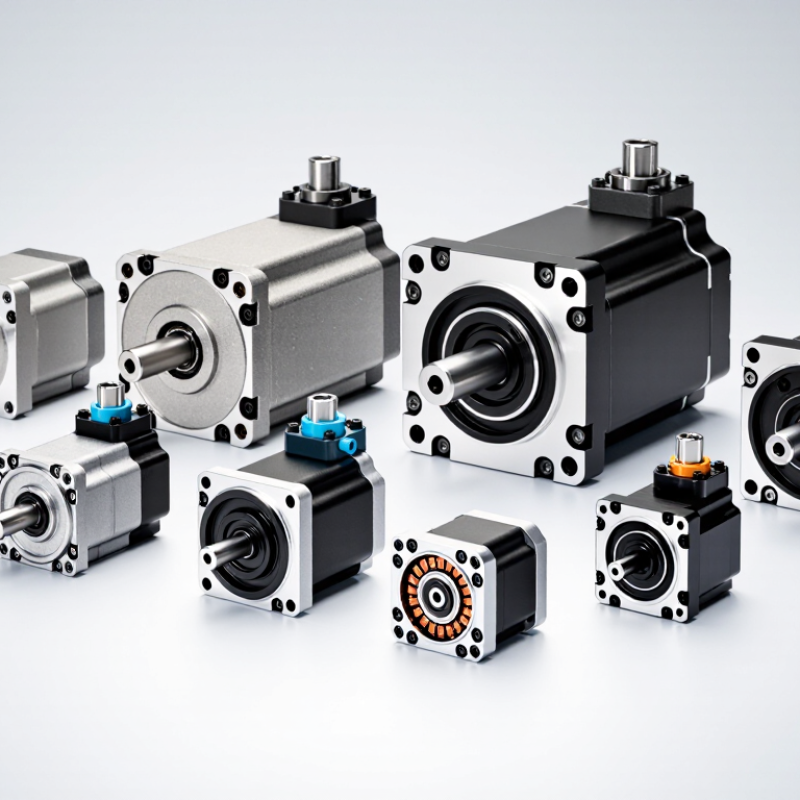
China Top 10 High Torque Brushless DC Motor Manufacturers

High-Torque BLDC Motors: Operating Principles and Key Components

High-torque brushless DC motors produce rotation through the interaction of magnetic fields. Current flows through stator windings, while permanent magnets on the rotor respond to the changing field. An electronic controller switches current between winding phases in sequence. This commutation keeps the rotor moving and determines how smoothly torque is delivered. Hall sensors can report rotor position; sensorless controllers estimate it from electrical signals. Neither method is perfect under every load.

Several components shape real-world performance. Copper windings carry current, laminated steel guides magnetic flux, and rotor magnets provide the field. Bearings support the rotating shaft, while the housing helps dissipate heat. More current can increase torque, but it also raises winding temperature. Heat matters. A motor that feels strong during a brief test may overheat during sustained operation, especially with limited airflow. A well-matched controller, supply voltage, and load are therefore essential. Even careful calculations can miss vibration or temperature changes in a particular machine, so testing under realistic conditions remains important.

Torque, Speed, and Power: T (N·m) = 9550P (kW)/n (r/min)

For high-torque brushless DC motors, torque, speed, and power must be judged together. The relationship T (N·m) = 9550P (kW)/n (r/min) makes that trade-off visible. A 1.5 kW motor turning at 1,000 r/min produces about 14.3 N·m. At 3,000 r/min, the same power gives about 4.8 N·m. More speed does not mean more torque.

The U.S. Department of Energy’s 2014 motor-systems sourcebook estimates that motor-driven systems use roughly 68% of industrial electricity. That figure makes efficient sizing more than a laboratory concern. For a conveyor starting under load, engineers should check starting torque, continuous torque, and the motor’s thermal limits. A gearbox can increase shaft torque, but it also changes speed and adds losses. Small details matter.

Numbers can mislead. The equation describes mechanical output, not the full operating picture. Real performance depends on controller settings, cooling, duty cycle, and load changes. A motor rated for high peak torque may not sustain it without overheating. Measure current and shaft speed during the actual duty cycle, then compare results with the manufacturer’s test conditions. This step is easy to skip, and it can expose a mismatch before installation.

China High-Torque BLDC Motors: Torque at 10 Rated Operating Points

Calculated shaft torque for illustrative power-and-speed combinations—not manufacturer-specific test data.

Torque is calculated using T (N·m) = 9550 × P (kW) ÷ n (r/min). Actual motor torque depends on the product’s rated operating conditions and specifications.

How to Assess Manufacturers by Rated Torque, Peak Torque, and Test Data

When comparing China’s high-torque brushless DC motor manufacturers, treat rated torque and peak torque as different claims. Rated torque describes sustained output under specified conditions. Peak torque is usually available only for a limited time. Ask each supplier to state that duration, the permitted duty cycle, and any thermal limits. A peak figure without these details is hard to compare.

Check the test setup, not just the headline number. Request torque-speed curves and test reports that identify voltage, current, motor temperature, and measurement equipment. A calibrated dynamometer and a clear test procedure make results easier to verify. Ask whether the data comes from a production sample or a specially prepared unit. Small details matter.

Compare motors at the speed and operating cycle your equipment actually needs. A motor with higher peak torque may still run too hot during repeated starts. Watch for reports that omit ambient temperature or winding temperature. Numbers need context. Even a tidy spreadsheet can mislead when test conditions differ. It is easy to overlook this, and the comparison may need another review. Ask for the curve, the test conditions, and a written explanation of any gaps.

Profiles of China’s 10 Leading High-Torque BLDC Motor Manufacturers

Profiles of China’s ten leading high-torque BLDC motor manufacturers are most useful as capability snapshots, not a simple league table. Some focus on compact motors for robotics; others build larger units for pumps, conveyors, or electric vehicles. The IEA’s report Energy-Efficiency Policy Opportunities for Electric Motor-Driven Systems estimates that motor-driven systems consume about 45% of global electricity. Efficiency matters. So does torque under sustained load.

A careful comparison should examine winding design, magnet grade, cooling paths, and control compatibility. Ask for torque curves across operating speeds, not just peak figures. One manufacturer may offer customized shafts and housings, while another may emphasize automated production and repeatable tolerances. Heat tells the truth. Request test conditions, including ambient temperature and duty cycle, before comparing claims.

The ten profiles should also distinguish engineering support from catalog breadth. Check whether a supplier can explain vibration readings, bearing life, and thermal limits with test records. For high-torque applications, a motor that performs well for a short demonstration may still struggle during a long shift. That distinction is easy to overlook. Published specifications help, but independent verification and sample testing provide stronger evidence.

Industrial Applications and Selection Factors for High-Torque BLDC Motors

High-torque brushless DC (BLDC) motors serve conveyors, packaging lines, mobile robots, and compact pumps. Their strong low-speed output can help move a loaded belt without a bulky drive assembly. In a warehouse, for example, a cart may need steady torque when starting on a ramp. Real loads vary, though; a clean test bench rarely tells the whole story.

Start with the load, not the catalog headline. Compare continuous torque with peak torque, then check acceleration, stopping frequency, and daily duty cycle. A motor may handle a brief surge but overheat during repeated starts. Heat is easy to underestimate. Also confirm that the drive matches the motor’s voltage, current, and feedback requirements. Consider ambient temperature, dust, moisture, mounting space, and gearbox needs. A spreadsheet helps, but it cannot fully predict vibration or changing friction on a factory floor.

Tips: Measure the real load if possible. Record start-up current and motor temperature during a representative shift. Leave a sensible margin, but avoid oversizing by habit; an oversized system can add cost and reduce efficiency. If results look inconsistent, investigate the machine before blaming the motor.