How to Choose a Can Filling Machine in 2026?
Choosing a Cans Filling Machine in 2026 requires more than comparing speed, price, and stainless-steel appearance. The right decision connects product behavior, container dimensions, hygiene, labor, utilities, and future demand. PMMI’s recent beverage packaging research highlights continued automation, flexible formats, and data visibility as major investment priorities. That shift matters on the factory floor. A machine rated for 600 cans per minute may slow sharply when foam increases, temperatures change, or operators switch can sizes.
Market forecasts also support careful planning. Grand View Research has identified sustained growth in the global metal cans market, driven by beverages, convenience, and recyclable packaging demand. However, market growth does not guarantee a suitable machine. Your product may contain pulp, carbonation, particulates, or sensitive ingredients. Each condition affects filling accuracy, product loss, cleaning time, and seal performance. Small details matter.
Watch the transfer point.
Experienced engineers usually request production trials before approving equipment. They measure fill-volume variation, dissolved oxygen, changeover time, clean-in-place performance, and rejected cans. EHEDG hygienic design guidance and ISO 22000-based food safety systems can strengthen this evaluation, but certification alone cannot solve poor line integration. A perfect specification sheet can still hide awkward access panels or slow maintenance. That assumption needs testing. Ask suppliers for reference installations, service-response data, spare-parts availability, and realistic energy figures. The best choice in 2026 will not simply run fast. It will run consistently, clean safely, adapt to changing formats, and give operators useful evidence when performance declines.
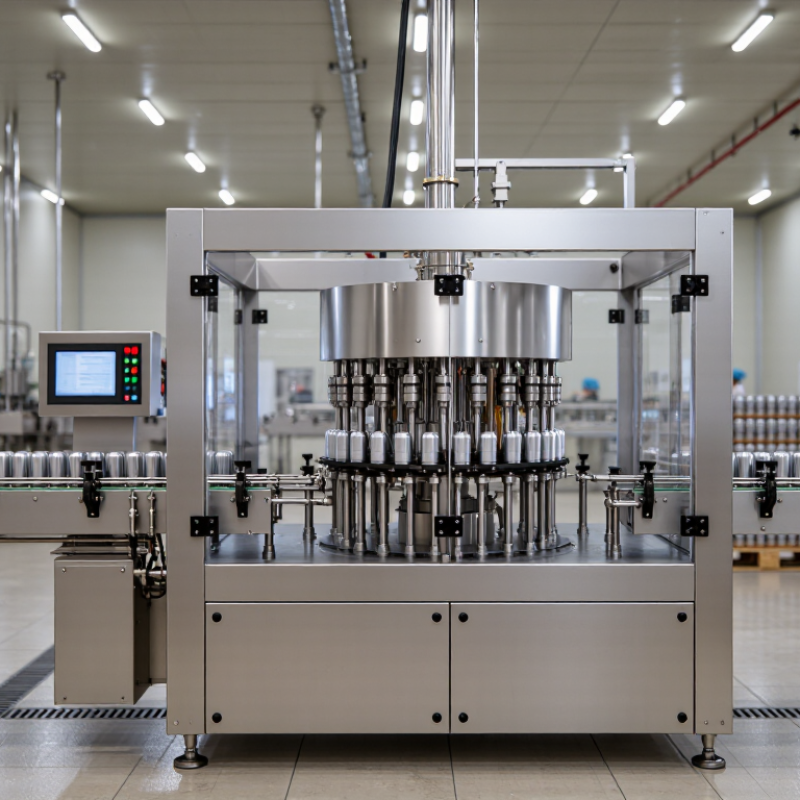
Define Your Can Filling Requirements and Production Goals
Choosing a can filling machine starts with clear production requirements, not catalogue speed. Define the can diameter, height, fill volume, product viscosity, carbonation level, and temperature range. Record your target output in cans per minute, not only cans per hour. Allow for cleaning, maintenance, changeovers, and rejected containers.
Grand View Research valued the global beverage cans market at approximately USD 55 billion in 2023. Its report also projects continued growth through 2030. This growth increases pressure on flexible, reliable filling lines. However, higher speed may reduce accuracy when products foam or change viscosity. Specify acceptable fill-weight variation, seam inspection requirements, and the number of daily format changes. A practical plant trial should test real cans, product, temperature, and operating staff. Laboratory results alone can mislead.
Tips: Build a requirement sheet before requesting quotations. Include peak demand, normal demand, and future capacity. Ask suppliers to document measured speed, fill accuracy, changeover time, and cleaning duration. Check electrical, air, water, drainage, and floor-space needs. Sustainability also matters. The Can Manufacturers Institute reported a 43% U.S. aluminum beverage can recycling rate in 2023. That figure supports recyclable packaging, but it does not guarantee efficient filling. Some assumptions will fail. A slower machine with stable fills may outperform a faster machine with frequent stoppages. Test the inconvenient scenario before approving the investment.
Compare Can Filling Machine Types and Filling Methods
Choosing a can filling machine in 2026 starts with the product, not the machine price. Rotary fillers suit high-volume beverage lines and maintain steady output. Inline fillers need less floor space and support smaller production runs. Isobaric filling protects carbonation during beer and sparkling-water production. Gravity filling works better for still drinks, while volumetric filling offers tighter dose control for thicker liquids.
PMMI’s 2024 beverage packaging research identifies automation, labor shortages, and resource efficiency as major investment drivers. These pressures make servo-controlled systems attractive, but they also increase maintenance complexity. A manual or semi-automatic filler may remain practical for seasonal production. Mordor Intelligence projects continued growth in the global beverage can market through 2029, raising the value of flexible equipment. Growth alone does not justify oversizing.
Check filling accuracy, changeover time, cleaning access, and oxygen pickup during trials. The Can Manufacturers Institute reports that aluminum beverage cans have high recycling value, so minimizing product loss and damaged cans matters operationally. Ask suppliers for measured results using your can diameter, liquid temperature, and target speed. Published capacity can look impressive.
Real production is messier.
A machine rated for 12,000 cans per hour may deliver less after rinsing, lid changes, inspection, and sanitation. I would also question any system that hides water use or rejects data. Compare total operating cost, not only purchase cost. Sources: PMMI, Beverage Trends Driving Change, 2024; Mordor Intelligence, Beverage Cans Market report; Can Manufacturers Institute, recycling data.
Evaluate Speed, Accuracy, Compatibility, and Automation Features
Choosing a can filling machine in 2026 starts with the product, not the advertised output. In plant evaluations, I measure usable speed during a full shift, including changeovers, cleaning, and minor stops. A machine rated at 300 cans per minute may deliver less when operators adjust valves or replace seals. Ask for a production trial with your actual can sizes, liquid viscosity, temperature, and target fill level. Real conditions reveal more than a brochure.
Accuracy protects margins and customer trust. Check fill-volume variation across every nozzle, not only the average result. For regulated products, confirm the machine supports documented calibration, traceable records, and routine verification. A strong system should detect missing cans, foam, blocked nozzles, and abnormal pressure before waste spreads. Still, sensors can misread reflective cans or heavy foam. Build manual checks into the operating procedure.
Compatibility covers container diameter, height, lid design, conveyors, utilities, and cleaning methods. Leave space for future formats. Automation should reduce repetitive work without hiding important decisions. Useful features include recipe control, automatic adjustments, alarm history, remote diagnostics, and secure user permissions. During commissioning, ask operators to test faults, not just normal production. I have seen teams choose maximum automation and later struggle with complex maintenance. Simpler can be better, though that judgment depends on staff skills, service access, and the cost of downtime.
Check Hygiene, Safety, Maintenance, and Long-Term Reliability
How to Choose a Can Filling Machine in 2026?
A reliable can filling machine should protect product hygiene from inlet to sealing. Choose stainless steel construction, smooth welds, and drainage-friendly surfaces. Avoid hidden corners where syrup, foam, or rinse water can collect. Check whether product-contact parts can be removed without special tools. Small gaps matter. Ask for documented cleaning procedures and verify them during a factory visit. Operators should reach valves and sensors safely, without climbing over equipment. Guards, emergency stops, and clear control panels reduce preventable injuries. Safety should be practical, not decorative.
Tips: Request a live cleaning demonstration. Inspect the machine after production, not only when it is polished. Review maintenance intervals, spare-part access, lubrication points, and sensor replacement time. I have learned that a machine can run quickly yet create expensive delays during changeovers. No machine is maintenance-free, despite optimistic sales language. Ask how the system handles foam, inconsistent can heights, and short production pauses. These details reveal real engineering quality.
Long-term reliability depends on stable filling accuracy, dependable sealing, and simple fault diagnosis. Review performance records from similar products and operating conditions. Ask for training materials, service response procedures, and recommended spare parts. A strong supplier should explain limitations honestly. That honesty matters. Test controls with gloved hands and inspect noise, vibration, and liquid residue around fittings. Small weaknesses often appear before a major failure, but teams sometimes ignore them during acceptance testing. Reliability is built through design, inspection, and disciplined daily care.
Assess Costs, Supplier Support, and Future Expansion Options
Choosing a can filling machine in 2026 requires more than comparing purchase prices. A recurring plant-floor mistake is pricing the filler while ignoring changeover labor, utilities, spare parts, validation, and downtime. PMMI’s 2024 State of the Industry report placed U.S. packaging machinery shipments above $10 billion in 2023, reflecting continued investment despite tight operating budgets. That scale makes supplier discipline important. Request a five-year total-cost model, not a glossy quotation. Ask for energy use per thousand cans, fill accuracy data, guaranteed speeds, and documented maintenance intervals. Test every number with your product.
Supplier support is an operating cost. Require response-time commitments, remote diagnostics, technician availability, training hours, and local spare-parts stock. PMMI’s 2024 report also identifies labor constraints and automation needs as major packaging investment pressures. A machine needing one specialist per shift may defeat its apparent efficiency. Watch the factory acceptance test. Run your actual can sizes, product viscosity, and target speeds. Keep failed runs in the record. They reveal more than a perfect demonstration.
Future expansion should be priced before installation. Specify spare I/O, accessible frame space, scalable controls, and room for additional filling heads. Interact Analysis’ 2024 industrial automation research points to continuing investment in connected production and data visibility. Connectivity is not automatically useful. Ask whether exported data fits your maintenance system. Also price the second line, not only the first. Modular design can reduce disruption, although it may cost more initially. That trade-off deserves a spreadsheet, and honest doubt. Cheap today can become expensive later.
