How to Choose Carton Flow Racking Systems in 2026?
Choosing Carton Flow Racking Systems in 2026 requires more than comparing catalogue prices. These systems use inclined roller tracks to move cartons toward picking faces. In a busy warehouse, that movement can reduce walking, replenishment delays, and stock searching. Yet the right design depends on carton dimensions, product weight, turnover, and available aisle space. A system that looks efficient on paper may fail when cartons deform or labels face the wrong direction.
Experienced warehouse planners measure real cartons, not only standard specifications. Record length, width, height, weight, packaging strength, and daily order frequency. Test several carton types on sample lanes before approving a full installation. Check roller spacing, lane depth, replenishment access, flow speed, and stop mechanisms. Safety matters too. Operators need clear pick faces, stable frames, sensible load limits, and visible inspection points. Suppliers should provide engineering data, installation guidance, maintenance instructions, and references from comparable operations.
This guide examines configurations, materials, automation options, and lifecycle costs for 2026 projects. It also considers future SKU growth, seasonal peaks, and warehouse management software integration. Not every warehouse needs sensors or automated replenishment. Sometimes, a simple gravity lane performs better and costs less. That conclusion can feel disappointing. It may also be correct. No design is perfect. Reliable decisions come from measured workflows, controlled trials, and honest reviews of failures, not attractive renderings alone. The goal is a practical system that improves access, accuracy, and safe productivity over time.
Define Carton Flow Racking: FIFO, Gravity Flow, and 2026 Applications
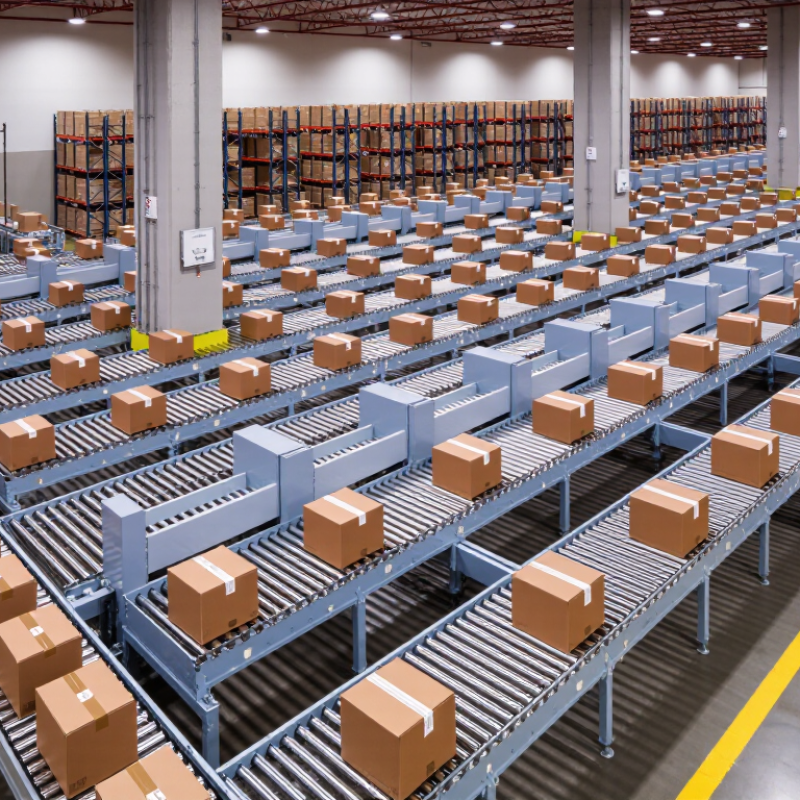
Carton flow racking uses inclined rollers or wheels to move cartons by gravity. It normally follows FIFO: first in, first out. Workers load cartons from the rear and pick them from the front. This keeps older stock visible and reduces unnecessary walking. It suits fast-moving products, spare parts, food packaging, and small components.
Gravity flow is simple, but “simple” can mislead. Carton weight, box friction, and lane angle affect movement. A light carton may stop halfway. A damaged carton may jam the lane. In my warehouse assessments, operators often notice these problems only after installation. Test real cartons, not sample boxes. Include the heaviest and lightest packaging. Allow lane dividers, replenishment access, and clear labels.
The U.S. Census Bureau reported that e-commerce represented about 16.1% of total U.S. retail sales in 2024. That pressure makes rapid, accurate picking more important in 2026. The 2024 MHI Annual Industry Report found that 55% of surveyed supply-chain professionals faced labor shortages. Carton flow can reduce reaching and walking, but it cannot repair poor slotting. Place high-volume cartons near the pick face. Reserve deeper lanes for stable demand. Review replenishment frequency, carton dimensions, load capacity, and maintenance access before choosing a system. A spreadsheet may recommend maximum density. Operators may prefer safer access. Both views deserve attention.
How to Choose Carton Flow Racking Systems in 2026
Carton flow racking uses inclined rollers or wheels to move cartons by gravity. It supports FIFO inventory rotation, improves picking access, and is commonly applied to fast-moving, case-picked, and order-fulfillment operations.
The planning scores indicate how well each operating profile fits carton flow racking on a 1–5 scale. High-throughput, date-sensitive, and frequently replenished products generally benefit most from gravity flow lanes and FIFO control.
Analyze SKU Profiles: Dimensions, Weight, Velocity, and the 80/20 Rule
Choosing carton flow racking in 2026 starts with the SKU profile, not the frame color. Measure carton length, width, height, and actual packed weight. Record the largest and smallest cartons, because one average dimension hides clearance problems. A 400 mm carton may need 450 mm of usable lane space when labels or overhangs interfere. Check carton rigidity too. Soft boxes can deform on rollers, especially under stacked pressure.
Velocity shows how often each SKU enters and leaves the pick face. Use recent order history, preferably twelve months, and separate seasonal spikes from normal demand. Count order lines, not only units. A fast seller in small quantities can consume more labor than a slow seller shipped by the case. Map the top 20 percent of SKUs that generate roughly 80 percent of order activity. This is a useful rule, not a law. Your operation may show 70/30 or 90/10.
Place high-velocity cartons in waist-to-shoulder zones, where replenishment and picking stay quick. Assign lane widths by real carton dimensions, leaving enough room for labels and hand access. Reserve stronger lanes for heavier cartons, and test flow with a loaded carton before approval. In practice, a spreadsheet can mislead. I have seen measured cartons differ from supplier data by several millimeters. That small error can create jams. Recheck dimensions after packaging changes, then compare pick time, replenishment touches, and damage reports.
How to Choose Carton Flow Racking Systems in 2026?
Analyze SKU Profiles: Dimensions, Weight, Velocity, and the 80/20 Rule
| SKU Profile | Typical Carton Size
(L × W × H, mm) | Unit Weight
(kg) | Daily Order Lines | Share of
Order Lines | Average Cartons
per SKU | Velocity Class | 80/20 Segment | Recommended Lane Width
(mm) | Recommended Roller
Pitch (mm) | System Recommendation |
| Small, fast-moving cartons | 300 × 200 × 150 | 1.5 | 420 | 24.7% | 12 | High | A | 300–400 | 50–75 | High-density carton flow with short pick faces |
| Standard e-commerce cartons | 400 × 300 × 250 | 4.0 | 350 | 20.6% | 10 | High | A | 400–500 | 75–100 | FIFO carton flow with adjustable lane dividers |
| Medium household cartons | 500 × 350 × 300 | 8.0 | 265 | 15.6% | 8 | High | A | 500–600 | 100–125 | Heavy-duty flow lanes with reinforced front stops |
| Long or irregular cartons | 650 × 300 × 250 | 6.5 | 185 | 10.9% | 6 | Medium | A | 600–700 | 100–125 | Wide lanes with adjustable guides and brake rollers |
| Dense, heavy cartons | 450 × 400 × 350 | 15.0 | 145 | 8.5% | 5 | Medium | B | 500–600 | 75–100 | High-capacity rollers with controlled-flow braking |
| Seasonal promotional cartons | 550 × 400 × 300 | 9.0 | 120 | 7.1% | 4 | Medium | B | 600–700 | 100–125 | Reconfigurable lanes for seasonal assortment changes |
| Slow-moving spare-part cartons | 350 × 250 × 200 | 3.0 | 95 | 5.6% | 3 | Low | C | 400–500 | 75–100 | Selective storage or shared carton-flow lanes |
| Bulky, low-frequency cartons | 700 × 500 × 400 | 18.0 | 75 | 4.4% | 2 | Low | C | 700–800 | 125–150 | Wide heavy-duty lanes or selective pallet storage |
| Fragile mixed-size cartons | 400 × 300 × 200 | 5.0 | 45 | 2.6% | 2 | Low | C | 500–600 | 100–125 | Low-impact rollers with dedicated protective lanes |
Planning rule: The sample profile shows that approximately 71.8% of order lines are generated by the first four SKU groups. In practice, classify the fastest-moving SKUs as A-items, position them closest to the picking aisle, and reserve adjustable or shared lanes for B- and C-items. Validate lane width, roller pitch, slope, load capacity, carton rigidity, and replenishment frequency using measured operating data before final design.
Size Lanes and Capacity: Pitch, Slope, Load Ratings, and Safety Factors
How to Choose Carton Flow Racking Systems in 2026?
Size lanes around the carton, not the average order. Measure the longest, widest, and tallest cases, including labels and damaged corners. Allow enough side clearance for smooth loading, but avoid excessive space that lets cartons rotate. Lane pitch should match carton depth and picking frequency. A shallow pitch suits compact cartons. Deeper lanes need stronger flow testing.
Slope is equally important. Many carton-flow applications begin near 3–5 degrees, but wheel type, carton weight, and surface friction can change the result. Test the lightest carton first. Then test the heaviest carton repeatedly. It must move without surging. It must stop safely.
Capacity calculations need more than total kilograms. Confirm the load per lane, beam level, and individual roller track. Include impact from replenishment and uneven loading. ANSI MH16.1-2023 supports engineered rack design, while supplier ratings should be verified under actual loading conditions. Never apply a homemade safety factor to a published rating. Ask a qualified engineer to review seismic, anchoring, and deflection requirements.
The 2024 MHI Annual Industry Report found that 74% of surveyed organizations planned to increase technology investment. That trend makes reliable rack data more valuable, not less. Sensors can identify shortages, but they cannot correct a weak slope or overloaded lane. I once underestimated carton softness during a layout review. The cartons stalled. Physical trials still expose uncomfortable mistakes.
Select Rollers and Accessories for Carton Weight and Throughput Targets
Choosing a carton flow rack in 2026 starts with the carton, not the frame. Record carton weight, base dimensions, surface material, and daily carton volume. A 12-kilogram carton needs different roller resistance than a 3-kilogram carton. Measure the real load, including damaged or overfilled cartons. Those exceptions often cause stoppages.
For steady movement, select roller pitch according to carton length. At least three rollers should support the carton base at all times. Use higher-capacity rollers for dense cartons, then test braking on the steepest lane. Dividers and side guides help control narrow cartons, while end stops prevent impact damage. For high throughput, add lane replenishment space and clear labels. The MHI 2024 Annual Industry Report identifies labor availability as a continuing supply-chain challenge, so accessories should reduce manual correction work. Simple guides can matter more than expensive upgrades.
A practical trial is essential. Load the heaviest carton first, then test mixed cartons at the planned cartons-per-hour rate. Watch for hesitation, sideways drift, and noisy roller contact. I have seen designs pass a static weight test but fail during rapid replenishment. That weakness is easy to miss. The 2024 WERC Warehousing and Logistics Industry Report emphasizes measurement and process discipline in warehouse performance, supporting this test-based approach. Keep a small safety margin, but avoid oversized rollers that increase starting resistance. The first specification may be wrong. Review it after two weeks of operating data.