What Are the Best Commercial Lifts in 2026?
The best Commercial Lifts in 2026 are not simply the fastest or most polished models. They are systems that suit a building’s daily traffic, available shaft space, accessibility needs, and maintenance capacity. A compact passenger lift may serve a small office well, while a busy hotel may need greater capacity and smarter traffic control. The right choice depends on the building. Details matter.
Lift consultant David Cooper’s practical advice can be summed up this way: “Match the lift to real traffic, then check how it will be maintained.” This is an editorial paraphrase, not a verified verbatim quotation. It points to a question buyers sometimes overlook: who will respond when the lift stops during a busy morning? A clear service plan can matter as much as a feature list.
This guide compares commercial passenger, goods, platform, and machine-room-less lifts through practical criteria. It considers capacity, travel height, energy use, controls, safety features, installation constraints, and long-term servicing. A glass cabin may look impressive in a bright lobby, but it cannot compensate for slow peak-hour flow. Nor is the newest technology automatically the best investment. Specifications and local site assessments should guide any shortlist; actual performance varies by model and building. Some trade-offs remain. The aim is to help property owners, facility managers, and project teams ask sharper questions before requesting proposals.
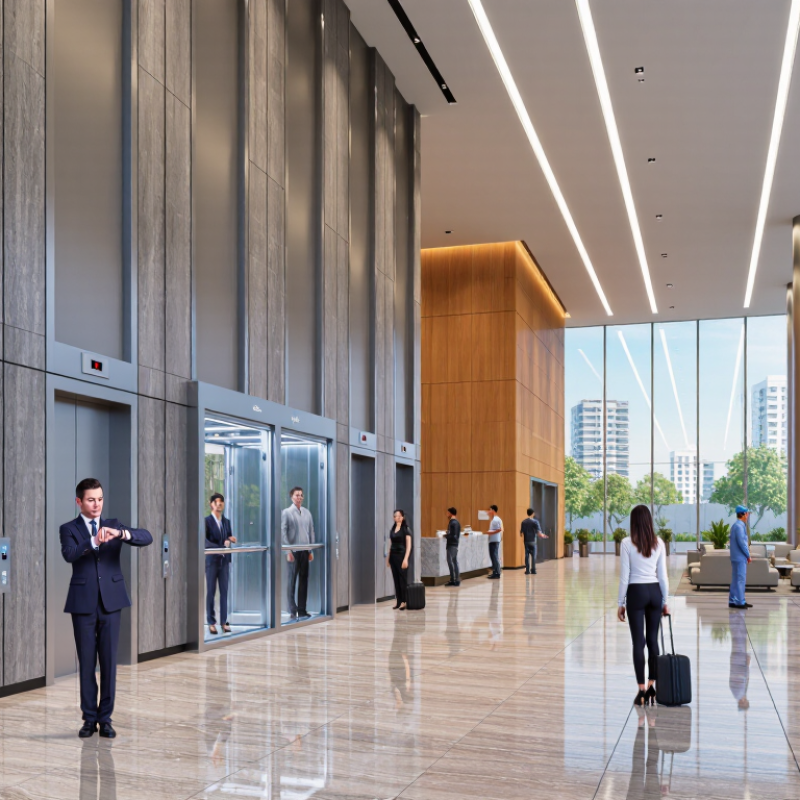
Commercial Lift Types: Traction, Hydraulic, MRL, and Platform Systems
Commercial lift choice starts with duty, not brochure speed. Traction systems suit busy, taller buildings: counterweights handle frequent trips, while regenerative drives can return braking energy to the building. Ropes, controls, and machine access still need planned inspections. Hydraulic lifts suit low-rise sites with modest traffic and heavy loads, such as a loading area. They are straightforward to specify, but energy use and heat rejection can be drawbacks. That matters.
Machine-room-less (MRL) lifts save dedicated plant-room space, which can help in tight retrofits. MRL is not a separate drive principle; it is a traction arrangement. Compare the motor, controller, and service access. Platform lifts can provide short-rise access where a passenger lift is excessive, but speed and capacity are limited. Not always.
CIBSE Guide D: Transportation Systems in Buildings (2020) estimates that lifts use roughly 3–5% of office-building electricity; building height and traffic affect the share. Treat this as a benchmark, not a promise. Before specifying a system, record peak queues, daily starts, travel distances, and car loading for a week. Then compare lifecycle energy, standby consumption, pit and headroom dimensions, and local service response. I would leave some margin: real traffic rarely matches the neat design-day model.
Rated Capacity and Speed: Typical Loads of 2,500–5,000 lb and 100–500 fpm
What Are the Best Commercial Lifts in 2026?
Rated Capacity and Speed: Typical Loads of 2,500–5,000 lb and 100–500 fpm
For many commercial buildings, 2,500–5,000 lb is a useful early planning range. That equals roughly 1,134–2,268 kg. The right rating depends on what actually travels: people, wheeled carts, deliveries, or a mix. A busy clinic may need room for a bed and attendants, while a small office may prioritize passenger flow. Rated capacity is not the same as routinely carrying a full load. CIBSE Guide D, Transportation Systems in Buildings (2020), treats lift capacity and speed as inputs to traffic planning, not universal targets. Small details matter.
Typical speeds of 100–500 feet per minute equal about 0.5–2.5 metres per second. Lower speeds can suit short-rise buildings; taller buildings may need faster service to limit waiting and travel time. Yet speed alone does not make a lift effective. Door timing, stops, car size, and peak-hour demand all affect performance. ASME A17.1/CSA B44 sets safety requirements, while a project’s traffic study helps establish suitable performance. These ranges are starting points, not a specification. A neat spreadsheet can still miss the morning delivery rush. Have the design team compare expected loads and traffic patterns with actual building use before fixing capacity or speed.
What Are the Best Commercial Lifts in 2026? — Rated Capacity and Speed: Typical Loads of 2,500–5,000 lb and 100–500 fpm
| Lift Type | Typical Rated Capacity | Typical Rated Speed | Common Applications | Key Selection Consideration |
| Low-Rise Hydraulic Passenger Lift | 2,500–4,500 lb | 100–150 fpm | Low-rise offices, small hotels, and public buildings | Often suited to shorter travel distances; account for machine-room and energy requirements. |
| Traction Passenger Lift | 2,500–5,000 lb | 200–500 fpm | Mid-rise and taller offices, hotels, and mixed-use buildings | Speed and capacity should be matched to building height, traffic, and expected waiting times. |
| Machine-Room-Less Traction Lift | 2,500–4,000 lb | 200–500 fpm | Buildings where conserving dedicated machine-room space is important | Confirm that the selected configuration, maintenance access, and local code requirements suit the building. |
| Service Lift | 3,000–5,000 lb | 100–200 fpm | Hotels, hospitals, offices, and venues moving staff, carts, and supplies | Car dimensions, door opening, and protection against everyday impact may matter as much as capacity. |
| Passenger-Freight Combination Lift | 4,000–5,000 lb | 100–200 fpm | Commercial buildings needing both passenger and light-to-moderate goods transport | Check floor loading, doorway clearance, and the intended mix of people and goods. |
Planning note: Figures are representative ranges, not specifications for every lift. Actual rated capacity and speed depend on the building, travel distance, traffic analysis, equipment configuration, and applicable codes. Lift selection should be confirmed by a qualified elevator professional.
Accessibility Benchmark: ADA Standards Require a 36-Inch Clear Elevator Door
When comparing commercial lifts in 2026, look beyond rated capacity and travel speed. Door clearance can determine whether a wheelchair user enters comfortably or gets stuck at the threshold. For U.S. projects subject to the ADA Standards, elevator doors generally need at least 36 inches of clear opening. Measure the usable space with the doors fully open, not the rough opening in the wall. Small differences matter.
A tape measure helps. So does a site visit. Check the approach space, door timing, and alignment between the car floor and landing. A 36-inch opening does not guarantee an accessible trip if a tight corridor blocks the approach or a raised sill catches a mobility device.
The right lift also depends on traffic, building layout, travel height, and service access. Freight use may call for different capacity and controls than a passenger lift. Requirements can vary by project and jurisdiction, so have a qualified accessibility professional confirm the plans and finished installation. I would not rely on a brochure measurement alone; real buildings rarely match the drawing perfectly. Keep enough clearance for routine maintenance, too, so adjustments do not quietly reduce the usable opening.
Safety Framework: ASME A17.1/CSA B44 and EN 81-20/50
What Are the Best Commercial Lifts in 2026?
Safety Framework: ASME A17.1/CSA B44 and EN 81-20/50
The best commercial lift is not simply the fastest or largest; it must fit the building and meet the locally adopted safety code. ASME A17.1/CSA B44 is used in many North American jurisdictions. EN 81-20 and EN 81-50 provide a key safety framework in Europe and other markets. The applicable edition matters, and local requirements can vary. Check with the authority responsible for the project.
EN 81-20 covers safety requirements for the design, construction, and installation of passenger and goods lifts. EN 81-50 addresses examination, calculation, and testing of lift components. ASME A17.1/CSA B44 sets safety requirements across areas such as installation, inspection, testing, and maintenance. These frameworks address practical details, including doors, clearances, and safety devices. Small details matter.
For a project review, compare the proposed lift’s rated load, travel, and expected traffic with the building’s needs. Then confirm that the design, installation, testing, and records align with the code adopted locally. A checklist helps, but it can miss site-specific constraints, such as a narrow machine space or unusual access needs. I would not treat a standards reference alone as proof of compliance; qualified review and documented verification are essential.
Choosing a 2026 Lift: Compare Traffic, Travel, Energy, and Lifecycle Costs
What Are the Best Commercial Lifts in 2026?
Choosing a 2026 Lift: Compare Traffic, Travel, Energy, and Lifecycle Costs
The best commercial lift depends on how people use the building, not just its floor count. Map arrivals during busy periods, such as office openings or hotel check-in, and note where queues form. A traffic study can help compare car capacity, speed, and dispatch controls. Ask for the assumptions behind the results; a neat simulation may not reflect real visitor patterns.
Tips: Record peak traffic, typical loads, and travel between floors. Compare estimated waiting times alongside journey times. For taller buildings, examine how longer travel affects both service and passenger flow.
Energy use deserves a closer look. Request estimates that include standby operation, since lifts may spend much of the day waiting. Then compare purchase price with expected maintenance, inspections, parts availability, and likely modernization needs over the building’s planned life. Keep the estimates consistent: different usage assumptions can make comparisons misleading. No forecast is perfect. A small change in tenant mix can alter traffic and costs, so leave room for review.
