Contact us

How to Choose a Chemical Eyewash Station?

Choosing a Chemical Eyewash station starts with the substances workers may encounter—not with the equipment catalog. Review the safety data sheets, identify splash risks, and consider where spills could happen. A corrosive liquid near a mixing bench presents a different exposure scenario from occasional dust in a storage area. Small details matter: a blocked aisle, a locked door, or a station hidden behind stacked cartons can cost precious seconds.

Chemical safety engineer Dr. Elena Morris puts the selection principle this way: “Choose for the credible exposure, then make the station easy to reach and ready to use.” That is the point. Consider whether a plumbed unit, self-contained station, or combination with a safety shower suits the site. Check that the spray reaches both eyes, controls are simple to operate, and the water supply and maintenance plan are dependable. Verify performance against applicable workplace standards and manufacturer instructions; product claims alone are not enough.

Then walk the route. Can a worker reach the unit quickly with eyes closed? Is the path clear, and can the station operate through the work shift? Test the installation and document routine inspections. A checklist helps, but it cannot replace a real site assessment. And the uncomfortable part: even a well-chosen station may fail workers if nobody knows how to use it. Use this guide to compare hazards, station types, placement, water supply, and upkeep—before a splash becomes an emergency.
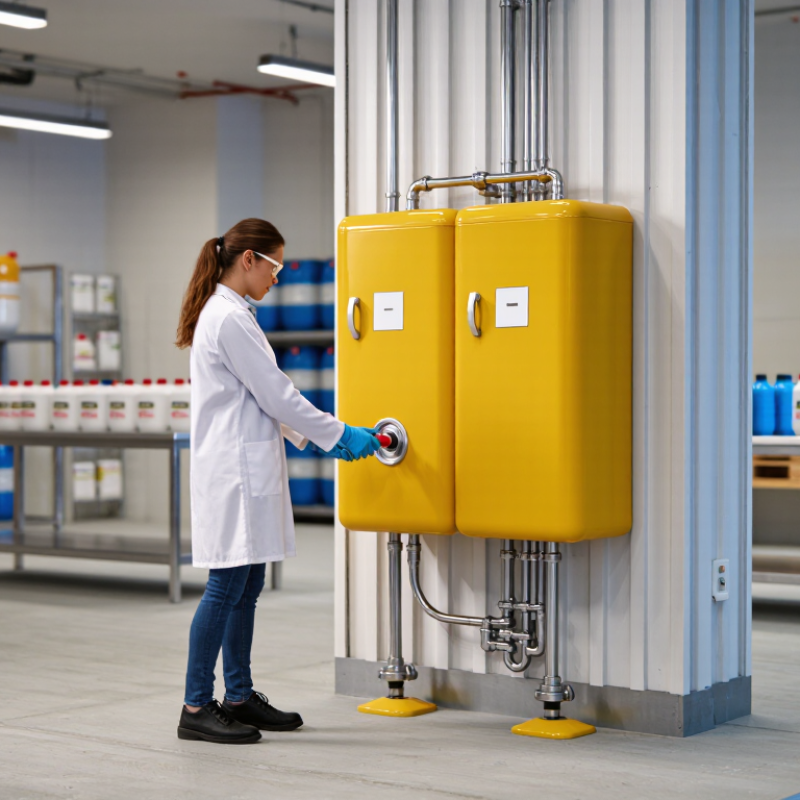
How to Choose a Chemical Eyewash Station?

Identify the Chemical Hazards and Eyewash Requirements

How to Choose a Chemical Eyewash Station?

Identify the Chemical Hazards and Eyewash Requirements

Start with the chemicals, not the equipment catalog. Review each product’s safety data sheet for eye hazards, concentration, and first-aid instructions. Then consider how exposure could happen: a splash while pouring, a leaking hose, or dust stirred during cleanup. Small details matter. A task involving diluted solution may still create a serious risk if splashes reach the face.

Match the station to the likely exposure and the site conditions. For corrosive chemicals, confirm that the selected eyewash can provide continuous flushing for the duration required by applicable standards and workplace procedures. ANSI/ISEA Z358.1 commonly specifies at least 15 minutes of flushing, with tepid water; verify the current standard and your facility’s requirements. Place the unit on the same level as the hazard, along an unobstructed route, and close enough for prompt access. That can change. A cabinet, pallet, or locked door can turn a nearby station into a poor choice.

Check water supply, drainage, temperature control, and routine testing before installation. A station that looks ready may deliver weak flow or water that is painfully cold. Ask workers to demonstrate how they would reach and operate it, ideally with gloves on. Their feedback may reveal a blocked path or confusing handle. Reassess after chemicals, equipment, or work practices change. Some risks are easy to miss.

Compare Types of Chemical Eyewash Stations

Chemical eyewash stations mainly differ in water supply, installation, and backup capacity. A plumbed unit connects to a potable-water line and can provide continuous flushing, making it suitable for fixed work areas. It needs reliable water pressure, routine flow checks, and protection from freezing or contamination. A self-contained station stores flushing fluid in a tank, so it can serve locations without plumbing. Its limits are easy to overlook: the tank needs scheduled inspection, cleaning, and refilling. Combination units pair an eyewash with a safety shower, which helps where splashes could affect both eyes and the body. They require more space and enough water flow for simultaneous use. A practical trade-off.

Portable eyewash bottles are useful for immediate first aid, but they generally cannot replace a full station where hazardous splashes are a foreseeable risk. Check the applicable safety standard and site risk assessment before choosing equipment. Then measure the route from the hazard, confirm unobstructed access, and verify that controls are easy to operate with wet hands. Water temperature, drainage, maintenance access, and alarm or inspection records matter too. I would not choose by purchase price alone; an awkward station may be harder to reach during an emergency. Test the actual setup, and follow the equipment instructions for inspection and flushing duration. A real walk-through can reveal problems a floor plan misses.

How to Choose a Chemical Eyewash Station? — Compare Types of Chemical Eyewash Stations
Station Type Water or Flushing-Fluid Supply Key Advantages Limitations and Maintenance Best Suited For Key Selection Checks
Plumbed eyewash station Connected to a building’s potable-water supply. Provides a continuous supply while the unit is operating; suitable for frequent-use or higher-risk locations. Requires plumbing, installation, and regular activation checks. Water temperature and quality should be suitable for emergency flushing. Fixed work areas with corrosive chemical exposure and a reliable water supply. Confirm that the unit can deliver the required flow for the required duration, is accessible, and can provide tepid flushing fluid. ANSI/ISEA Z358.1 specifies at least 0.4 gallons per minute (1.5 L/min) for eyewash equipment for 15 minutes.
Self-contained gravity-fed station Stores flushing fluid in an onboard tank and uses gravity to deliver it. Does not need a permanent water connection; can be installed where plumbing is unavailable. Has a finite fluid supply. The tank must be filled, inspected, cleaned, and serviced according to the manufacturer’s instructions; fluid replacement intervals vary by product. Remote or temporary work areas where a suitable plumbed supply is not available. Check the unit’s rated flow and flushing duration, tank capacity, fluid type, replenishment schedule, and suitability for the site’s temperature conditions.
Portable pressurized self-contained station Stores flushing fluid in a pressurized container. Can be moved between work areas and does not require fixed plumbing. Limited by stored-fluid capacity and pressure. Requires pressure checks and fluid servicing as specified by the manufacturer. Mobile tasks, temporary work zones, or locations where permanent installation is impractical. Verify the specified flushing duration and flow, pressure-monitoring method, fluid requirements, and inspection schedule before purchase.
Personal eyewash bottles Small bottles of flushing fluid held at or near the worker. Can provide immediate flushing while the person reaches emergency equipment; easy to position near a task. Limited fluid volume and duration. Bottles generally do not replace a compliant emergency eyewash station where one is required. Supplemental first-flush access near a workbench, vehicle, or task area. Use only as a supplement where required. Check that bottles are accessible, sealed, within their stated service life, and compatible with the intended use.
Combination shower and eyewash unit Usually connected to a building water supply; some configurations may use a self-contained supply. Provides body and eye flushing at one location when chemical exposure may affect both. Needs adequate supply and space. Confirm that the selected unit is designed to operate both components simultaneously and that both remain accessible. Areas where splashes or spills could expose both the eyes and the body. Check the flow requirements for each component, simultaneous operation, drainage, access, and tepid-water provision. Follow the applicable standard and product instructions.

Check Water Supply, Flow Rate, and Temperature

How to Choose a Chemical Eyewash Station?
Check Water Supply, Flow Rate, and Temperature

A station is only useful if its water supply stays reliable during an emergency. Check that the supply can maintain the required flow for the full flushing period, even when nearby fixtures are in use. ANSI/ISEA Z358.1-2014 (R2020) specifies an eyewash flow of at least 0.4 gallons per minute for 15 minutes. That is a steady rinse, not a brief splash. Confirm the unit’s operating instructions and have a qualified person test flow at the installed location.

Temperature matters, too. The standard defines tepid flushing fluid as 60°F to 100°F (about 16°C to 38°C). Water outside that range may discourage someone from continuing the rinse. In practice, seasonal changes can affect supply temperature; a comfortable reading during one inspection may not last through winter or summer. Record test results and investigate changes rather than assuming the system is fine.

Tips: Run a timed test. Check flow and temperature at the nozzles, not just at the supply pipe. Keep the path clear, and document routine inspections. Small details count.

Choose an Accessible Location and Install the Station

Place the eyewash station close to chemical-use areas, not behind a door or around a corner. A worker with irritated eyes may struggle to see or move quickly. Keep the route clear of carts, hoses, and stored boxes. Keep it clear. Many workplaces aim for access within about 10 seconds, but confirm the distance against your site’s risk assessment and applicable safety guidance. A route that looks short on a floor plan can feel much longer during an emergency. Walk it yourself.

Install the unit on a stable, level surface with enough room to approach and hold both eyes open under the streams. The handles should be easy to find and operate, even with wet or gloved hands. Add a visible sign and adequate lighting; do not rely on staff remembering the station’s exact position. No locked doors. Connect the water supply as specified for the equipment, and check that drainage will not create a slippery floor. In cold or hot areas, protect the unit and water from unsuitable temperatures. Before use, verify the flow, spray pattern, and clear access. Test it on a regular schedule, following the manufacturer’s instructions and your facility’s procedures. A station can be installed correctly and still become obstructed later. Include it in routine walkthroughs.

How to Choose a Chemical Eyewash Station

Choose an accessible location and install the station so it can be reached quickly from a chemical hazard.

Placement note: ANSI/ISEA Z358.1 specifies that an emergency eyewash should be reachable within 10 seconds of travel time. Install it on the same level as the hazard, keep the route unobstructed, and consider immediate access where the hazard requires it.

Plan Routine Testing, Maintenance, and Training

How to Choose a Chemical Eyewash Station? Plan Routine Testing, Maintenance, and Training

Choosing a station is only the start; workers must be able to reach and use it quickly. NIOSH estimates that about 2,000 U.S. workers sustain job-related eye injuries requiring medical treatment each day. That figure makes readiness more than a box to check. Place the station along an unobstructed route, near the chemical hazard, and confirm its water supply suits the site’s conditions. ANSI/ISEA Z358.1 calls for weekly activation of plumbed units and annual inspection. Keep dated records of tests, repairs, and water changes for self-contained units.

Tips: Run the weekly test. Check both spray heads, water flow, and access. Look for leaks, blocked drains, and expired solution. A short test log helps reveal missed checks, though it cannot replace a hands-on inspection. Follow the unit’s instructions and applicable site requirements.

Maintenance matters most when it is easy to neglect. Assign a named person, set calendar reminders, and keep spare parts available. Train workers to start flushing immediately, hold their eyelids open, and continue for the duration specified by the chemical’s safety data sheet and site procedure. Practice at the actual station, not just in a meeting room. The route may look clear on paper, yet a parked cart can change that. Recheck after layout changes, and ask workers what feels confusing; the answer may expose a gap in the plan.