Contact us

How to Choose Open Frame Generator Sets?

Choosing Open Frame Generator Sets is a practical decision about continuity, fuel use, service access, and operating risk. A generator may look suitable on a specification sheet, yet struggle with motor starting, dusty air, or long standby periods. The stakes are real. Technicians regularly inspect sets beside warehouses, workshops, farms, and construction sites where heat, vibration, and poor ventilation affect performance. This guide explains how to compare ratings, engine quality, alternator design, controls, noise, and maintenance requirements.

Industry demand is also changing. The International Energy Agency’s Electricity 2024 report projects global electricity demand will grow by an average of 3.2% annually from 2024 to 2026. It also expects data-centre, artificial-intelligence, and cryptocurrency electricity use to exceed 1,000 TWh by 2026. These trends increase pressure on backup systems, especially where short interruptions can stop production or damage sensitive equipment. The U.S. Energy Information Administration continues to identify diesel as an important fuel for reliable, dispatchable power generation, although fuel quality and storage conditions remain critical.

A sound selection process begins with the actual load, not the generator’s maximum headline output. Check prime or standby ratings under ISO 8528, starting currents, voltage stability, altitude, ambient temperature, and expected running hours. Leave practical headroom. Too much spare capacity can reduce efficiency and cause wet stacking in diesel engines. Too little capacity creates overload risk. There is no perfect package. The right Open Frame Generator Sets balance accessible maintenance, verified performance, site conditions, and total lifecycle cost. Always confirm manufacturer data with an independent technician and local electrical requirements before purchase.
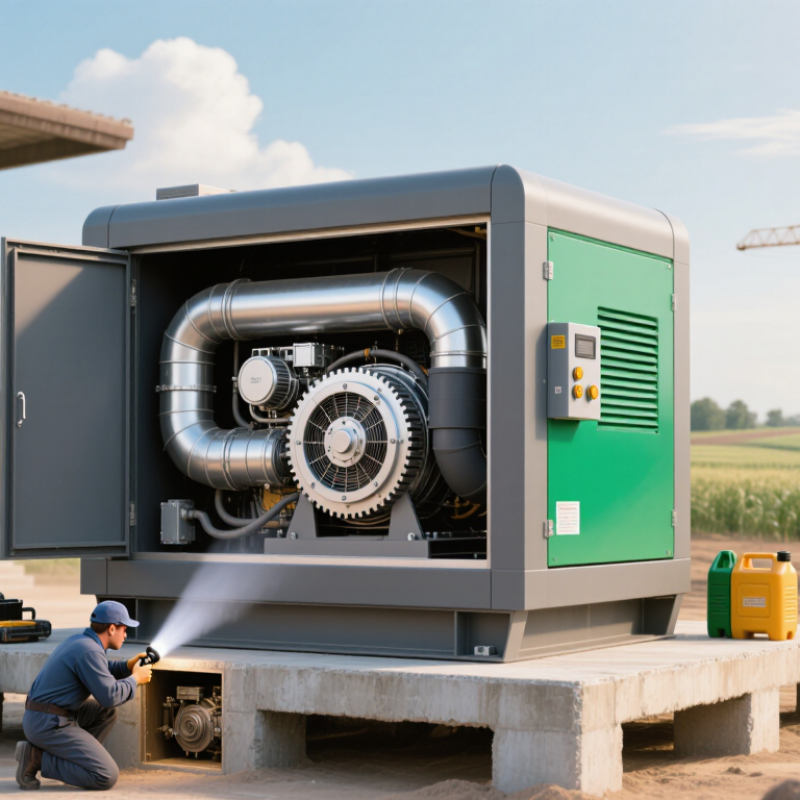
How to Choose Open Frame Generator Sets?

What an Open Frame Generator Set Is and How It Works

How to Choose Open Frame Generator Sets?

An open frame generator set is a power system built on a visible steel base. It usually includes a diesel or gasoline engine, alternator, fuel tank, radiator, and control panel. Unlike enclosed models, it has no weatherproof acoustic cabinet around these components. This design improves airflow and makes inspections easier. However, it also exposes the machine to rain, dust, and accidental contact.

During operation, fuel combustion moves the engine pistons and turns the crankshaft. The crankshaft drives the alternator, which produces electricity through electromagnetic induction. A voltage regulator helps maintain stable output as the electrical load changes. Engine speed controls frequency, so incorrect speed can damage sensitive equipment.

In practical installations, I check voltage, phase, frequency, and load type before choosing a set. A rough estimate is not enough. Starting motors may demand several times their running current.

Tips:

Match the generator to continuous and starting loads, not only the average demand.

Leave clear space around the radiator and exhaust. Use a suitable canopy or sheltered location when weather protection is needed.

Inspect oil, coolant, belts, terminals, and fuel quality on a fixed schedule.

Open frames are often easier to service, but they can be louder than expected. Noise and ventilation are easy to underestimate.

A properly sized transfer switch and trained electrician also reduce connection risks.

How to Assess Your Power Requirements and Operating Conditions

Choosing an open frame generator set starts with measured demand, not the largest rating available. List every load, including lights, pumps, heaters, tools, and control equipment. Record running watts and starting watts separately. Motors can briefly demand three to seven times their normal power. That surge may trip protection or stall a small generator.

Check voltage, phase, frequency, and the required operating duration. A site using sensitive controls may need stable voltage and frequency. Estimate the continuous load, then allow practical headroom for future equipment. A neat spreadsheet is not enough. Walk through the site and observe what starts together. I have seen a modest workshop overload its generator when a compressor and extraction fan started simultaneously.

Operating conditions can change the correct rating. High altitude, hot weather, and restricted airflow reduce available output. Dusty areas require thoughtful maintenance access and frequent filter checks. Outdoor installation also demands protection from rain, standing water, and unauthorized contact. Measure the installation space carefully. Open frame sets need generous ventilation and safe exhaust routing. Nearby workers may require a quieter enclosure or remote placement. Fuel quality, service intervals, transfer equipment, and emergency shutdown access also deserve attention. I sometimes allow too much reserve, but undersizing creates greater operational risk. Recheck the figures against actual site conditions before selecting the set.

How to Choose Open Frame Generator Sets? - How to Assess Your Power Requirements and Operating Conditions

Assessment Dimension Typical Data or Formula Example Evaluation Selection Guidance
Continuous Running Load Add the rated input power of all loads intended to operate continuously. Lighting: 4 kW; ventilation: 6 kW; pumps: 12 kW. Total: 22 kW. Choose a set whose prime rating comfortably exceeds the continuous load.
Starting and Transient Load Consider motor starting current, compressor inrush, and transformer energizing current. A motor with a 15 kW running load may require substantially higher power during direct-on-line starting. Check the generator’s motor-starting capability, voltage dip, and alternator transient response.
Required Generator Capacity Recommended capacity should cover running demand, starting demand, and a practical reserve. For a 22 kW operating load, a 30 kW class set may provide useful headroom if starting conditions are moderate. Avoid sizing only to the average load; verify the worst operating sequence.
Power Factor Apparent power (kVA) = Real power (kW) ÷ Power factor. At 22 kW and 0.8 power factor: 22 ÷ 0.8 = 27.5 kVA. Use both kW and kVA ratings when loads include motors, transformers, or variable-speed drives.
Load Balance For three-phase systems, distribute single-phase loads evenly across phases. A phase imbalance of more than a few percent can increase heating and reduce usable capacity. Review phase-by-phase current rather than relying only on total connected load.
Duty Profile Identify standby, prime, or continuous operation and record expected running hours. A construction site operating 8–12 hours per day has a different duty requirement from emergency standby use. Select the rating category that matches actual operating hours and load variability.
Altitude Higher altitude reduces air density and may require derating or special configuration. An installation above approximately 1,000 m should be checked against the engine and alternator derating curves. Obtain site-specific correction factors before finalizing generator size.
Ambient Temperature High temperatures can reduce cooling efficiency and engine air density. A hot outdoor location may require additional ventilation, a larger radiator, or output derating. Use the maximum expected ambient temperature, not the annual average.
Ventilation and Airflow Allow adequate intake air, radiator airflow, and exhaust discharge without recirculation. Restricted airflow can cause overheating, reduced output, and protective shutdowns. Keep the open frame set in a clean, well-ventilated area with sufficient clearance.
Fuel Availability and Runtime Runtime depends on fuel-tank capacity, load level, and fuel consumption rate. A set consuming 8 L/h with a 160 L usable tank has a theoretical runtime of about 20 hours. Plan refueling intervals, fuel storage, spill control, and low-fuel protection.
Noise and Site Location Assess sound pressure, operating hours, distance to occupied areas, and local limits. An open frame design is generally more exposed acoustically than an enclosed configuration. Use acoustic barriers or select an enclosed set if noise restrictions are significant.
Weather and Environmental Exposure Consider rain, dust, salt air, flooding risk, and corrosive atmospheres. Outdoor exposure may require a weather canopy, protective treatment, drainage, and additional filtration. Do not place an open frame generator directly in standing water or unprotected severe weather.
Electrical Compatibility Verify voltage, frequency, phase configuration, earthing, breaker rating, and transfer equipment. A 400/230 V, 50 Hz, three-phase installation is not automatically compatible with a 480/277 V, 60 Hz system. Match generator output to the site distribution system and applicable electrical codes.
Maintenance and Service Access Review oil changes, filter replacement, battery access, inspection intervals, and spare-parts availability. Open frame construction usually provides convenient access to major service points. Maintain clear working space and follow the engine and generator maintenance schedule.
Practical sizing reminder: Final selection should be based on the highest simultaneous running load, the largest starting event, site derating factors, electrical compatibility, and the required operating duty.

Which Engine, Alternator, and Fuel Features to Compare

Choosing an open frame generator set starts with the load profile, not the advertised kilowatt figure. ISO 8528-1 separates standby, prime, and continuous ratings. A set sized only for peak demand may operate inefficiently for long periods. Compare the engine’s rated speed, torque reserve, cooling method, and service intervals. A lower-speed engine can reduce noise and wear, but it may increase purchase cost. Small details matter.

The alternator deserves equal attention. Check rated voltage, frequency stability, insulation class, and short-circuit performance. IEC 60034-1 defines key requirements for rotating electrical machines, including insulation and temperature limits. Ask for test data at partial load, not only full load. In real installations, motors, pumps, and compressors create starting surges. I have seen buyers focus on continuous kW and overlook these brief demands. That mistake can cause nuisance shutdowns.

Fuel performance also needs practical comparison. The U.S. Energy Information Administration lists diesel at about 137,381 Btu per gallon, but actual consumption depends on load, temperature, and maintenance. Compare fuel burn at 25%, 50%, 75%, and 100% load. Check tank capacity, filtration, water separation, and cold-weather starting. A larger tank is not automatically better; stored fuel can degrade when turnover is poor. The International Energy Agency’s Electricity 2024 report highlights rising demand for reliable backup power, making efficiency and readiness increasingly important. Yet published figures are not enough. Request site-specific testing before final selection.

How to Choose the Right Generator Size and Performance Rating

How to Choose Open Frame Generator Sets?

Choosing an open frame generator set starts with the real electrical load, not the largest number on a brochure. List lighting, pumps, heaters, tools, and control equipment separately. Record their running watts and starting currents. Motors can briefly demand two to seven times their normal power. That surge may trip an undersized generator before it reaches full speed.

Small details matter.

Convert the total load into kilowatts and kilovolt-amperes when necessary. A generator rated in kVA also depends on its power factor. For example, 80 kW at a 0.8 power factor requires about 100 kVA. Keep normal operation near 70–80% of the rated capacity. This leaves room for motor starting and future equipment. Oversizing is not always safer. A lightly loaded diesel engine may run inefficiently and accumulate deposits.

Choose the performance rating according to operating conditions. Standby ratings suit emergency outages with limited annual use. Prime ratings fit temporary sites or frequent, variable operation. Continuous ratings suit steady loads over long periods. Check altitude, ambient temperature, humidity, fuel quality, and ventilation. Heat and thin air reduce output. Open frames also require a dry, secure, well-ventilated location, with suitable protection from dust and accidental contact.

Verify voltage, phase, frequency, connection method, noise limits, and maintenance access with a qualified technician. Manufacturer data and recognized electrical standards should support the final selection. A calculation can still be wrong if the load list is incomplete. Recheck actual demand after installation, because real equipment rarely behaves exactly like the estimate.

What to Check for Installation, Safety, Maintenance, and Support

Choosing an open frame generator set starts with the installation site. Measure the available space, service clearance, exhaust route, and fuel access before purchase. A level concrete base reduces vibration and frame stress. Keep air inlets away from dust, heat, and vehicle exhaust. According to ISO 8528-1, generator performance depends on defined operating conditions, including load, ambient temperature, and altitude. A simple site sketch often prevents expensive changes.

Safety checks must be practical, not decorative. Install a correctly rated transfer system, grounding arrangement, emergency stop, guards, and clearly marked isolation points. Exhaust gases require special attention; carbon monoxide can collect near doors, windows, or low roof areas. The Uptime Institute’s 2024 Annual Outage Analysis reported that power issues contributed to 54% of reported data-center outages. That figure makes testing essential. A quiet test run proves very little.

Maintenance planning should include fuel quality, coolant level, battery voltage, belts, filters, terminals, and alarm history. Exercise the set under a realistic load, not only at no-load conditions. Keep inspection records with dates, readings, and corrective actions. NFPA 110 provides widely used guidance for emergency and standby power systems. Yet standards cannot notice a cracked hose. Support also matters: request response times, technician coverage, spare-parts availability, and remote troubleshooting limits in writing. Factory acceptance data is useful, but it is not proof of site readiness. The uncomfortable question remains: who will respond at 2 a.m.?

How to Choose Open Frame Generator Sets

Use this checklist-weighted view to compare open-frame generator sets. Prioritize installation compatibility and safety first, then confirm maintenance access and dependable technical support before making a final selection.