China Top Shuttle Cart Manufacturers How to Choose?
Choosing a Shuttle Cart manufacturer in China takes more than comparing prices or browsing product photos. The right supplier should understand your load, travel distance, floor conditions, and production rhythm. A cart designed for smooth warehouse concrete may perform poorly on uneven floors or tight turns. Small details matter.
Start by defining the job. Record the maximum load, cart dimensions, aisle width, and required travel speed. Then ask manufacturers how they select motors, batteries, wheels, frames, and braking systems for those conditions. Clear technical answers are more useful than broad promises. Request drawings, specifications, and test records for the proposed configuration, not just a standard model sheet.
Supplier experience also deserves close review. Ask for relevant project examples, production capacity, quality-control steps, and support after delivery. If possible, inspect the factory or arrange a live video walkthrough. Check how the supplier handles spare parts, operator training, maintenance guidance, and warranty claims. These points affect daily uptime.
A polished brochure proves little. Compare response times and the consistency of answers across sales, engineering, and service teams. Confirm what is included in the quotation, such as controls, charging equipment, installation, and documentation. One thing is easy to miss: customization can add lead time and make replacement parts less standard. Ask for a realistic schedule and a written list of changes.
There may be no perfect manufacturer for every operation. A careful shortlist, supported by verifiable documents and practical questions, can reduce avoidable risk. Choose a partner that explains limitations as openly as capabilities.
Understanding Shuttle Cart Systems and Their Warehouse Applications
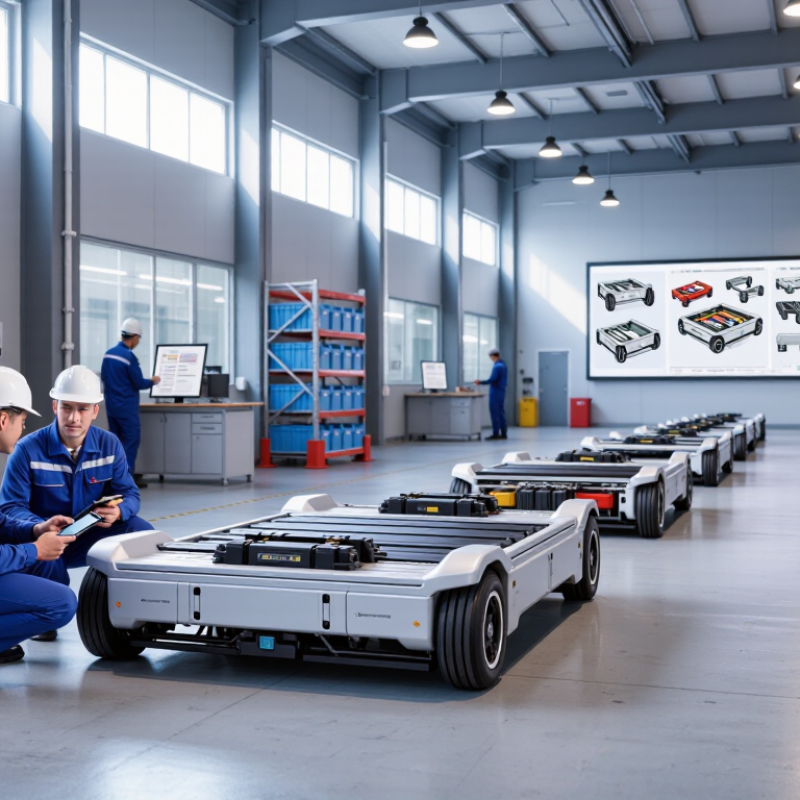
Shuttle cart systems move pallets or totes along fixed rails inside storage lanes. A lift transfers loads between levels, while control software assigns locations and retrieves inventory. They suit warehouses handling many similar items, including high-volume replenishment and batch picking. Deep lanes can use space efficiently, but access depends on the system’s layout and operating rules. The trade-off is real.
MHI’s 2024 Annual Industry Report found that 55% of surveyed organizations planned to increase supply-chain technology investment in 2024. That broader trend does not guarantee a shuttle system will pay off. Compare peak throughput, load dimensions, SKU turnover, and recovery procedures. Ask how the system behaves when a cart, lift, or network connection stops. A glossy capacity figure is not enough. Measure travel time on your own floor, including congestion at handoff points.
Tips: Map daily order patterns before choosing lane depth. Test a typical pallet and tote, not just the smallest load. Check maintenance access, spare-cart storage, and software integration. In cold or dusty areas, confirm operating limits. I have seen layout assumptions age quickly; leave room for change.
Mapping China's Shuttle Cart Manufacturer Landscape
Mapping China’s shuttle-cart manufacturers means looking beyond factory size. The market includes equipment makers, warehouse-system integrators, and component suppliers. Their capabilities differ. Some focus on cart mechanics and controls; others design the full system, including racking, conveyors, and warehouse software. Ask which parts are engineered in-house and which depend on subcontractors.
The International Federation of Robotics reported 276,288 industrial robot installations in China in 2023, out of 541,302 worldwide, in World Robotics 2024. That figure describes industrial robots, not shuttle carts. Still, it signals a broad automation supply base, not proof of shuttle-system expertise.
A useful supplier comparison should examine load capacity, aisle dimensions, retrieval speed, battery strategy, and fleet-control logic. Request test results under your own SKU mix, not just a clean demo. Small details matter.
Service depth deserves equal scrutiny. Ask for commissioning timelines, spare-parts locations, software-update procedures, and references for installations with similar storage density. Check how the system behaves when a cart stops midway or a sensor gets dusty. These questions expose practical differences. A gap remains: published, comparable data on China’s shuttle-cart output is limited, so independent verification matters. Pilot testing may reveal issues neither a brochure nor a factory tour makes obvious.
Comparing Product Range, Customization, and Technical Capabilities
When comparing shuttle cart manufacturers, start with the jobs the system must handle. Record pallet dimensions, load weights, aisle widths, and shifts per day. Then check whether the product range covers single-deep storage, multi-lane operation, and the required cart capacity. A broad range is useful only when its limits are clear.
Customization should solve a measured constraint, not simply add options. Ask how the cart accommodates existing rack tolerances, floor joints, barcode rules, and warehouse-control interfaces. Request drawings, interface notes, and a defined acceptance test before production. Small details matter. Dimensions on a drawing may differ from conditions around a real rack. That mismatch deserves discussion.
Technical capability shows in more than a specification sheet. Review drive and battery data, safety sensors, fault logs, maintenance access, and spare-part availability. Ask for commissioning steps and operator training, plus references from installations with similar loads and workflows. Ask for evidence. Response speed matters, but clear limits and honest service commitments matter more. A supplier may not answer every question perfectly; note the gaps and verify them in writing.
Assessing Quality Standards, Safety Features, and After-Sales Support
When comparing shuttle cart manufacturers, ask for evidence, not polished claims. Request a quality plan covering material traceability, weld inspection, dimensional checks, and rated-load testing. A quality-management system such as ISO 9001 helps standardize production controls, but it does not certify each cart’s performance. Review inspection records and test conditions. Details matter.
Safety deserves equal scrutiny. For automated driverless systems, verify design and validation against ISO 3691-4:2020, including speed control, stopping behavior, and protective devices. Walk the proposed route with the supplier. Check aisle clearance, transfer points, emergency stops, and sensor-fault responses. MHI’s 2024 Annual Industry Report found that 55% of surveyed organizations planned to adopt robotics and automation within five years. That signals growing interest, not proof that a system is safe or suitable.
After-sales support can decide whether a small fault becomes a shift-long delay. Ask for local technician coverage, response-time commitments, spare-parts availability, software support, and operator training in writing. Request a sample maintenance schedule and escalation process. A supplier may promise fast service, yet parts lead times can still be long. Check references from sites with similar loads and operating hours. One reference is not enough. Compare warranty exclusions, especially for batteries, wheels, and wear components.
Matching a Manufacturer to Your Project and Procurement Requirements
China Top Shuttle Cart Manufacturers: How to Choose?
Matching a manufacturer to your project starts with the warehouse, not the catalog. Map the route, load weight, aisle width, and peak hourly throughput. A cart that handles 1,000 kilograms on paper may still be unsuitable if your pallets vary in size or the floor has joints and slopes. Ask for the rated load under your actual operating conditions, plus stopping accuracy, transfer time, and recovery procedures after a fault.
The International Federation of Robotics reported 553,052 industrial robot installations worldwide in 2022, with Asia accounting for 73% of new installations. This figure reflects wider automation growth, not shuttle-cart demand. Still, it highlights why integration matters: confirm that the proposed cart can communicate with your warehouse control system and existing equipment. Request a site-specific test plan, interface documentation, spare-parts lead times, and technician response targets. Details matter.
Procurement should compare lifecycle cost, not just unit price. Include commissioning, software updates, batteries, maintenance, and operator training. Ask manufacturers for references from facilities with similar loads and shift patterns, then verify the details directly. A polished demonstration is useful, but it cannot show every bottleneck. One uncomfortable question helps: what happens when the cart stops at the busiest transfer point? The answer may expose gaps in service coverage or manual recovery plans. I would also leave room for uncertainty; forecasts rarely capture every change in SKU mix.
How to Choose a Shuttle Cart Manufacturer
Example procurement priority weights for matching a manufacturer to project requirements
These percentages are an illustrative scoring framework, not market survey results. Adjust them to your project’s load, throughput, facility layout, safety and integration needs, service expectations, and total cost of ownership. Compare shortlisted manufacturers using verified specifications, layout reviews, and written quotations.
