304 Stainless Plate is a widely specified material for equipment exposed to moisture, heat, cleaning chemicals, and daily wear. Its nominal composition includes approximately 18% chromium and 8% nickel, creating a stable passive surface that resists many common corrosive environments. It is not corrosion-proof. Chlorides, stagnant water, and harsh acids can still cause staining or pitting.
Demand reflects stainless steel’s broad industrial role. The International Stainless Steel Forum reported global crude stainless steel production of about 58.4 million tonnes in 2023, showing the scale of the material’s supply chain. Within that market, 304 remains a practical choice for food-processing frames, commercial kitchens, storage tanks, architectural panels, pharmaceutical equipment, and fabricated machinery. Its formability and weldability reduce fabrication difficulty. Its clean surface also supports frequent washing.
The real question is not simply, “Is 304 the strongest option?” It is whether the grade matches the service conditions. ASTM A240 commonly covers stainless plate for pressure-vessel and general applications, while EN 10088-2 defines comparable European product requirements. Engineers still check thickness, surface finish, temperature, weld design, and chloride exposure before approval. A polished plate may look ideal beside a kitchen sink, yet a coastal structure may require 316 stainless steel instead. That distinction matters.
Small details matter.
A plate used near salt spray needs more careful specification than one installed indoors. Reliable buyers should request mill certificates, heat numbers, dimensional tolerances, and corrosion-related documentation. Industry guidance helps, but field experience remains essential. Misjudging the environment can turn a reasonable purchase into an expensive replacement.
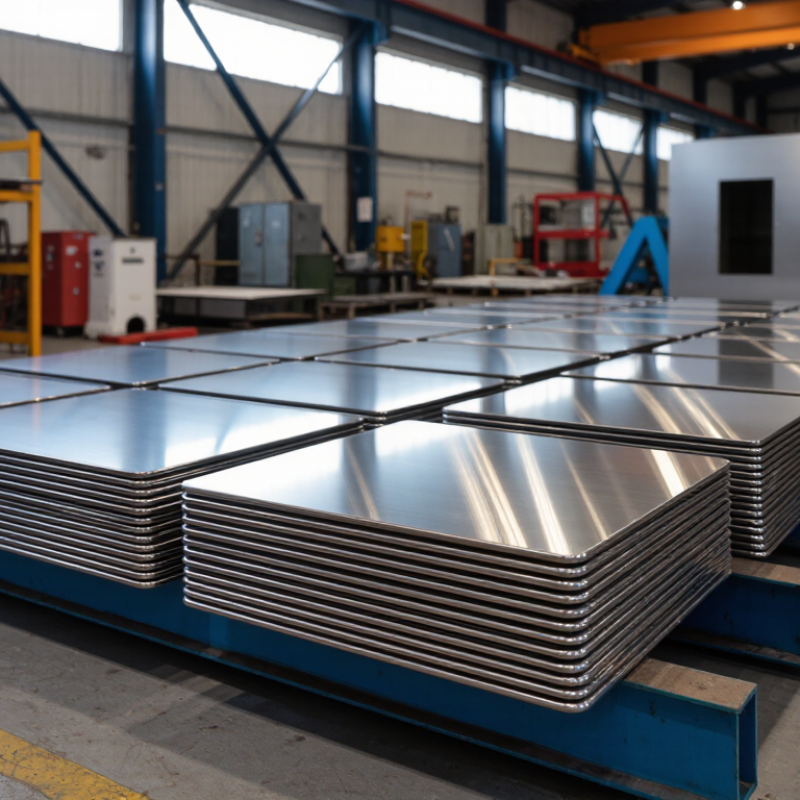
What Is 304 Stainless Plate Used For?
304 stainless plate is widely selected because its chemistry balances corrosion resistance, formability, and cost. Its core composition contains about 18% chromium and 8–10.5% nickel, as defined by ASTM A240/A240M requirements for stainless plate. Chromium forms a thin passive film on the surface. Nickel helps stabilize the austenitic structure and improves ductility during bending, rolling, and fabrication.
This combination supports food-processing tanks, commercial kitchen panels, architectural cladding, pharmaceutical equipment, and chemical containers. It also performs well around moisture, steam, and many mild organic chemicals. The World Stainless Association reported approximately 60 million tonnes of stainless steel crude production in 2023, reflecting its broad industrial use. However, total production does not prove suitability for every service condition.
304 plate is not universally corrosion-proof. Chloride exposure can cause pitting, especially near seawater, road salt, or poorly cleaned welds. A technical review should consider temperature, concentration, surface finish, and fabrication history. Weld discoloration may reduce surface protection if it remains untreated. That detail is often overlooked. In demanding chloride environments, engineers may specify a higher-alloy grade instead. Even then, the decision should follow test data and the applicable material standard, not a simple assumption that “stainless” means maintenance-free.
| Category | Dimension or Property | Typical or Specified Data | Practical Relevance |
|---|---|---|---|
| Material Identity | Common designation | Type 304 austenitic stainless steel | One of the most widely used general-purpose stainless steels for plate, sheet, and fabricated equipment. |
| Chemical Composition | Chromium (Cr) | 18.0–20.0% by mass | Creates a passive chromium-oxide film that provides general atmospheric and oxidizing-environment corrosion resistance. |
| Chemical Composition | Nickel (Ni) | 8.0–10.5% by mass | Stabilizes the austenitic structure and supports ductility, toughness, and formability. |
| Chemical Composition | Carbon (C) | Maximum 0.08% by mass | Controls the standard Type 304 carbon limit; 304L is preferred when reduced carbon is needed for welded applications. |
| Chemical Composition | Manganese (Mn) | Maximum 2.00% by mass | Supports manufacturing and deoxidation requirements within the specified composition range. |
| Chemical Composition | Silicon (Si) | Maximum 1.00% by mass | Used as a deoxidizing element and controlled to maintain the intended material properties. |
| Chemical Composition | Phosphorus (P) | Maximum 0.045% by mass | Limited because excessive phosphorus can negatively affect ductility and fabrication performance. |
| Chemical Composition | Sulfur (S) | Maximum 0.030% by mass | Controlled to balance machinability with weldability and corrosion performance. |
| Mechanical Properties | Minimum tensile strength | Approximately 515 MPa, depending on the applicable product specification | Provides adequate strength for tanks, panels, structural fabrications, and process equipment. |
| Mechanical Properties | Minimum yield strength | Approximately 205 MPa at 0.2% offset, depending on the applicable product specification | Helps engineers evaluate resistance to permanent deformation during service. |
| Mechanical Properties | Elongation | Typically about 40% minimum in standard plate specifications | Supports bending, rolling, deep drawing, and other forming operations. |
| Physical Properties | Density | Approximately 8.0 g/cm³ | Useful for estimating component weight, shipping weight, and support requirements. |
| Physical Properties | Melting range | Approximately 1,400–1,450°C | Relevant to welding, heat treatment, and high-temperature fabrication processes. |
| Fabrication | Weldability | Generally good with common fusion-welding processes | Suitable for welded vessels, frames, piping supports, food-processing equipment, and architectural assemblies. |
| Fabrication | Formability | Good ductility and cold-forming capability | Can be bent, rolled, pressed, and fabricated into covers, guards, bins, housings, and equipment panels. |
| Surface and Finish | Common plate finishes | Hot-rolled, pickled, bright-annealed, brushed, or polished finishes | Finish selection depends on appearance, cleanability, friction, reflectivity, and service conditions. |
| Typical Use | Food and beverage equipment | Processing tables, tanks, hoppers, conveyors, sinks, and sanitary panels | Its smooth, cleanable surface and resistance to many food-related environments make it widely suitable. |
| Typical Use | Kitchen and catering equipment | Countertops, backsplashes, cabinets, preparation surfaces, and appliance components | Offers a durable, hygienic, and visually consistent surface for commercial and residential environments. |
| Typical Use | Chemical and process equipment | Storage tanks, housings, platforms, ducts, and non-severe process-contact components | Performs well in many mildly corrosive and oxidizing environments, subject to chemical compatibility checks. |
| Typical Use | Architectural and construction applications | Wall panels, elevator interiors, trim, roofing components, and protective cladding | Combines appearance, durability, formability, and resistance to normal indoor and outdoor atmospheric exposure. |
| Typical Use | Pharmaceutical and laboratory equipment | Work surfaces, cabinets, vessels, enclosures, and equipment frames | Its cleanable surface and corrosion resistance are useful where sanitation and maintenance are important. |
| Typical Use | Automotive and transportation components | Decorative panels, exhaust-related shields, brackets, and fabricated covers | Selected where corrosion resistance, appearance, and fabrication performance are more important than maximum strength. |
| Limitations | Chloride exposure | Susceptible to pitting and crevice corrosion in concentrated chlorides or seawater | For severe chloride environments, a higher-alloy stainless steel may be more appropriate after engineering review. |
| Limitations | Welded sections | Standard 304 may be vulnerable to sensitization in certain thermal cycles | 304L or an approved stabilized grade is often considered for extensive welding or corrosive service after welding. |
| Selection Guidance | Applicable product standard | Commonly specified under standards such as ASTM A240/A240M; requirements vary by region and product form | Always verify the purchase specification, thickness tolerance, surface finish, mechanical requirements, and test certificates. |
