Contact us

Top 10 Green Sand Casting Manufacturers Worldwide

Green Sand Casting remains a practical choice for manufacturers producing iron and steel components at scale. The process uses a compacted mixture of sand, clay, and water to form a mold around a pattern. Its appeal is tangible: flexible tooling, reusable molding sand, and production options ranging from small batches to high volumes. But results depend on control. Moisture, sand strength, mold permeability, and pouring temperature can all affect surface finish and dimensional consistency.

Casting researcher John Campbell’s first rule for reliable castings is concise: “Avoid turbulence.” That principle matters when comparing the Top 10 Green Sand Casting Manufacturers Worldwide. A supplier’s equipment list alone cannot show how carefully it manages mold preparation, metal flow, inspection, and delivery. Ask for evidence: process capabilities, material specifications, sample inspection records, and clear communication about tolerances. A polished website proves little. Nor does a large plant automatically suit every project.

This overview introduces manufacturers to consider, not a universal ranking of quality. Company capabilities and service locations can change, while published information may omit important process details. Treat each profile as a starting point. Compare suppliers against the part’s geometry, alloy, expected volume, and quality requirements, then verify critical claims directly. The best fit may not be the biggest name. Sometimes the less obvious choice deserves a closer look.
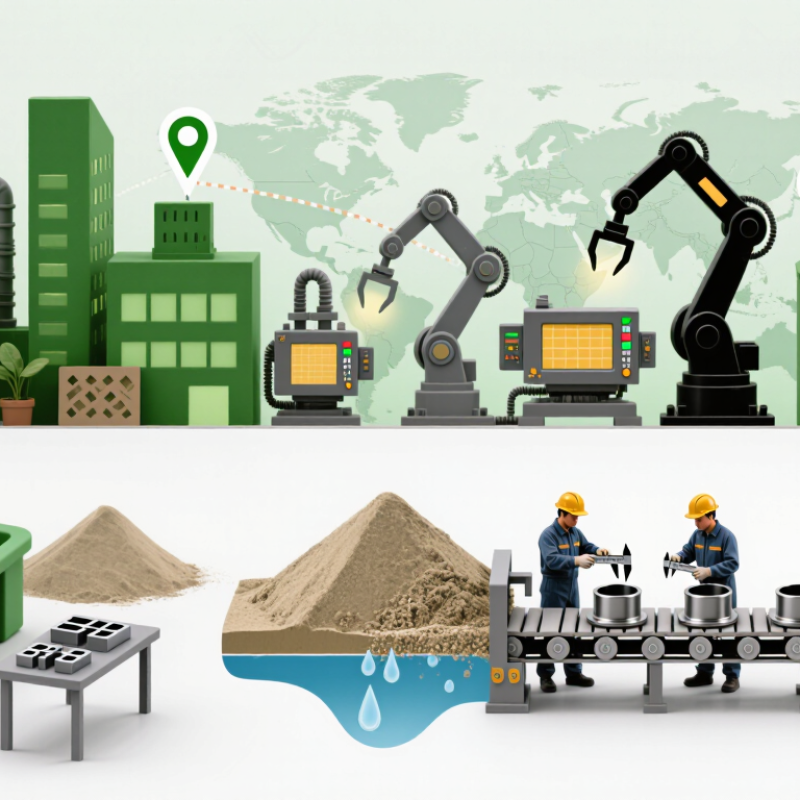
Top 10 Green Sand Casting Manufacturers Worldwide

Green Sand Casting: Process, Materials, and Applications

Green sand casting uses a reusable mixture of sand, clay, water, and sometimes carbon-based additives to form a mold. “Green” means the mold is damp and uncured, not that it contains plant material. A pattern shapes the cavity, while the mold is packed in two sections called the cope and drag. The pattern is removed, and molten metal is poured into the prepared cavity.

After the metal cools, workers break the mold and separate the casting from the sand. Much of the sand can be screened and reused, though its moisture and clay content need regular control. Small details matter. Too much moisture may create gas defects, while uneven compaction can lead to rough surfaces or dimensional variation. The process is practical, but it is not flawless; that variability deserves attention during production.

Green sand casting is commonly used for iron and nonferrous metal parts, including pump housings, machine bases, and pipe fittings. It suits a wide range of part sizes and can be economical for repeat production. However, castings may need machining where close tolerances or smooth sealing surfaces are required. Engineers typically consider the alloy, pattern design, wall thickness, and finishing needs before selecting the process.

Top 10 Green Sand Casting Manufacturers Worldwide - Green Sand Casting: Process, Materials, and Applications

This table summarizes ten common green sand foundry capabilities and applications. It is an industry overview, not a ranked directory of manufacturers; no company or brand names are listed.

No. Capability or process area Typical materials and method Common applications Key production considerations
1 Green sand preparation Reclaimed or new silica sand is commonly combined with clay binder, water, and controlled additives. Molds for a broad range of ferrous castings. Moisture, compactability, permeability, and sand temperature affect mold behavior and casting quality.
2 Pattern and mold making Reusable patterns shape the mold cavity; cope and drag sections are compacted around the pattern. Repeat production of components with consistent external geometry. Pattern design accounts for shrinkage, draft, machining stock, and parting lines.
3 Gray iron casting Gray iron, whose graphite is present mainly as flakes, is poured into prepared sand molds. Machine bases, housings, brake components, and pipe fittings. Alloy composition, pouring conditions, section thickness, and cooling influence mechanical properties.
4 Ductile iron casting Ductile iron is treated to form predominantly spheroidal graphite; green sand is one of several mold options. Valve bodies, pump components, automotive parts, and infrastructure components. Treatment control, inoculation, feeding design, and metallurgical testing are important.
5 Core making and internal passages Cores, often made with chemically bonded sand, create internal cavities and passages in the casting. Engine blocks, pump bodies, manifolds, and other hollow components. Core strength, location, venting, and removal after pouring must be considered in the design.
6 Gating and riser design Runners, gates, and risers guide molten metal into the mold and help feed solidification shrinkage. Castings requiring controlled filling and soundness in critical sections. Design aims to limit turbulence, inclusions, misruns, and shrinkage-related defects.
7 Mechanized high-volume molding Automated molding lines compact prepared sand and support repeatable mold production. Recurring automotive, machinery, and general industrial components. Line capacity, pattern changes, mold consistency, and coordinated melting and pouring affect throughput.
8 Jobbing and lower-volume production Green sand molding can be adapted to varied patterns and production runs, subject to foundry equipment and tooling. Replacement parts, industrial equipment, and custom cast components. Tooling, setup, inspection, and batch size influence lead time and unit cost.
9 Shakeout and sand reclamation After cooling, castings are separated from the mold; reclaimed sand may be conditioned and reused. Foundries seeking efficient sand use and controlled waste streams. Reclamation systems, dust control, sand testing, and local environmental requirements vary by facility.
10 Finishing and quality inspection Castings may undergo fettling, shot blasting, machining, dimensional checks, and material testing as specified. Components supplied for transport, energy, construction, agriculture, and industrial machinery. Inspection plans depend on drawing requirements, material specification, and end-use risk.

How to Evaluate Green Sand Casting Manufacturers

Evaluating a green sand casting manufacturer starts with process evidence, not a polished capability list. Ask how the foundry controls moisture, compactability, permeability, and sand temperature during each shift. Small changes matter. Request recent test records and ask who responds when readings drift. Credible answers should connect measurements to specific corrective actions.

Review the supplier’s experience with parts similar to yours. Ask for examples involving thin walls, cores, tight dimensional tolerances, or demanding surface finishes. Inspect representative castings for cold shuts, inclusions, uneven surfaces, and machining allowance. Clarify how patterns are maintained and how revisions are approved. Scrap rates need context: a low figure means little if difficult parts are excluded. Numbers alone can mislead.

Compare inspection methods, production capacity, and delivery performance against your expected order volume. Confirm that material and process records can be traced to individual batches. Request sample inspection reports, not just a quality certificate. If possible, visit the foundry and observe sand testing, mold preparation, and pouring practices. Notice whether operators can explain the controls in plain language. A site visit may not reveal every weakness, but it often raises useful questions. Even a capable supplier may have gaps; discuss them openly before approving production.

Worldwide Industry Landscape and Regional Strengths

Green sand casting strengths reflect supplier networks, labor skills, energy costs, and proximity to customers. Modern Casting’s 57th Census of World Casting Production reported 109.8 million tonnes of castings worldwide in 2022. China produced 51.8 million tonnes, India 14.2 million, and the United States 10.6 million. These figures cover all casting processes, not green sand alone. The distinction matters.

Asia benefits from large manufacturing ecosystems and high production volumes. In North America, foundries often serve established automotive, machinery, and agricultural markets. European suppliers tend to compete through process control and close integration with industrial customers. These are broad patterns, not guarantees. A country’s output does not reveal each foundry’s capabilities.

Logistics also shape regional competitiveness. The World Bank’s 2023 Logistics Performance Index scored Germany 4.1, China 3.7, and India 3.4 out of five. That context can help explain delivery and sourcing differences, but it cannot measure casting quality. Not a clean ranking. Buyers should verify mold consistency, scrap rates, and lead times directly. Data can hide local variation. That is the part worth questioning.

Profiles of 10 Leading Green Sand Casting Manufacturers

These ten profiles highlight different strengths found among leading green sand casting manufacturers worldwide. One specializes in high-volume automotive housings, where repeatable dimensions and steady mold cycles matter. Another focuses on pump and valve bodies, often producing thick sections that need careful cooling. A third serves agricultural equipment makers with rugged iron castings built for rough operating conditions. A fourth handles complex shapes, using close coordination between pattern design and foundry-floor teams.

A fifth profile represents a regional foundry offering flexible production runs. Short runs matter. A sixth emphasizes automated molding lines, which can improve consistency but still require skilled process checks. A seventh combines patternmaking and casting, helping teams adjust designs before full production. An eighth focuses on custom industrial components, where drawings may change during development. A ninth profile centers on material and process control, tracking sand moisture, temperature, and casting defects. The tenth serves customers needing machining alongside castings, reducing handoffs between suppliers.

Comparing these manufacturers means looking beyond output claims. Ask about alloy options, inspection methods, typical lead times, and how they handle rejected parts. A clean sample is useful, but it does not prove stable production. Green sand casting also depends on variables such as sand condition and mold compaction. Even experienced teams can face inconsistencies; that is worth discussing openly.

Green Sand Casting: Typical Mold-Mixture Composition

Green sand molds are made from sand, clay, and water. The chart shows a representative formulation, not a manufacturer-specific measurement; actual mixtures vary by foundry and casting requirements.

Technology, Sustainability, and Market Trends in Green Sand Casting

Green sand casting is changing through better process control, practical automation, and closer attention to resource use. At a well-run molding line, operators monitor sand moisture, temperature, and compactability because small shifts can cause weak molds or rough surfaces. Digital sensors can flag changes sooner, while simulation software helps engineers spot likely filling and cooling problems before production begins. The tools are useful, not magic. Small details matter.

Manufacturers worldwide are also trying to reuse more molding sand and reduce waste. Reclaimed sand can lower demand for new material, but its quality must be checked; excess fines or changing clay content can affect mold performance. Dust collection, water management, and efficient melting equipment matter too. A “greener” process is not defined by recycled sand alone. Energy sources and local operating conditions also shape its footprint.

Market demand favors reliable quality, shorter lead times, and clearer production data. Buyers may compare suppliers on testing capability, process consistency, technical support, and the ability to handle changing order volumes. Automation can improve repeatability, yet it requires skilled people to interpret readings and maintain equipment. That part is easy to overlook. No single technology suits every foundry, and some sustainability improvements bring costs or trade-offs that deserve honest review.