What is a Regulated Power Supply and How Does It Work?
A Regulated Power Supply is essential in numerous electronic applications. It ensures stable voltage and current, vital for sensitive equipment. According to industry reports, over 70% of electronic devices require a regulated power source to function optimally. Without it, devices can malfunction or suffer damage.
Many industries depend on regulated power supplies. For instance, telecommunications and healthcare rely heavily on consistent power to ensure system reliability. However, not all power supplies are created equal. Some might fail under extreme conditions or fluctuate significantly, leading to performance issues.
Choosing the right regulated power supply can be challenging. It requires understanding the device's power needs and environmental conditions. The evolving technology landscape further complicates these choices. With the rise of compact devices, the demand for efficient power supplies grows. Reflection on these challenges can lead to better decisions in selecting the right system.
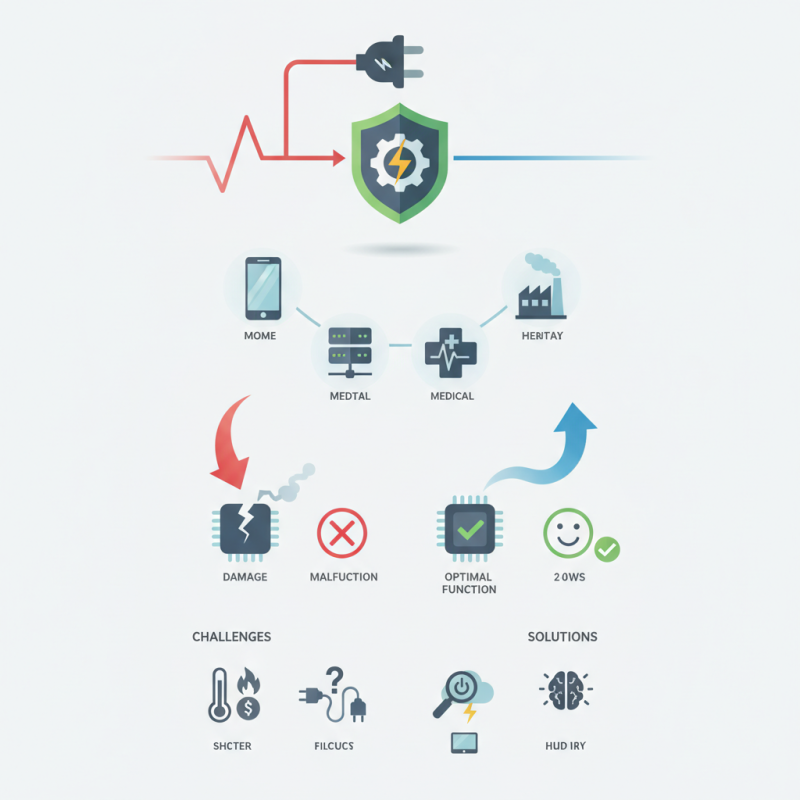
What is a Regulated Power Supply?
A regulated power supply is a device that provides a constant voltage output. It is essential in many electronic applications. Unlike unregulated supplies, they maintain output despite input variations. This consistency is vital for sensitive equipment such as computers and medical devices.
The importance of regulated power supplies is highlighted in a recent industry report. It stated that approximately 70% of electronics failures are due to unreliable power sources. This emphasizes the necessity for stable voltages in complex systems. Regulated supplies often use feedback mechanisms to adjust output. This means they can react to changes quickly.
However, not all regulated supplies perform equally. Some may struggle under heavy loads. There are cases where adjustment circuits fail, leading to output fluctuations. Such issues warrant a closer inspection of design and component selection. Understanding these nuances is key to improving reliability in power supply systems.
Key Components of a Regulated Power Supply
A regulated power supply is crucial in many electronic applications. Key components ensure stable voltage and current. Understanding these components is vital for designers.
The transformer steps down voltage to a manageable level. It's the first line of defense in voltage regulation. Next, diodes convert AC to DC. This process is essential for most electronics. Capacitors then filter out noise, smoothing the output. They help maintain a steady voltage level. However, if not properly sized, capacitors can lead to issues. Reports indicate that incorrect filtering can cause fluctuations in output voltage.
Regulators come next, providing precise voltage control. Linear regulators are simple but generate heat. Switching regulators, however, are more efficient. They can achieve over 90% efficiency in some applications. Despite their benefits, they introduce complexity. Improper configuration can result in instability. Many designs overlook this aspect. In fact, approximately 30% of power supply failures are due to regulation issues. Addressing these potential pitfalls is key for reliable performance.
How a Regulated Power Supply Works: A Step-by-Step Process
A regulated power supply ensures a stable output voltage, regardless of variations in input voltage or load. This device primarily utilizes a feedback loop to adjust its output based on real-time conditions. When the voltage drops, the feedback mechanism detects the change and compensates for it. Similarly, if there is an overload, the supply limits the output to protect the circuit.
The components involved in this process often include transformers, rectifiers, and voltage regulators. For example, in a typical setup, a transformer steps down the voltage. Then, rectifiers convert AC power to DC. Finally, voltage regulators fine-tune the output to the desired level. According to industry reports, an effective regulated power supply can minimize voltage fluctuations to within 1% of its nominal value, ensuring equipment operates efficiently and safely.
However, challenges exist. Designing a regulated power supply can be complex. Many designers overlook heat dissipation, which can lead to component failure. Furthermore, noise in the power supply line can affect performance. Regular testing and validation are crucial to address these issues. Reports indicate that nearly 30% of power supply failures stem from inadequate thermal management.
Voltage Regulation in Power Supplies
This chart illustrates the performance metrics of a typical regulated power supply. The input voltage is 12V, which is regulated down to a stable output voltage of 5V, accommodating a maximum load of 2A with an efficiency of 85%.
Types of Regulated Power Supplies and Their Applications
Regulated power supplies are crucial in many sectors. They provide stable voltage and current levels, vital for electronic devices. Various types of regulated power supplies serve distinct applications. Switching power supplies, linear power supplies, and low-dropout regulators each have unique benefits and drawbacks.
Switching power supplies are popular in industrial settings. They can achieve efficiencies above 90%. This is significant since energy efficiency reduces operational costs. However, they may introduce electrical noise, impacting sensitive equipment. Linear power supplies offer excellent noise performance but are less efficient. They are ideal for audio equipment where clarity is paramount.
Low-dropout regulators are essential in battery-operated devices. They maintain output stability even with minimal voltage drop. Research shows growth in the market for regulated power supplies, projected to reach $39 billion by 2027. However, challenges like heat dissipation and size constraints remain. Engineers must carefully consider these factors for optimal designs. Balancing efficiency and functionality is a common struggle in the field.
Advantages of Using Regulated Power Supplies in Electronics
Regulated power supplies offer significant advantages for modern electronic devices. According to industry reports, about 70% of electronic faults stem from power supply issues. This highlights the critical importance of stable power sources. Regulated power supplies maintain consistent voltage and current levels, reducing the risk of damage to sensitive components.
One notable benefit is enhanced performance. Many devices operate best within specific voltage ranges. Inconsistent power can lead to erratic functionality or complete failure. A regulated supply mitigates these issues effectively. In fact, studies show that using regulated supplies can increase device longevity by up to 30%. This is vital for sectors like aerospace and telecommunications, where reliability is paramount.
However, not all regulated supplies are flawless. Some designs may introduce noise, affecting sensitive applications. Additionally, the initial cost can be higher compared to unregulated options. Users should weigh the pros and cons. While the benefits are substantial, careful consideration of application requirements is essential. Balancing performance, cost, and reliability leads to better outcomes in electronic design.
What is a Regulated Power Supply and How Does It Work?
| Feature | Description |
| Definition | A regulated power supply provides a constant output voltage or current irrespective of variations in input voltage or load conditions. |
| Types | Linear and Switching power supplies are the two main types of regulated power supplies. |
| Applications | Used in consumer electronics, industrial machinery, and telecommunication devices. |
| Advantages | Provides stable output, protects against surges, enhances reliability and longevity of devices. |
| Efficiency | Switching power supplies are generally more efficient compared to linear power supplies. |