Contact us

How to Source Aluminum Tube Extrusions in 2026?

Sourcing Aluminum Tube Extrusions in 2026 requires more than comparing online prices. Buyers must connect engineering requirements with verified production capability. A tube may look acceptable in a sample photo, yet fail after cutting, bending, or anodizing. Small details matter.

Start with a clear specification sheet. Include the alloy, temper, outside diameter, wall thickness, length, surface finish, and permitted tolerances. For example, 6063 aluminum often suits architectural applications, while 6061 may support higher mechanical demands. Ask for dimensional inspection reports and current material certificates. Confirm whether testing comes from the mill or an independent laboratory.

Supplier evaluation should include practical evidence. Review extrusion press capacity, die-making experience, quality controls, packaging methods, and export records. A serious manufacturer should explain how it controls wall variation and protects surfaces during transport. Request a trial order before committing to large volumes. Inspect the tubes under normal factory lighting, not only polished product images.

No sourcing plan is flawless. Forecasts change. Lead times slip. Even experienced buyers can overlook die charges or packaging waste. That is why reliable procurement combines technical review, sample approval, commercial comparison, and continuous communication. In 2026, successful buyers will not simply choose the lowest quotation. They will select suppliers that document their process, respond clearly, and improve when problems appear. That standard protects product performance, project schedules, and long-term purchasing decisions.
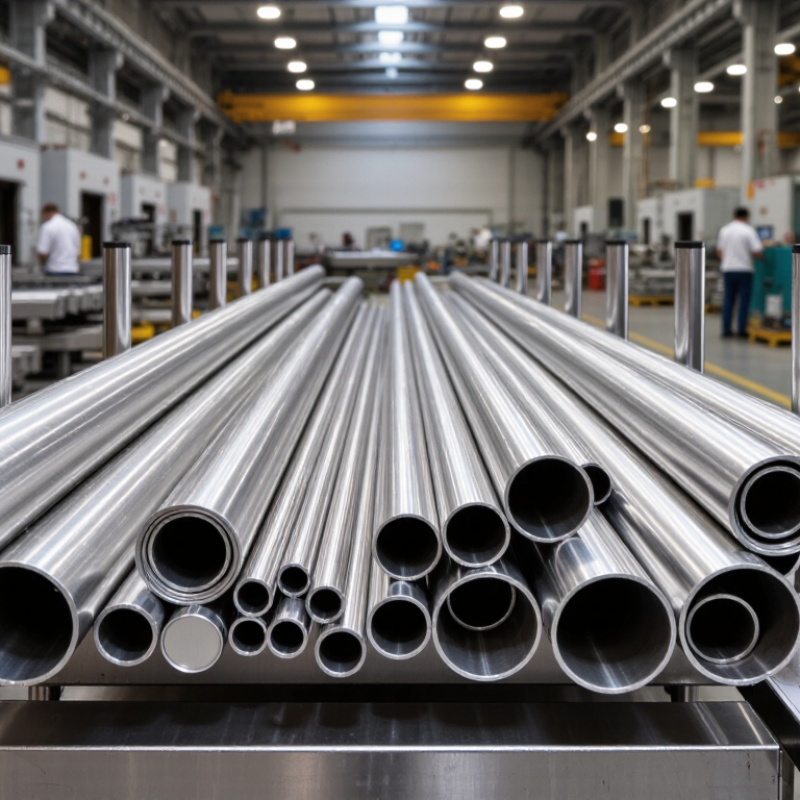
How to Source Aluminum Tube Extrusions in 2026?

Define Tube Requirements: 6063 or 6061 Alloy, Temper, Size, and Wall

When sourcing aluminum tube extrusions in 2026, begin with a drawing, not a supplier catalog. Define alloy, temper, outside dimensions, inside dimensions, and wall thickness. A vague request often produces a tube that looks right but fails during bending or welding. I have seen this happen. Small assumptions become expensive tooling changes.

6063 is commonly selected for clean surface finish, smooth extrusion, and moderate structural loading. It suits architectural frames, guards, and visible tubing. 6061 offers higher strength for demanding mechanical loads, but it can be less forgiving during forming. Choose the alloy from actual loads, joining methods, and exposure conditions. Do not select it by habit. Temper changes performance too. T5 and T6 are not interchangeable, especially when yield strength and bending behavior matter. Ask for material certificates. Verify the stated temper through independent testing when risk is high.

Size needs more than a nominal diameter. State outside diameter, inside diameter, wall thickness, length, straightness, corner radius, and dimensional tolerances. For example, a 40 mm tube with a 2 mm wall behaves differently from one with a 3 mm wall. Specify whether the wall must remain uniform after extrusion. That detail is often missed. Also confirm cut-end squareness, surface requirements, and allowable scratches. I would leave room for review, because early drawings are rarely perfect. A trial extrusion can reveal distortion, die marks, or unexpected springback before full production.

Verify Specifications Against ASTM B221, EN 755, and ISO 6362 Tolerances

How to Source Aluminum Tube Extrusions in 2026?

Verify Specifications Against ASTM B221, EN 755, and ISO 6362 Tolerances

A reliable sourcing process starts with a controlled drawing, not a supplier quotation. State the alloy, temper, tube shape, wall thickness, outside dimensions, and required length. Then identify the governing edition of ASTM B221, EN 755, or ISO 6362. These standards are related, but they are not interchangeable. Each may define dimensional limits differently for diameter, wall thickness, straightness, twist, corner radius, and cut length.

Ask the extruder to confirm every tolerance in writing. For example, a 50 mm square tube with a 2 mm wall needs more than an “approximate” size. Request the applicable tolerance table, measurement method, inspection frequency, and material certificate. Experienced buyers also verify whether tolerances apply before or after aging, cutting, or surface treatment. I have seen acceptable-looking samples fail because the inspection method was never agreed. That mistake is avoidable, though it still happens.

Tips: Mark critical dimensions directly on the drawing. Separate functional tolerances from cosmetic requirements. Check several locations along each tube, especially near the beginning and end of a production run. Review first-article samples before approving volume production. Keep photos, inspection records, and deviations together. If a supplier cites a standard without naming the exact clause or tolerance class, ask for clarification. Small wording gaps can create large fit-up problems.

How to Source Aluminum Tube Extrusions in 2026?

Verify nominal dimensions and permissible variation against ASTM B221, EN 755, and ISO 6362 tolerance tables before approving a supplier.

Reference comparison for a 50 mm outside-diameter, 2 mm wall-thickness extruded aluminum tube. The values represent typical screening checkpoints and must be confirmed against the applicable alloy, temper, product shape, manufacturing route, and dimensional table in the specified standard.

Screen Mills by Press Capacity, MOQ, Die Charges, and ISO 9001 Status

How to Source Aluminum Tube Extrusions in 2026?

A capable mill should match press capacity to your tube’s diameter, wall thickness, alloy, and length. Larger presses are not automatically better. An oversized press may increase setup costs and reduce scheduling flexibility. Ask for recent production examples with similar tolerances. Request details on straightness, surface finish, and dimensional inspection methods.

Minimum order quantity affects cash flow more than many buyers expect. Some mills quote low MOQs but add handling fees, trial costs, or expensive packaging. Compare the full delivered cost. Die charges also need careful review. Confirm whether the tooling remains yours, how revisions are priced, and whether storage is included. Ask for a written die drawing before approval. Small details matter.

ISO 9001 status is useful, but the certificate alone proves little. Check the certificate’s scope, issuing body, expiration date, and covered production site. Ask how nonconforming tubes are isolated and corrected. I have seen technically strong suppliers lose control during finishing or packing. That risk is easy to miss. Request sample inspection records and a clear corrective-action process. Do not rely on polished sales language. Ask for proof. A mill that answers precisely is usually easier to manage when tolerances, MOQ, or delivery plans change.

How to Source Aluminum Tube Extrusions in 2026? - Screen Mills by Press Capacity, MOQ, Die Charges, and ISO 9001 Status

The table below provides an anonymized 2026 screening framework based on common commercial practices for aluminum tube extrusion suppliers. MOQ, tooling fees, lead times, and certification status should be confirmed in writing before placing an order.

Screening Profile Typical Press Capacity Suitable Tube Size Range Typical MOQ Typical Die Charge Indicative Tooling Lead Time ISO 9001 Status to Require Best Use Case
Small-profile extrusion mill 600–1,000 metric tons Outer diameter up to approximately 50 mm; wall thickness typically 1.0–5.0 mm 300–800 kg per profile US$300–900 per die 2–4 weeks Valid ISO 9001 certificate covering extrusion and quality control; certificate scope and expiry date must be verified Prototypes, replacement parts, small commercial batches, and standard round tubes
Medium-profile extrusion mill 1,000–1,800 metric tons Outer diameter approximately 25–100 mm; wall thickness typically 1.2–8.0 mm 500–1,500 kg per profile US$500–1,500 per die 3–5 weeks Current ISO 9001 certification, documented inspection plan, and traceable batch records General industrial tubing, furniture, heat-transfer components, and moderate-volume programs
Large-profile extrusion mill 1,800–3,000 metric tons Outer diameter approximately 60–180 mm; wall thickness typically 2.0–12.0 mm 1,000–3,000 kg per profile US$900–2,500 per die 4–7 weeks ISO 9001 certificate plus material certificates, dimensional capability data, and nonconformance records on request Structural tubes, transportation components, machine frames, and repeat production orders
Heavy-duty extrusion mill 3,000–5,000 metric tons Outer diameter approximately 100–250 mm; wall thickness typically 3.0–20.0 mm 2,000–5,000 kg per profile US$1,500–4,000 per die 5–8 weeks ISO 9001 certification with defined process controls, calibration records, and incoming-material traceability Large hollow sections, heavy-wall tubing, rail and transport applications, and high-volume supply
Extra-large industrial extrusion mill 5,000 metric tons or above Large or complex hollow sections; practical limits depend on alloy, profile circumference, and wall ratio 3,000–10,000+ kg per profile US$3,000–8,000+ per die 6–10 weeks ISO 9001 certification, formal supplier-quality procedures, full heat-lot traceability, and customer audit access Large structural tubes, energy equipment, major transportation programs, and long-term contracts

Recommended Supplier-Screening Checks

Evaluation Dimension Minimum Evidence to Request Commercial Decision Rule
Press and profile capability Press tonnage, maximum billet diameter, maximum profile dimensions, and examples of comparable tube sections Reject suppliers whose press capacity cannot support the requested profile with adequate process margin
MOQ and yield Minimum saleable weight, minimum order value, setup scrap policy, and cut-length yield assumptions Compare MOQ against annual demand and calculate the landed cost per usable kilogram
Die ownership and charges Die material, die-life estimate, repair policy, ownership terms, storage period, and replacement pricing Confirm whether the die charge is refundable, amortized, or separately invoiced
ISO 9001 status Certificate number, issuing certification body, scope, issue date, expiry date, and audit status Treat certification as a qualification requirement, not as proof of dimensional capability or product conformity
Product conformity Alloy and temper designation, dimensional inspection report, surface requirements, and material test certificate Approve only after first-article samples meet the agreed drawing and inspection criteria
Delivery reliability Tooling schedule, sample date, mass-production lead time, monthly capacity, and contingency plan Use written milestone dates and define remedies for late samples or missed production windows

Note: Price ranges are indicative screening values in U.S. dollars and can vary with alloy, profile complexity, die steel, tolerances, surface finish, order volume, tooling ownership, and country of production. ISO 9001 status should always be independently validated against the current certificate.

Compare 2026 Pricing Using LME Aluminum Benchmarks, Freight, and Scrap Rates

How to Source Aluminum Tube Extrusions in 2026?

A practical 2026 quotation should separate metal, conversion, freight, and finishing costs. LME aluminum benchmarks provide a useful reference, not a final purchase price. Regional premiums, billet availability, and currency movements can change the delivered figure. Ask suppliers to state the benchmark date and pricing formula clearly.

For example, calculate the metal portion from the quoted alloy weight per meter. Then add extrusion conversion, die charges, cutting, packaging, and surface treatment. Freight needs its own line.

A full truck may reduce unit costs, while a small shipment can make freight surprisingly expensive. Compare prices using the same delivery term and destination.

Scrap rates also affect the real cost. Clean extrusion offcuts usually have better recovery value than mixed or contaminated material. Confirm whether the supplier credits your account or keeps the scrap value. Request recent mill certificates, dimensional inspection records, and lot traceability. Experience shows that a low price can hide weak tolerances or inconsistent wall thickness.

Check the math twice. I would also test two or three volume scenarios, such as 500, 2,000, and 10,000 kilograms. The cheapest option is not always the safest. A supplier should explain assumptions, lead times, and possible surcharges in writing. Some comparisons remain imperfect because freight and scrap markets can move before approval. That uncertainty deserves a visible allowance, not a quiet guess.

Approve Samples Through Dimensional, Surface, Strength, and Anodizing Tests

In 2026, sourcing aluminum tube extrusions requires more than comparing quotations. Ask each supplier for alloy certificates, extrusion capability, tolerance records, and sample traceability. A reliable sample should match the approved drawing, not merely look similar in a product photo. Record the billet batch, extrusion date, and inspection equipment used. Small details matter.

Approve samples through four controlled checks. Measure outside diameter, wall thickness, straightness, and cut length with calibrated tools. Compare several points along the tube, because one accurate end can hide process variation. Inspect scratches, die lines, dents, and stains under consistent lighting. Test strength against the required alloy and temper, using documented tensile or hardness results. For anodizing, verify color consistency, coating thickness, adhesion, and sealing quality. Request photographs and raw data, not only a pass statement. No test plan is perfect. Review weak results honestly.

Tips: Use a written inspection sheet before ordering production quantities. Define acceptable limits with the engineering team, since decorative and structural tubes need different criteria. Keep retained samples for future comparison. Ask suppliers how they control die wear and bath chemistry. If an anodized sample looks excellent but dimensional data is missing, pause approval. A polished surface cannot correct a thin wall or poor straightness. Recheck critical dimensions after cutting, because stress relief may change tube geometry.