Choosing a Crushing Machine is not simply a matter of selecting the largest frame or highest motor rating. Feed size, rock hardness, moisture, abrasiveness, capacity, and product shape all influence the correct choice. A jaw crusher may handle large blasted rock effectively, while a cone crusher can produce a more consistent, cubical aggregate. Conditions change quickly.
F.C. Bond, a respected comminution researcher, stated, “The work input is proportional to the new crack tip length produced.” This principle explains why crushing efficiency depends on fracture behavior, not power alone. It also reminds engineers to examine energy use, liner wear, and product quality together. One measurement is never enough.
This guide examines ten widely used types of Crushing Machine, including jaw, gyratory, cone, impact, hammer, roll, toothed roll, vertical shaft impact, compound, and mobile crushers. Each machine has a practical role. A primary jaw crusher may sit beside a dusty quarry face, reducing uneven boulders before conveyor transfer. A vertical shaft impact crusher may shape manufactured sand during the final stage.
The word “top” is imperfect. There is no universal winner. A machine that performs well on dry limestone may struggle with sticky clay or frozen feed. Site records, laboratory tests, and experienced maintenance teams should support the final decision. Small details matter, sometimes painfully. This overview offers a reliable starting point, but real projects still require verified specifications, trial results, and honest reflection on operating limits.
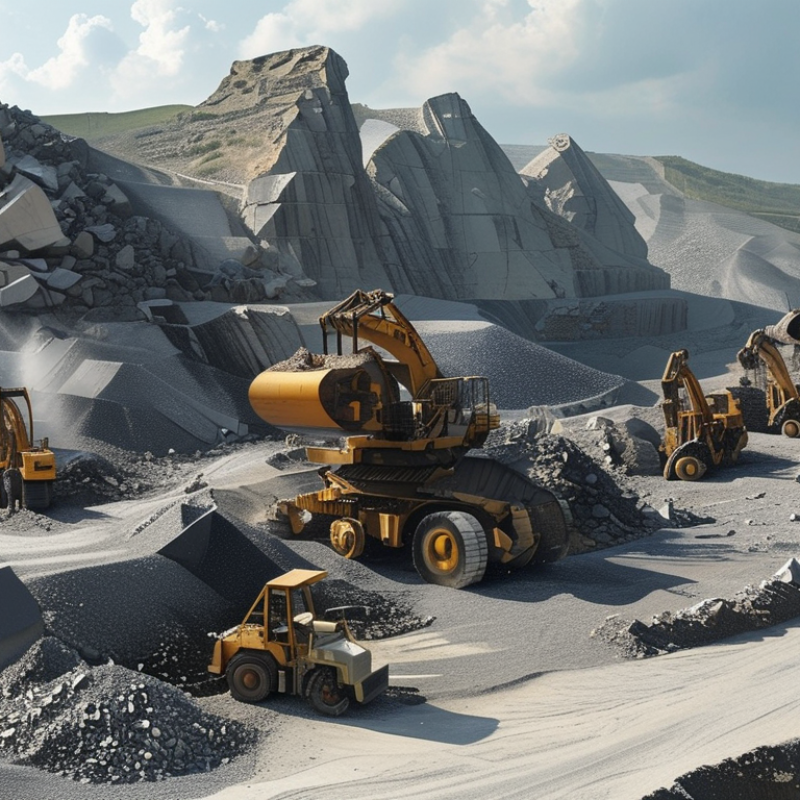
Crushing machines reduce rock into controlled sizes for aggregates, mining, recycling, and infrastructure projects. Their classification usually follows three practical questions: how they break material, where they work in the process, and whether they are fixed or mobile. The ten common types include jaw, gyratory, cone, impact, hammer, roll, toothed-roll, sizer, vertical-shaft impact, and mobile crushers.
Jaw and gyratory crushers usually handle primary crushing. Jaw units compress rock between a fixed plate and a moving plate. Gyratory machines use a rotating mantle inside a concave chamber. Cone crushers commonly serve secondary or tertiary stages, producing a more uniform product. Impact and hammer crushers use repeated blows, while roll and sizer machines compress material between rotating surfaces. Vertical-shaft impact crushers reshape particles through high-speed impact. Mobile crushers add transport flexibility, but mobility describes the installation, not the crushing principle.
Scale matters. The U.S. Geological Survey’s Mineral Commodity Summaries 2025 estimated U.S. crushed-stone production at about 1.5 billion metric tons in 2024. That volume explains why classification cannot rely on machine names alone. Feed size, rock abrasiveness, moisture, and required gradation often matter more. A hard, abrasive rock may punish impact equipment. Wet feed may reduce screening efficiency. The boundary between categories is not always clean. In field practice, selecting a crusher still involves compromise, measurement, and occasional rethinking.
| No. | Crusher Type | Primary Crushing Mechanism | Typical Feed Material | Typical Application Stage | Typical Product Shape | Main Strengths | Common Limitations |
|---|---|---|---|---|---|---|---|
| 1 | Jaw Crusher | Compression between a fixed jaw and a movable jaw | Hard rock, ores, concrete, and demolition material | Primary | Coarse, angular | Simple design, strong feed acceptance, and reliable performance with hard materials | Usually produces a less cubical product and may generate noticeable vibration |
| 2 | Gyratory Crusher | Continuous compression between a gyrating mantle and a concave surface | Very large, hard, and abrasive run-of-mine ore | Primary | Coarse, angular | High capacity, continuous crushing, and efficient handling of large feed sizes | Large footprint, high capital cost, and complex installation requirements |
| 3 | Cone Crusher | Compression and interparticle crushing between a mantle and concave | Hard rock, ores, and abrasive aggregates | Secondary or tertiary | Relatively cubical | Good reduction ratio, consistent product sizing, and effective operation in closed circuits | Requires controlled feed; sticky or wet materials can cause operating problems |
| 4 | Horizontal Shaft Impact Crusher | High-speed impact from rotating blow bars against impact aprons | Limestone, recycled concrete, asphalt, and moderately abrasive rock | Primary, secondary, or tertiary | Cubical, well-shaped | High reduction ratio and excellent shaping of aggregate particles | Wear rates increase with highly abrasive feed, and dust or noise control may be needed |
| 5 | Vertical Shaft Impact Crusher | Material-on-material or material-on-metal impact at high rotor speed | Aggregates, manufactured sand feed, and relatively friable rock | Tertiary or quaternary | Highly cubical, fine | Produces well-shaped particles and can improve the quality of manufactured sand | Generally needs well-controlled feed and can have high energy and wear-part costs |
| 6 | Hammer Crusher | Repeated impact from pivoted or fixed hammers against breaker plates or screens | Soft to medium-hard limestone, gypsum, coal, and other brittle materials | Primary or secondary | Fine to medium, often angular | High reduction ratio and effective size control for brittle feed | Rapid wear with abrasive materials and reduced effectiveness with wet, sticky feed |
| 7 | Single-Roll Crusher | Compression and shear between a rotating roll and a crushing plate | Coal, lignite, shale, soft rock, and other low-to-medium-strength materials | Primary or secondary | Coarse to medium | Compact design, controlled product size, and relatively low fines generation | Not suitable for very hard, highly abrasive feed or large unbreakable objects |
| 8 | Double-Roll Crusher | Compression, shear, and limited interparticle crushing between two counter-rotating rolls | Coal, salt, potash, limestone, and other friable materials | Primary or secondary | Uniform, medium to coarse | Low over-crushing, predictable product size, and relatively low fines production | Limited reduction ratio and unsuitable for extremely hard or highly abrasive rock |
| 9 | Toothed Roll Crusher | Shearing, tearing, and compression by toothed rolls | Run-of-mine coal, lignite, clay, and other soft, sticky, or layered materials | Primary | Coarse, controlled | Handles large feed and sticky materials with relatively low fines generation | Tooth wear can be significant, and performance is generally unsuitable for very hard rock |
| 10 | Mineral Sizer | Low-speed compression, shearing, and sizing between toothed shafts | Coal, overburden, soft rock, clay-containing materials, and mixed mineral feed | Primary or secondary | Coarse, closely controlled | High throughput, low-speed operation, and effective handling of wet or sticky feed | Usually not the first choice for extremely hard, competent, or highly abrasive rock |
Classification note: Crushing machines are commonly classified by the dominant force used—compression, impact, shear, or a combination of these forces—and by their position in the process, such as primary, secondary, tertiary, or quaternary crushing. Actual capacity, feed size, product size, and energy consumption depend on material properties and operating conditions.