China has become a significant production base for automotive 3D printing, supporting prototypes, tooling, spare parts, and selected end-use components. Its supplier landscape includes service bureaus, equipment manufacturers, material developers, and integrated production partners. Yet a polished website does not prove manufacturing capability.
Terry Wohlers, a respected additive manufacturing consultant, once stated, “Additive manufacturing is not a replacement for traditional manufacturing; it is a complement.” That distinction matters in automotive production. A supplier may print a lightweight dashboard bracket quickly, but the part still needs dimensional inspection, thermal testing, surface finishing, and reliable batch records. Speed alone is not enough.
This guide examines leading China automotive 3D printing suppliers through practical criteria. These include machine capability, material options, production volume, tolerances, post-processing, quality systems, and engineering support. It also considers whether suppliers can provide traceability from powder or filament to finished component. Details matter. A metal part may look accurate under workshop lighting but fail after repeated vibration and heat cycles.
Some evaluations remain imperfect. Public supplier data can be incomplete, and published tolerances may not reflect every production condition. Buyers should request samples, audit facilities, review certificates, and test parts independently. That takes time.
It prevents expensive surprises.
The companies discussed here are not ranked by marketing visibility alone. Their relevance depends on application fit, technical transparency, delivery reliability, and experience with automotive requirements. For manufacturers seeking dependable automotive 3D printing partners, careful verification remains more valuable than impressive claims.
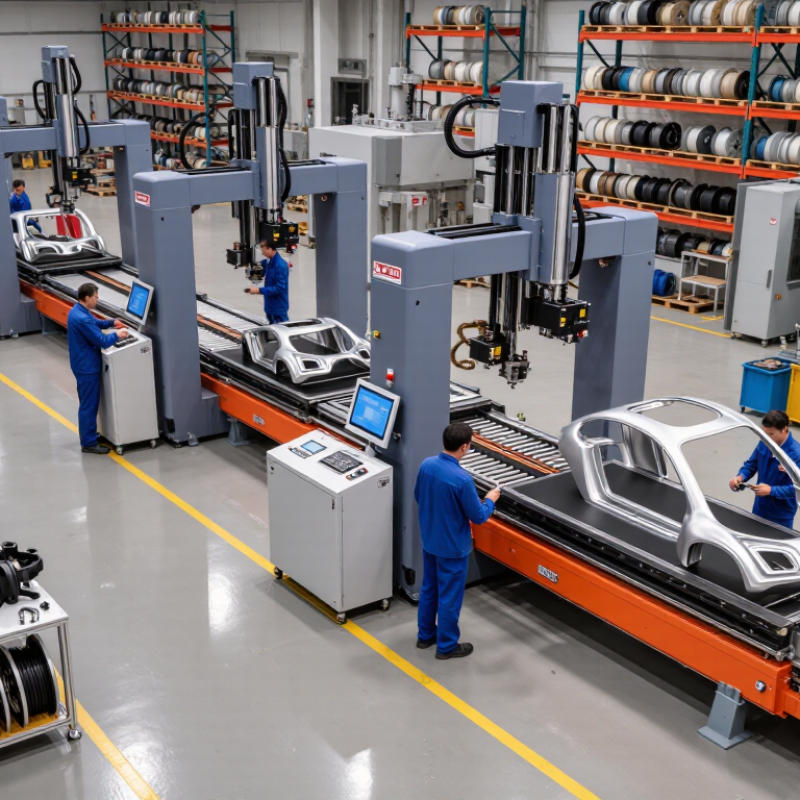
Automotive 3D printing uses digital designs to create parts layer by layer. In China, it supports vehicle development, tooling, repair, and limited production. Engineers can print a dashboard bracket in hours, rather than wait weeks for a metal mold. This shorter cycle helps teams test fit, weight, airflow, and assembly more frequently.
The technology matters because Chinese vehicle makers face fast product cycles and demanding customization needs. Qualified suppliers provide design optimization, industrial printers, material guidance, and post-processing. They may work with nylon, resin, aluminum, or high-performance polymers, depending on heat, vibration, and load requirements. A reliable supplier should document material batches, machine settings, dimensional results, and inspection methods. Traceability matters.
The benefits are practical. A lightweight bracket can reduce mass, while a redesigned cooling duct may improve airflow around a battery system. However, printing is not magic. A smooth prototype can hide weak layer bonding or poor heat resistance. Some projects still move too quickly from testing to production. Engineers need repeated validation, including fatigue, temperature, vibration, and real assembly checks. Cost estimates also deserve scrutiny, because labor, finishing, failed builds, and quality control can change the final price. The strongest Chinese suppliers are not simply fast; they explain limitations clearly and help customers improve the design.
China’s expanding automotive and new energy vehicle output increases demand for rapid prototyping, lightweight components, tooling, customized fixtures, and low-volume production. These applications are key reasons automotive 3D printing is becoming strategically important in China.
Source: China Association of Automobile Manufacturers (CAAM), annual vehicle production statistics, 2020–2024. Values are shown in millions of vehicles.
Review the supplier’s process controls carefully. Check whether materials receive batch-level traceability from storage through final inspection. Confirm their printers, post-processing equipment, and measurement tools match your project requirements. Clear quality procedures should cover powder handling, resin storage, build monitoring, and defect management. Ask for relevant certifications and audit records, not only presentation slides. A polished factory tour proves little.
Communication also affects technical reliability. Evaluate how engineers handle tolerance changes, support removal, warping risks, and design-for-additive-manufacturing decisions. Request a small trial order before approving larger production. Compare lead times against actual delivery records. Protect drawings through a clear confidentiality agreement and controlled file access. Export documents, material declarations, and testing data should be prepared accurately. Some suppliers answer quickly but overlook one critical tolerance. That is easy to miss. Keep a written review after every sample, including failures and unclear assumptions. A supplier willing to discuss defects openly may be more dependable than one promising perfect results.
China’s leading automotive 3D printing suppliers are not defined by one machine alone. They stand out through metal powder-bed fusion, industrial polymer printing, and reliable production support. According to the Wohlers Report 2024, the global additive manufacturing market reached $20.035 billion in 2023, growing 11.1% year over year. This growth reflects stronger demand for lightweight parts, tooling, and rapid development. Chinese suppliers increasingly serve these needs with large-format systems, domestically produced materials, and localized maintenance. The ranking is not fixed. Capability can differ sharply between laboratories and factories.
Automotive buyers should examine more than print speed. A capable supplier should provide dimensional inspection, powder traceability, heat-treatment records, and repeatable test results. ISO/ASTM 52900 terminology helps teams compare processes clearly. The China automotive market also creates demanding conditions, including high-volume production and short design cycles. Suppliers using topology optimization can reduce brackets or cooling components without sacrificing practical strength. Yet a lighter part may complicate repairs or recycling. That trade-off deserves honest review, not marketing language. Real experience still matters.
Tips: Request sample parts with thin walls, mounting holes, and curved channels. Review five repeated builds, not one successful prototype. Ask for tensile data from the same material batch. Confirm whether service engineers can visit your plant. A low quotation may hide qualification costs. Think beyond the first print.
China’s automotive 3D printing suppliers produce parts from polymers, metals, and composite materials. The 2024 Wohlers Report valued the global additive manufacturing industry at $20.035 billion in 2023, showing strong industrial demand.
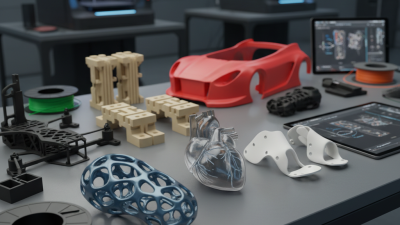
Selective laser sintering commonly uses PA12, PA11, and glass-filled nylon. These materials suit air ducts, dashboard prototypes, battery covers, and lightweight interior brackets. Polyurethane-like powders can create flexible seals and protective covers. Resin printing offers fine detail for lamps, buttons, vents, and small design models. However, resin parts may age poorly under heat and ultraviolet exposure.
Metal suppliers often process aluminum, stainless steel, titanium, and nickel alloys. These materials support engine brackets, cooling channels, exhaust prototypes, suspension components, and tooling inserts. Carbon-fiber reinforced polymers can reduce fixture weight while keeping useful stiffness. Some suppliers also print ceramic components, although automotive adoption remains narrower.
Practical buyers should request tensile data, thermal testing, dimensional reports, and batch traceability. ISO/ASTM 52900 terminology helps compare processes consistently. A printed prototype is not automatically a qualified vehicle part. The weak point is repeatability. Powder refresh rates, chamber temperature, and post-processing can change results. Suppliers with in-house scanning and inspection can identify warped edges, blocked channels, or uneven surfaces before assembly. That matters. According to the 2024 Wohlers Report, growth does not remove the need for validation; production success still depends on process control, not impressive samples alone.
When selecting a Chinese supplier for an automotive 3D printing project, judge process control before price. A polished website proves very little. Ask for a factory video, equipment list, calibration records, and recent inspection reports. Confirm whether the supplier prints prototypes, tooling, or production parts. These uses require different machines, materials, and validation plans. Request a sample made with the same material and layer settings. Small tests matter. I have seen attractive samples hide weak internal structures and inconsistent surface finishing.
Technical fit should guide your shortlist. Discuss dimensional tolerances, heat exposure, vibration, chemical contact, and expected service life. Ask how engineers manage warping, support removal, porosity, and post-processing. Reliable suppliers explain limits clearly instead of promising every result. Review their quality system, traceability, measurement equipment, and corrective-action records. For regulated vehicle programs, verify applicable local and international requirements with your own compliance team. Do not rely on a generic certificate.
Communication can decide the project. Use drawings with revision numbers, material specifications, acceptance criteria, and delivery milestones. Run a paid pilot before approving large quantities. Check packaging, labeling, inspection data, and response times during that pilot. Protect design files through written confidentiality and access controls. I would also compare two suppliers, even when one appears cheaper. My earlier mistake was trusting fast replies too quickly. Factory capacity, engineering depth, and honest problem reporting deserve equal weight.
| Evaluation Dimension | Suggested Weight | Relevant Benchmark or Requirement | Evidence to Request from a Chinese Supplier | Automotive Project Significance |
|---|---|---|---|---|
| Application and Process Fit | 15% | The process should match the use case: polymer printing for prototypes and low-load parts; metal powder-bed fusion, directed-energy deposition, or binder jetting for suitable metal applications. | Process description, sample parts, material-process qualification records, and examples of comparable automotive geometries. | Prevents a supplier from recommending a process that cannot meet the required strength, heat resistance, surface quality, or production volume. |
| Dimensional Accuracy and Repeatability | 15% | Accuracy depends on process, part size, geometry, orientation, material, and post-processing. Metal powder-bed fusion commonly requires machining or finishing on critical interfaces. | Inspection reports, calibrated measurement equipment, capability studies, GD&T inspection results, and documented acceptance tolerances. | Critical mounting points, sealing surfaces, bearing seats, and interfaces must be validated rather than judged only by visual appearance. |
| Material Selection and Traceability | 12% | Material choice should reflect operating temperature, chemical exposure, fatigue, impact, weight, corrosion resistance, and regulatory requirements. | Material certificates, powder or filament batch records, certificates of analysis, storage controls, and traceability from raw material to finished part. | Traceable materials are essential for engineering validation, failure analysis, repeat orders, and safety-related applications. |
| Mechanical and Thermal Performance | 12% | Mechanical properties are affected by build direction, density, porosity, heat treatment, infill, and post-processing. Test conditions must be defined before comparison. | Tensile, compression, fatigue, impact, hardness, heat-deflection, or thermal-cycling data produced under recognized test methods where applicable. | Helps confirm whether a prototype or production part can withstand vibration, load cycles, heat, and service-environment exposure. |
| Build Size and Production Capacity | 10% | The supplier must demonstrate sufficient build volume, machine availability, operator capacity, and post-processing resources for the required batch size. | Machine specifications, current utilization, monthly capacity estimate, production schedule, equipment maintenance records, and backup-machine plan. | A technically capable supplier may still fail if it cannot maintain delivery dates during prototype iterations or ramp-up production. |
| Post-Processing Capability | 10% | Relevant operations may include support removal, heat treatment, stress relief, machining, bead blasting, polishing, coating, dyeing, or sealing. | Post-processing flow charts, surface-roughness results, machining tolerance records, and samples showing the final specified finish. | Final properties and fit often depend as much on post-processing as on the printing step itself. |
| Quality Management and Inspection | 10% | A controlled quality system should cover incoming materials, machine parameters, in-process checks, final inspection, nonconformance handling, and corrective actions. | Quality-system certificate, inspection plan, calibration records, first-article report, nonconformance procedure, and sample certificate of conformity. | Documented controls reduce variation between prototype batches and support customer or regulatory audits. |
| Automotive Compliance Readiness | 6% | The supplier should understand applicable customer-specific requirements, restricted substances, product safety controls, and documentation expectations. | Compliance declaration, restricted-substance information, process-control documents, audit history, and readiness to support customer quality requirements. | Compliance preparation becomes increasingly important when parts move from concept validation toward vehicle-level approval. |
| Lead Time and Communication | 5% | A quotation should clearly state design review time, printing time, post-processing time, inspection time, packaging, and shipping assumptions. | Detailed quotation, project schedule, engineering-change process, named technical contact, response-time commitment, and escalation procedure. | Fast and accurate communication is critical when automotive designs undergo multiple engineering revisions. |
| Cost Transparency and Total Cost | 3% | The total price should distinguish printing, material, support removal, heat treatment, machining, inspection, packaging, freight, duties, and tooling where applicable. | Itemized quotation, payment terms, minimum order conditions, tooling ownership terms, shipping basis, and pricing for design revisions. | The lowest unit price may not be the lowest project cost if rework, inspection, logistics, or engineering changes are excluded. |
| Intellectual Property and Data Security | 2% | The supplier should protect CAD files, drawings, test data, process parameters, and proprietary design features throughout quotation, production, and storage. | Confidentiality agreement, access-control policy, data-retention policy, file-transfer method, and written ownership terms for tooling and manufactured parts. | Protects product designs and reduces commercial risk when outsourcing sensitive automotive components. |
| Total Selection Score | 100% | Score each supplier from 1 to 5 for every dimension, multiply by the suggested weight, and confirm all critical technical requirements before final approval. | ||
Note: Performance ranges and acceptance criteria should be confirmed for the selected material, machine, part geometry, build orientation, and post-processing route. Supplier capability should be validated with project-specific samples and inspection records.