Contact us

What Are the Top Loss in Weight Feeder Types in 2026?

In 2026, choosing a Loss in weight feeder is less about selecting the most advanced model and more about matching equipment to the material. A fine powder that bridges above a small hopper behaves differently from free-flowing pellets dropping through a wide outlet. Those differences affect refill interruptions, dosing stability, and line performance. Small details matter.

This guide compares the main feeder types used in production: single-screw, twin-screw, vibratory, and specialty designs. It considers material flow, required feed rates, accuracy needs, cleaning access, and integration with downstream equipment. A feeder that handles pellets reliably may struggle with a cohesive powder. A twin-screw unit can improve control for difficult materials, but it may add cleaning and maintenance demands. There is no universal winner.

For a reliable expert quotation, a named source and original reference are needed; none was supplied here, so no quotation is attributed. That distinction matters. Buyers should verify performance claims against test data using their own material, operating range, and refill conditions. Look closely at what happens when the hopper empties. Watch the discharge. Check whether the feeder recovers smoothly after refill. Even a polished specification sheet can leave practical questions unanswered. This comparison offers a grounded starting point, not a substitute for trials with the actual process material.
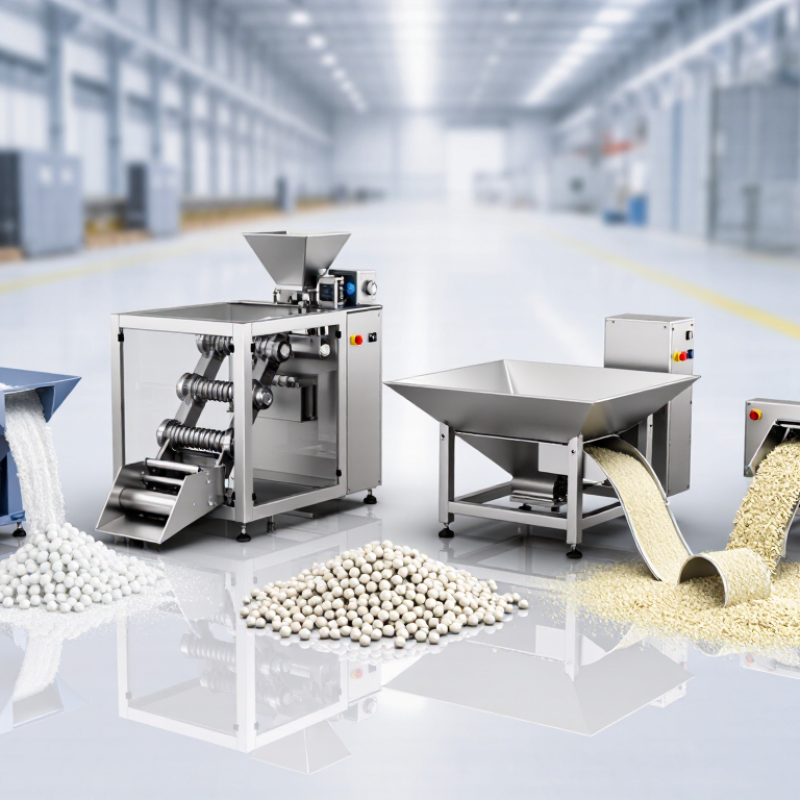
What Are the Top Loss in Weight Feeder Types in 2026?

What Is a Loss-in-Weight Feeder?

A loss-in-weight feeder is a gravimetric system that meters material by tracking the weight lost from its supply hopper. A load cell measures the hopper and its contents continuously. The controller compares successive readings, calculates the mass flow rate, and adjusts a screw, belt, or other discharge device to maintain the target feed rate. That is the core. Unlike volumetric feeders, it responds to changes in bulk density, so a fluffy powder and a compacted batch can be fed at the same mass rate.

For a simple example, a hopper losing 10 kilograms in five minutes delivers an average of 2 kilograms per minute. The number is illustrative, not a guaranteed accuracy figure. FDA’s 2004 Process Analytical Technology guidance describes timely measurement and process control as ways to improve process understanding. That principle helps explain why feeder performance depends on more than the scale: vibration, bridging, refill cycles, and material buildup can all disturb readings. Small drift matters. In practice, engineers check calibration and observe the actual material during startup, then tune the feeder under normal operating conditions. One limitation deserves attention: refill events temporarily add weight, so the controller must compensate without masking a real feed-rate change.

How Does a Loss-in-Weight Feeder Measure and Control Material Flow?

A loss-in-weight feeder controls material flow by weighing its hopper and tracking how quickly its weight falls. Load cells beneath the hopper send continuous readings to a controller. As material leaves through a screw, belt, or vibratory tray, the controller calculates the discharge rate and compares it with the target. The difference matters. If the feeder is delivering too slowly, the controller can increase the drive speed; if too quickly, it can reduce it.

The system works best when material moves steadily and the weighing frame is protected from vibration, drafts, and contact with nearby equipment. Even a flexible connection can affect readings if it pulls on the hopper. During refill, incoming material temporarily masks weight loss, so many feeders switch to a short volumetric mode or pause rate correction until weighing stabilizes. Operators should check calibration, feeder settings, and material behavior under real production conditions. Powders can bridge; pellets may flow unevenly. Small details matter. A loss-in-weight feeder is precise, but not infallible, and a sensible setup still needs observation and adjustment.

What Are the Top Loss in Weight Feeder Types in 2026? — How Does a Loss-in-Weight Feeder Measure and Control Material Flow?
Feeder type Typical materials How material is metered How flow is measured and controlled Common strengths and considerations
Single-screw feeder Free-flowing powders, granules, pellets, and many bulk solids A rotating screw moves material from a hopper through an outlet. Load cells track the decreasing weight of the feeder and hopper. The controller calculates the rate of weight loss over time and adjusts screw speed to maintain the target mass flow. A widely used general-purpose option. Performance depends on screw design, material consistency, hopper flow, and correct feeder sizing.
Twin-screw feeder Cohesive, sticky, difficult-to-flow, or flood-prone powders; some pellets and flakes Two screws convey material together, helping maintain a more consistent discharge for challenging solids. Hopper weight loss provides the mass-flow feedback signal. The controller changes screw speed to correct the measured rate toward the setpoint. Often selected when a single screw has difficulty feeding consistently. Screw geometry and agitation should be matched to the material.
Vibratory feeder Fragile granules, crystals, flakes, and other solids that can be conveyed in a shallow stream Controlled vibration moves material along a tray or trough. A load-cell-supported supply hopper measures weight loss. A controller adjusts vibration intensity or frequency, where supported by the design, to regulate discharge. Can provide gentle handling and avoid a rotating screw. Flow may be affected by material characteristics, tray loading, and vibration settings.
Belt feeder Granules, pellets, flakes, and other solids suited to belt transport A moving belt carries material from the supply hopper to the discharge point. The feeder assembly is weighed on load cells; the controller uses the rate of weight decrease and adjusts belt speed to maintain the requested mass flow. Useful for materials that are not well suited to screw conveying. Belt design, material distribution, and sealing are important considerations.
Liquid loss-in-weight system Liquids, pastes, and some viscous ingredients supplied from a weighed vessel A pump, valve, or other discharge device withdraws material from a tank or vessel. Load cells measure the vessel’s weight decrease over time. The control system adjusts the pump or valve to keep the mass-flow rate near its setpoint. Provides gravimetric dosing without relying solely on liquid volume. Vessel, piping, and pump arrangement must accommodate the fluid’s properties.
How loss-in-weight control works: The feeder assembly is weighed by load cells, and the controller determines mass flow from the change in measured weight over time. It adjusts the metering device to correct deviations from the target rate. During hopper refill, the weight signal is affected by the added material, so systems typically use a designed refill sequence and may temporarily rely on a calculated or volumetric feed rate until gravimetric measurement is stable again.
Selection note: These are common loss-in-weight feeder configurations, not a ranked performance list. The appropriate type depends on material flow properties, required feed rate, accuracy needs, process conditions, and refill requirements. Actual performance is application-specific.

What Are the Main Loss-in-Weight Feeder Types in 2026?

Main loss-in-weight feeder types are selected by material behavior and required feed rate. A single-screw feeder suits many powders and granules, while a twin-screw design can handle cohesive or difficult-to-flow materials more consistently. Screw geometry matters: a fine, dusty powder may need a different pitch from coarse pellets. Small details matter.

Vibratory feeders move free-flowing or fragile solids with less mechanical handling. Belt feeders are useful for larger, bulkier materials that spread across a belt. For liquids, a loss-in-weight system typically tracks the tank’s decreasing mass while a pump controls delivery. It is not magic. Material bridging, vibration, and refill timing can all affect readings. During refill, some systems briefly rely on a different control mode, so operators should check performance across the full cycle. In practice, the neat categories blur: a material’s moisture, particle size, and flow behavior may matter as much as its name. Tests with the actual material are often more useful than choosing from a catalog description alone.

What Are the Main Loss-in-Weight Feeder Types in 2026?

Common designs include screw, vibratory, belt, and liquid-pump feeders. The chart compares their broad suitability for different material forms on a qualitative 1–5 scale, where 5 indicates a good general fit. Actual performance depends on material properties and feeder design.

Suitability ratings are a general comparison, not measured performance specifications. Cohesion, particle size, flowability, and required feed rate should be assessed when selecting a feeder.

How Do Feeder Types Differ by Material and Application?

Loss-in-weight feeder choice depends on flow behavior, particle shape, and required rate. Fine, cohesive powders such as flour or mineral additives can bridge above an outlet. Agitated or twin-screw designs help keep them moving. Cohesive materials need attention.

Free-flowing pellets and granules often suit single-screw or vibratory feeders. A belt feeder can handle larger, fragile flakes with less crushing. USDA’s Grain Inspection Handbook gives U.S. test-weight benchmarks of 56 lb/bu for corn and 60 lb/bu for wheat and soybeans. These figures describe grain grading, not feeder settings. Still, they show why “free-flowing grain” is not one uniform material: density and particle condition affect hopper drawdown and refill behavior. Test the actual product.

Application scale matters, too. The USGS Mineral Commodity Summaries 2025 estimates U.S. cement production at 88 million metric tons in 2024. Cement plants may favor robust screw feeders for continuous powder dosing, while small batch lines may prioritize gentle, repeatable delivery. Those are starting points, not rules. Humidity, particle-size spread, and hopper geometry can overturn a tidy selection chart; even a well-sized feeder may pulse when the material compacts. A short trial under real operating conditions is worth the extra effort.

How to Choose the Right Loss-in-Weight Feeder in 2026?

Choosing the right loss-in-weight feeder starts with the material, not the catalogue. Record bulk density, particle size, moisture, and flow behavior using a representative production batch. Fine powders may bridge or aerate; pellets can feed unevenly when sizes vary. A screw feeder suits many powders, while vibratory or belt designs may better handle other materials. There is no universal winner.

Set the required feed rate, turndown, and dosing tolerance before comparing models. Check whether the feeder can maintain accuracy during hopper refill, when weighing is temporarily disrupted. Ask for a trial using your material, at both low and high operating rates. Watch the discharge, inspect for residue, and review the trend data. A short test can mislead.

Deloitte and MAPI’s 2024 Smart Manufacturing and Operations Survey found that 86% of surveyed manufacturers viewed smart manufacturing as a driver of competitiveness over the following five years. This is not feeder-specific, but it supports checking data access and control-system compatibility. Confirm calibration procedures, refill settings, and cleaning requirements with the supplier. A feeder may pass a clean-material test, then drift on a humid Monday. Plan for that possibility.