Choosing a China-based manufacturer for an On Grid Solar System requires more than comparing panel prices. Buyers also need to assess inverter compatibility, product warranties, grid-connection support, and a supplier’s experience with projects of similar size. A rooftop system, for example, depends on how its modules and inverter perform together under local sunlight and temperature conditions. Small details matter.
The market is expanding quickly. IRENA’s Renewable Capacity Statistics 2024 reports that global solar capacity reached about 1,419 GW by the end of 2023, following roughly 346 GW of additions that year. In its World Energy Outlook 2020, the International Energy Agency described solar as “the new king of electricity markets around the world.” IEA Executive Director Fatih Birol made that observation as solar’s costs and deployment continued to reshape power markets. Yet broad growth figures do not prove that any one supplier is reliable.
This guide introduces leading Chinese manufacturers and the questions worth asking before shortlisting them. It considers manufacturing scale, certifications, warranty terms, and evidence of completed grid-connected projects. Rankings can be useful, but they can also hide meaningful differences in service and product scope. I would verify current specifications directly with each manufacturer. A polished brochure is not a performance record.
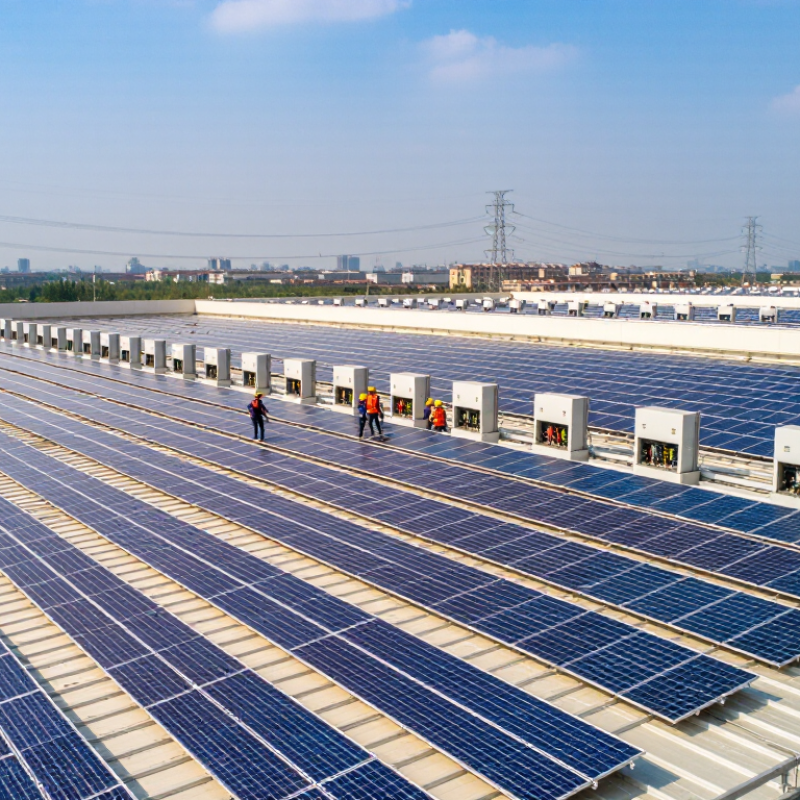
China’s on-grid solar systems connect rooftop or ground-mounted panels to the public electricity network. A typical setup includes photovoltaic modules, mounting rails, DC wiring, an inverter, AC protection devices, and a bidirectional meter. The inverter converts the panels’ direct current into grid-compatible alternating current. Small details matter.
Grid connection depends on the site’s electrical design and the local utility’s technical requirements. Before installation, engineers assess the service panel, cable routes, grounding, and available grid capacity. During sunny hours, solar power usually supplies nearby loads first; excess electricity may flow to the grid. After sunset, the building draws power from the network. A monitoring display can reveal changes in generation, but its readings should be checked against meter data. Drawings may miss a long cable run or a shaded roof edge. That can mislead.
Tips: Compare component specifications, protection settings, and inverter capacity, not just quoted system size. Ask for commissioning records and a clear power-flow diagram. Check that meters register import and export correctly. Chinese manufacturers offer many component configurations, but supplier claims alone cannot confirm site performance. Request verifiable test documents, and allow room for imperfect roof or load estimates.

China added 277.17 GW of solar power capacity in 2024, according to the National Energy Administration’s annual power-industry statistics. By year-end, installed solar capacity had reached about 886.66 GW. The scale is striking. Yet installed capacity measures potential generation, not the electricity actually delivered to customers. Weather, curtailment, transmission limits, and local grid conditions all affect output.
For on-grid projects, this rapid expansion puts practical demands on equipment and planning. Inverters must convert panel output reliably, while transformers and protection systems help connect generation safely to the grid. Developers also need to assess connection capacity at the project site, rather than relying only on national growth figures. The International Energy Agency has repeatedly identified grid flexibility and network investment as important factors in integrating rising renewable generation. A substation can become a bottleneck. That detail is easy to overlook. China’s 2024 additions show strong market momentum, but they do not mean every location can absorb new solar power equally well. Manufacturers and project teams should therefore judge system performance through verified output, connection requirements, and operating data—not headline capacity alone.
China’s on-grid solar sector includes manufacturers of wafers, cells, modules, inverters, and monitoring equipment. Some specialize in high-efficiency monocrystalline panels, while others offer bifacial modules for open, sunlit sites. Their scale can support steady supply, but buyers should check module dimensions, temperature ratings, warranty terms, and local service access. Small details matter.
Leading suppliers also differ in how they pair modules with grid-tied inverters. An inverter converts panel output into grid-compatible electricity and may provide monitoring, protection, and fault alerts. Portfolio breadth helps when projects need matched components, but compatibility should be confirmed model by model. Ask for independent test documents and clear product traceability, not just sales claims. Estimates should account for local shading, roof angle, and seasonal weather. Paper ratings can mislead. Installation quality still varies; that deserves more attention. A familiar logo alone cannot guarantee smooth commissioning.
Worldwide installed solar photovoltaic capacity, 2019–2023 (GW)
Global capacity expanded substantially over this period, reflecting the accelerating deployment of grid-connected solar. These figures describe the overall market, not individual manufacturers. Source: IRENA, Renewable Capacity Statistics 2024; values rounded to the nearest GW.
China’s on-grid solar suppliers should be compared using verified project data, not headline figures alone. Module efficiency affects how much power fits on a limited roof, but temperature performance and low-light output also matter. Ask for independent test reports and check whether quoted figures apply to the exact module offered. Small differences can matter.
Inverter performance deserves equal attention. Review conversion efficiency, operating voltage range, monitoring functions, and service arrangements. A high peak rating may not reflect performance during hot afternoons or cloudy mornings.
Warranty terms need close reading: note product coverage, performance guarantees, exclusions, and who handles claims. Grid codes vary by destination and utility.
Confirm that the proposed inverter supports required voltage and frequency settings, reactive power control, anti-islanding protection, and documented certification. Request evidence for the intended market, not a generic compliance statement.
Compare response times and spare-parts access, too. These details are easy to overlook. A supplier’s polished proposal may still leave gaps, so have a qualified installer review the design and local interconnection requirements before purchase.
When comparing on-grid solar system manufacturers, ask for modeled annual yield, not just module efficiency. Yield depends on local irradiation, roof or land layout, shading, temperature, inverter clipping, and grid outages. Request hourly simulations using the project’s actual coordinates and loss assumptions. A small shading strip at 3 p.m. can matter more than a brochure’s peak rating.
Compare levelized cost of energy (LCOE) using one consistent lifetime, discount rate, and replacement schedule. IRENA’s Renewable Power Generation Costs in 2023 reports a global weighted-average utility-scale solar PV LCOE of US$0.044 per kWh, 12% below 2022. That is a benchmark, not a China project quote; financing, land, grid connection, and curtailment change the result. For payback, divide installed cost by realistic annual bill savings or revenue, then test lower yields and higher maintenance costs. That estimate is useful, not a promise.
Lifecycle cost should include cleaning, monitoring, inverter replacement, insurance, and end-of-life handling. Jordan and Kurtz’s 2013 review of PV degradation studies found a median degradation rate near 0.5% annually. Model that decline across the full operating period. Check warranties against measured performance, and ask how yield estimates are verified after commissioning. The spreadsheet can still miss local dust.