Top TRV Radiator Manufacturers in China for Global Buyers
Heating controls are becoming more important as building owners pursue lower energy use and steadier indoor comfort. The International Energy Agency reports that buildings account for about 30% of global energy demand. Space heating remains a major contributor in colder markets. The European Commission also estimates that buildings represent roughly 40% of energy consumption in the European Union. These figures explain why a reliable Trv Radiator can matter beyond simple temperature adjustment.
China has become a significant manufacturing base for valves, radiators, and hydronic heating components. Global buyers now compare more than price. They examine EN 215 testing, ISO 9001 systems, material traceability, pressure performance, thread accuracy, and long-term warranty support. Product details matter. A clean brass valve body, stable sensing head, and consistent M30 × 1.5 connection can prevent costly installation problems. Yet catalog claims are not enough. Independent test records and verifiable factory experience deserve greater weight.
This guide reviews leading Trv Radiator manufacturers in China for international procurement teams. It considers production capability, customization, export experience, certifications, quality control, and after-sales communication. The analysis reflects practical buying concerns, including mixed-container orders and replacement-part availability. A supplier may offer an attractive unit price but weak documentation. That weakness can become expensive later. No ranking is perfect, and market conditions change. Buyers should still audit samples, confirm applicable standards, and test compatibility before signing large contracts. Industry data supports the opportunity, but careful verification protects the investment.
What Is a TRV Radiator and How Does It Work?
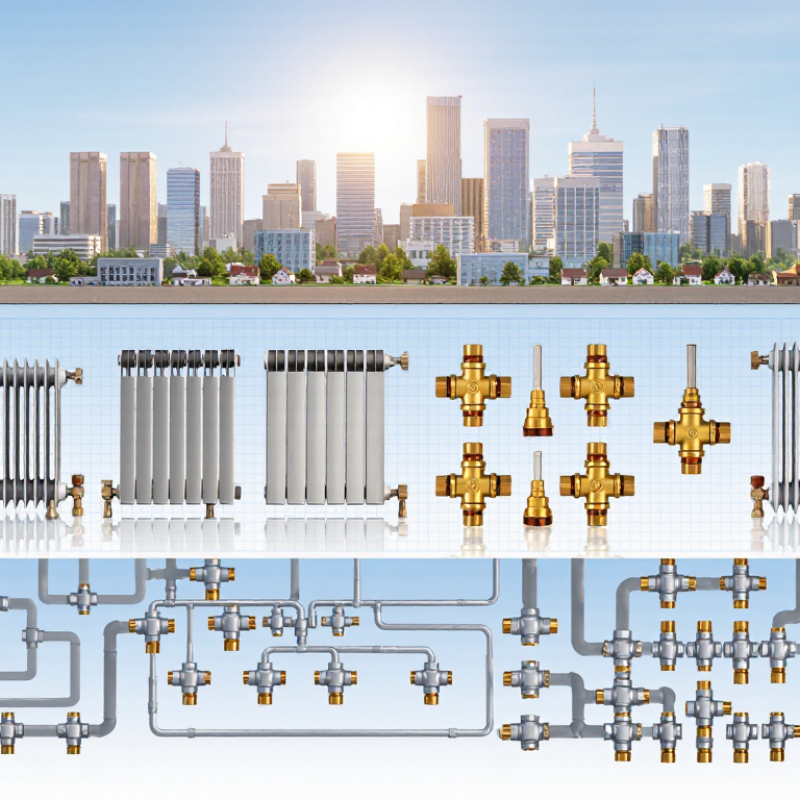
A TRV radiator combines a standard hydronic radiator with a thermostatic radiator valve. The valve senses room temperature and adjusts hot-water flow automatically. Most TRVs use a wax or liquid-filled sensor. As the room warms, the sensor expands and pushes a small pin inward. Flow decreases. When the room cools, the pin retracts and allows more heated water through.
The numbered dial is not an exact temperature gauge. It usually represents a comfort range, often near 20°C at a middle setting, depending on calibration. Installation position matters. A valve hidden behind curtains can sense trapped warm air and shut too early. According to the IEA’s Energy Efficiency 2023 report, buildings use about 30% of global final energy. Local temperature control can therefore support practical energy reduction, although savings depend on insulation, balancing, occupancy, and heating controls. A TRV is not a magic device.
For global buyers, performance evidence matters more than a polished catalogue. Check EN 215 testing, temperature stability, flow capacity, connection dimensions, and frost-protection behavior. Ask for test conditions, not only efficiency claims. Field installers often find that poor hydronic balancing causes uneven rooms, even with good valves. That detail is easy to overlook. Radiator output also changes with water temperature, so a TRV cannot compensate for an undersized radiator or a weak heat source. Some specifications remain imperfect across markets, especially when threads, adapters, and temperature scales differ. Careful sampling and installation trials are worthwhile before bulk purchasing.
Key Criteria for Selecting Chinese TRV Radiator Manufacturers
Top TRV Radiator Manufacturers in China for Global Buyers
When selecting Chinese TRV radiator manufacturers, start with engineering evidence, not attractive catalogues. A polished catalogue proves little. Ask for valve drawings, material specifications, pressure-test records, and recent production samples. Reliable manufacturers should explain sensing-element performance, temperature ranges, thread standards, and compatibility with common radiator systems.
Factory capability matters during larger orders. Review machining equipment, assembly lines, calibration tools, and inspection procedures. Request batch traceability from brass or stainless-steel materials to final packaging. A responsible supplier can describe how workers check leakage, thread accuracy, temperature response, and surface damage. Third-party quality audits can add confidence, but they should not replace your own sample testing.
Documentation is important. Look for a quality management system, product test reports, and market-specific compliance evidence, such as EN 215 where applicable. Confirm minimum order quantities, tooling charges, lead times, spare-part policies, and packaging details. Clarify whether the quoted price includes testing and export documentation. Small details matter.
Communication reveals practical reliability. Ask technical questions and measure response accuracy, not just speed. I have seen promising samples fail after repeated thermal cycles. That risk deserves attention. Test several units from different batches before approving mass production. One weakness remains: factory visits and independent testing increase costs. Yet skipping them may create higher replacement, delay, and warranty expenses later.
Leading TRV Radiator Manufacturers in China
Leading TRV radiator manufacturers in China are increasingly judged by engineering depth, not factory size. The UNEP 2023 Global Status Report for Buildings and Construction states that buildings and construction consumed 34% of global energy and produced 37% of energy-related emissions in 2022. This pressure makes accurate room-level heating control commercially important.
Experienced Chinese manufacturers usually provide brass or stainless-steel valve bodies, calibrated sensors, and compatible connection options such as M30 x 1.5. Strong suppliers can share flow curves, pressure ratings, leak-test records, and batch traceability documents. They should also support testing against EN 215 requirements. During supplier audits, buyers should inspect machining tolerance, wax-element consistency, and final assembly controls. Small defects matter.
The IEA reports that building operations account for about 30% of global final energy use. A reliable TRV can reduce overheating, but performance depends on correct sizing and installation. Ask for independent test results, not only laboratory claims. Export experience helps with packaging, documentation, and regional standards. Yet “leading” is not always clear. A large catalog may hide uneven quality between production batches. That assumption needs checking. Long-term buyers should compare samples, failure data, warranty terms, and response times before approving volume orders.
Product Standards, Certifications, and Quality Control
Top TRV Radiator Manufacturers in China for Global Buyers
Reliable thermostatic radiator valve production begins with standards, not attractive samples. Buyers should check compliance with EN 215, which covers thermostatic radiator valve performance and testing. Depending on the destination market, CE marking and other regional requirements may also apply. Certification must match the exact model, material, and configuration supplied.
A capable factory maintains an ISO 9001 quality management system and uses traceable batch records. Each valve should receive pressure, leakage, flow, and temperature-control checks. Inspectors may test brass bodies, stainless components, seals, and sensing elements separately. A practical audit should review calibration records, not only certificates. Ask for recent laboratory reports, product drawings, and inspection photos. Details matter.
Quality control is rarely perfect. A strong manufacturer admits recurring issues, such as scratched threads or inconsistent knob resistance, and documents corrective action. Incoming materials need random sampling, while finished valves require functional testing before packing. Packaging should protect threads from impact and labels from moisture. One overlooked carton can damage a good production run. Global buyers should also compare independent inspection results with factory data, because paperwork alone cannot prove stable performance.
Export Services, Pricing, and Global Buyer Considerations
For global buyers, Chinese TRV manufacturers should be judged by export reliability, not factory size alone. The European Commission reports that buildings consume about 40% of Europe’s energy. This keeps heating controls commercially important. Experienced suppliers should provide EN 215 testing, CE documentation, RoHS declarations, and traceable quality records. These documents matter more than attractive catalog photos. They also reduce customs delays and installation disputes.
Indicative factory pricing often ranges from USD 3–8 for basic mechanical TRVs and USD 12–35 for electronic models. Actual pricing depends on order volume, brass grade, sensors, packaging, and testing. Buyers should request pricing under clear Incoterms, such as FOB or DDP. Export services may include sample development, multilingual manuals, carton labeling, pre-shipment inspection, and spare-part support. A 2023 MarketsandMarkets report projects continued growth in smart thermostat demand, but TRV buyers should not assume every “smart” product offers reliable connectivity.
Ask for thread standards, Kv values, temperature ranges, leakage tests, and warranty terms. Request a pilot order before committing to large volumes. This is practical. Lead times of 25–45 days are common, though customized electronics may require longer production. Freight remains unpredictable, especially for small shipments. A low quote is not automatically a saving. I would still audit factory capacity, component origins, and after-sales response. Some suppliers present excellent certificates but weak field support, which remains an uncomfortable purchasing risk.
