Contact us

2026 Top UV Coating Curing Machine Types for Buyers

A Uv Coating Curing Machine is not simply a lamp attached to a conveyor. It is a process choice that affects coating adhesion, surface feel, line speed, and energy use. Buyers may compare mercury-arc, UV-LED, and hybrid systems, but the best fit depends on the coating’s chemistry, substrate, required cure depth, and production volume. A glossy sample can look convincing and still conceal incomplete curing beneath the surface.

Industry reports offer useful context, though they should not replace application testing. Grand View Research’s UV curing system market analysis tracks growth across industrial uses, including printing and coatings. RadTech International’s technical resources also describe UV and electron-beam processing as established technologies with potential process and energy benefits. Neither source, by itself, proves that a particular machine will work with a buyer’s ink, varnish, or line speed. Request test results on the actual substrate.

Before selecting a type, ask suppliers for irradiance and dose measurements at the working distance, not just lamp power. Check conveyor speed, cooling needs, lamp or LED replacement intervals, and the space required around the machine. Then inspect the cured part under the conditions it will face: handling, abrasion, and the intended environment. Small differences matter.

A named expert’s quotation should be verified against a traceable interview or publication; none is supplied here, so inventing one would weaken buyer trust. That gap is worth noting. The following guide compares machine types and the trade-offs buyers should test before purchasing.
2026 Top UV Coating Curing Machine Types for Buyers

How UV Coating Curing Machines Work

2026 Top UV Coating Curing Machine Types for Buyers

How UV Coating Curing Machines Work

A UV coating curing machine hardens liquid coating by exposing it to ultraviolet light. Photoinitiators in the coating absorb that light and trigger polymerization, linking small molecules into a solid film. The change can happen in seconds. The exact cure depends on the coating chemistry, lamp spectrum, light intensity, and exposure time.

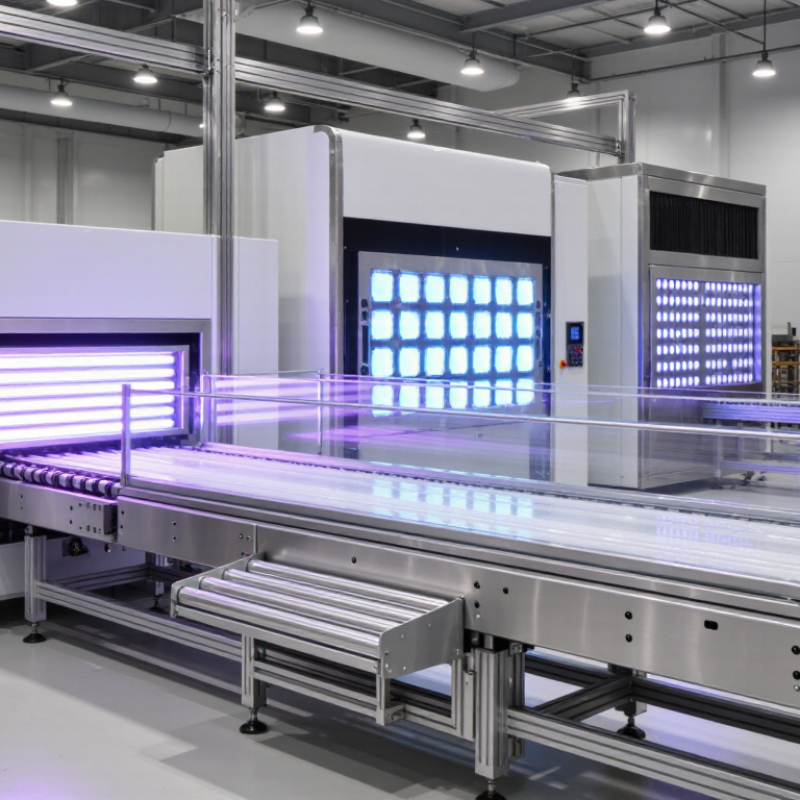
A conveyor system moves each coated part beneath a UV source. Reflectors help direct light toward the surface, while sensors can monitor lamp output and line speed. Mercury-vapor lamps provide broad-spectrum UV; UV-LED systems emit narrower bands and need a coating matched to their wavelength. Shadowed edges may remain tacky, so part geometry and light placement matter. A fast line is not always a fully cured line.

RadTech’s UV/EB sustainability materials report that UV and electron-beam curing can use up to 90% less energy than conventional thermal drying in suitable applications. That figure is a reported potential, not a guarantee for every factory. Actual savings depend on baseline equipment, coating, and production conditions. Operators should verify cure quality with practical tests, such as checking surface tack and adhesion. One missed detail: a glossy surface alone does not prove complete curing.

Major Types of UV Curing Machines Available in 2026

UV coating curing machines in 2026 come in several practical formats, and each suits a different production pattern. Conveyor systems move coated parts beneath fixed lamps, making them useful for steady, repeatable output. A line operator can adjust belt speed, but an incorrect setting may leave tacky edges or overheat thin pieces.

Batch and chamber machines cure multiple items inside an enclosed space. They suit smaller runs or irregular parts, such as coated panels and molded components. Spot-curing units direct UV energy at a limited area, which helps with repairs or detailed work. LED-based systems are another major option. They can offer lower heat and longer lamp life, but the coating must match the unit’s wavelength. That detail is easy to overlook.

Tips: Check the coating’s cure specifications before comparing machines. Ask for measured irradiance at the working distance, not just lamp power. Run a sample part at realistic line speed, then inspect corners and recessed areas. Small trials reveal problems. They do not replace process records, though. Keep notes on exposure time, lamp condition, and part temperature; even experienced teams sometimes assume yesterday’s settings will work on a new coating.

2026 Top UV Coating Curing Machine Types for Buyers – Major Types of UV Curing Machines Available in 2026

Machine type How it cures Typical applications Key advantages Buyer considerations
Medium-pressure mercury arc A mercury-vapor lamp emits broadband UV and visible light. The coating’s photoinitiator must absorb suitable wavelengths. Wood and furniture finishes, printing inks, protective coatings, and production lines with established UV formulations. Broad spectral output can cure many conventional UV formulations; suitable for continuous industrial processes. Produces substantial heat and requires lamp replacement and appropriate shielding. Some lamp setups can generate ozone, so exhaust and ventilation may be needed.
UV LED curing system LED arrays emit UV in selected wavelength bands, commonly centered near 365, 385, 395, or 405 nm. Heat-sensitive substrates, narrow or web lines, printing, electronics, and compatible clear or pigmented coatings. Instant on/off operation, no warm-up period, lower infrared output than many arc-lamp systems, and long operating life when properly managed. Match LED wavelength and irradiance to the coating’s photoinitiator and cure depth. Pigments, thick films, and shadowed areas may need process testing.
Microwave-powered UV lamp Microwave energy excites the lamp’s UV-emitting plasma; many systems use an electrodeless mercury lamp. High-throughput coating and printing lines where broadband UV output and continuous operation are required. Electrodeless lamp design avoids electrode wear within the bulb and can support high-output curing applications. Requires suitable shielding, cooling, and maintenance. Confirm substrate temperature limits, exhaust requirements, and compatibility with the coating formulation.
Excimer UV system Excimer lamps emit narrow-band, short-wavelength UV; 172 nm is a common wavelength used in specialized surface processes. Specialized surface modification and coating processes, including applications requiring very shallow surface treatment or matte effects. Short-wavelength radiation is strongly surface-active and can produce effects that differ from conventional broadband or LED curing. A specialized process rather than a general-purpose replacement for standard UV curing. Atmosphere, formulation, safety controls, and line design are critical.
Conveyor UV curing machine Parts move through a shielded curing chamber beneath or alongside one or more UV sources. Repeatable batch or continuous curing of flat parts, panels, printed sheets, and compatible components. Integrates readily into production workflows and provides controlled transport through the exposure zone. Select conveyor width, belt speed range, lamp arrangement, and shielding based on part dimensions, coating, and required throughput.
Spot or flood UV curing unit A spot unit directs UV to a small area, often through a light guide; a flood unit illuminates a wider work area. Small components, localized coating, assembly work, laboratory trials, and production cells with varied part shapes. Flexible exposure options for targeted curing or small-area coverage without a full conveyor line. Check working distance, illuminated area, uniformity, and access to recessed surfaces. Shadows can prevent complete curing.

Selection note: Confirm the coating supplier’s recommended UV wavelength and dose, then validate cure performance on the actual substrate and production line. Output and cycle time depend on the formulation, film thickness, color, geometry, and equipment setup.

Key Differences Between UV Lamp and LED Curing Systems

For a UV coating curing machine, the choice between a conventional UV lamp and LED curing depends on the coating, substrate, and production pace. Arc lamps emit a broad range of ultraviolet wavelengths, which can suit many established coating formulations. They also produce more radiant heat. On thin plastic sheets, that heat may cause warping, so operators often monitor surface temperature as well as conveyor speed.

LED systems emit light within a narrower wavelength band. They switch on quickly and typically add less heat to the workpiece. That can help when curing heat-sensitive materials or when production stops and starts frequently. There is a catch: the coating’s photoinitiator must respond to the LED wavelength. A coating that cures well under a broad-spectrum lamp may remain tacky under an unmatched LED system. Check the coating supplier’s technical data before comparing equipment.

Look closely at the actual cure, not just the machine’s rated power. A glossy surface can still hide incomplete curing underneath. Test sample pieces at the intended line speed, then check adhesion and resistance to handling. LED units can reduce lamp-related maintenance, while conventional lamps may offer more flexibility across existing coating recipes. Neither option is automatically better. I would also leave room for retesting after a coating change; production conditions rarely stay perfectly consistent.

Where Each UV Curing Machine Type Is Used

Conveyor UV curing machines suit production lines that move coated parts at a steady pace. They are commonly used for printed sheets, flooring panels, and furniture components. A conveyor carries each piece beneath a fixed lamp, giving operators repeatable exposure across a batch. Check the usable belt width and lamp arrangement against the largest workpiece. A fast line is not always better; coatings may need more exposure than the conveyor speed allows.

Enclosed chamber machines work well for smaller objects and short runs. Print shops may cure decorated bottles, signs, or flat samples inside a chamber, where the lamp-to-object distance stays controlled. Some units allow adjustable shelves, which helps when part sizes vary. Still, bulky items can be awkward to position. That matters.

Handheld or spot-curing units are useful for repairs, prototypes, and localized coating work. An operator can direct light onto a small area without moving an entire component through a line. These machines often appear in workshops handling custom furniture details or printed graphics. Consistent distance and exposure time take practice, though; uneven movement can leave dull patches.

For continuous web materials, roll-to-roll systems cure coated film, labels, or flexible sheets as they travel between rollers. Buyers should consider web width, tension control, and heat-sensitive substrates. The machine type should match the actual workflow, not just the coating name. Real production conditions can be messier than a sample test.

2026 Top UV Coating Curing Machine Types for Buyers

Typical UV wavelength coverage and where each curing system is used. Actual output depends on the lamp, optics, and equipment configuration.

Mercury-vapor lamps produce a broad spectrum; UV LED systems are commonly supplied at specific peak wavelengths; excimer systems use shorter-wavelength emission lines. Match the source to the coating’s photoinitiator and substrate.

How Buyers Can Compare Machines for Their Production Needs

2026 Top UV Coating Curing Machine Types for Buyers

Choosing a UV coating curing machine starts with the coating and production line, not the machine name. Conveyor systems suit continuous work, while compact units may fit smaller batches or limited floor space. Compare the usable curing width with your widest panels, and check whether the conveyor speed matches your target output. A fast line is not automatically a better line.

Lamp type matters. LED systems can reduce heat exposure and support frequent start-stop operation, but confirm that the coating cures at the LED wavelength. Traditional UV lamps may suit a broader range of formulations, though they can add heat and require lamp maintenance. Ask for measured irradiance and dose at the working surface, not just rated power. Test representative parts when possible. Real production can differ.

Tips: Bring sample panels and coating details to a machine trial. Record cure quality, surface appearance, line speed, and substrate temperature. Leave room for ventilation and routine cleaning. One comparison is easy to miss: operator access. A machine that is awkward to service may slow a busy shift.