Contact us

What Are the Top Bellows Valves Manufacturers?

Choosing the top Bellows Valves manufacturers requires more than comparing brand visibility or catalog size. These valves protect against stem leakage in demanding systems, including chemical plants, refineries, pharmaceutical lines, and high-temperature utilities. A reliable manufacturer must demonstrate controlled welding, accurate bellows forming, pressure testing, and consistent material traceability.

This overview examines recognized suppliers such as Emerson, Flowserve, Velan, KSB, and Powell Valves, while avoiding an unverified universal ranking. Each company may perform differently across nuclear, cryogenic, steam, vacuum, or corrosive applications. Product availability also varies by region. That detail matters.

The evaluation considers engineering depth, manufacturing experience, certification practices, testing capacity, service support, and documented customer performance. Relevant references may include ASME, API, ISO, and applicable pressure-equipment requirements. However, certificates alone do not prove suitability. Buyers should inspect test procedures, weld inspection records, cycle-life data, and after-sales response times. Small details often decide reliability. A polished website cannot replace factory evidence.

Some manufacturers excel in customized solutions, while others provide broader stock availability or stronger field service networks. Cost comparisons can also mislead when maintenance, downtime, and replacement intervals are ignored. The most suitable supplier depends on media, pressure, temperature, connection design, and operating frequency. This article offers a practical starting point, not a final purchasing decision. Specifications should be verified with qualified engineers and the manufacturer before procurement. Even experienced buyers can overlook installation conditions. That is worth remembering.
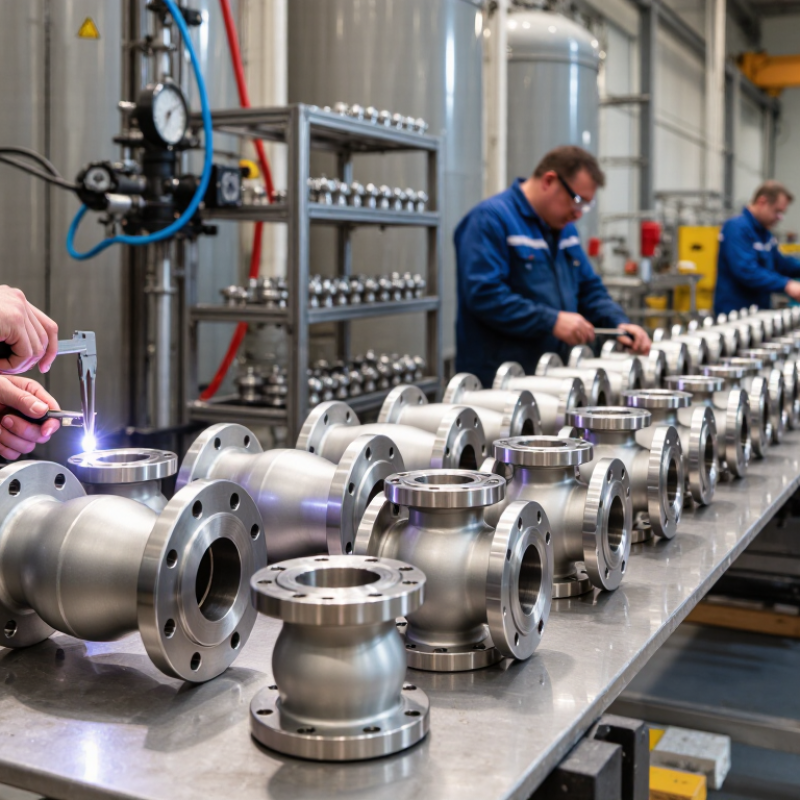
What Are the Top Bellows Valves Manufacturers?

Bellows Valve Basics: Metal Seals, Pressure Classes, and ASME B16.34

Selecting top bellows valve manufacturers starts with understanding the valve itself. A bellows valve uses a welded metal bellows to isolate the stem from the process fluid. This design limits fugitive emissions and protects sensitive media from outside contamination. The bellows is not decoration. It is a fatigue-sensitive pressure boundary.

During technical reviews, I examine bellows material, weld quality, stroke cycles, and guide design. Stainless steel may suit many corrosive services, while nickel alloys can handle more demanding environments. However, material choice must match temperature, pressure, and chemical exposure. Details matter. A polished surface alone proves little.

Pressure classes under ASME B16.34 help compare valve pressure-temperature capabilities. Common classes include 150, 300, 600, and higher ratings. The correct class depends on the actual fluid temperature and selected body material. Class 600 is not a universal safety answer. A valve can meet a class designation yet fail prematurely if cycling, vibration, or thermal shock is ignored.

When comparing manufacturers, request material certificates, pressure-test records, weld procedures, and bellows cycle data. Ask whether the stated performance applies to the complete valve, not only the bellows assembly. Factory inspection experience has taught me that documentation often reveals more than polished brochures. Still, documents can contain gaps. Confirm dimensions, end connections, packing arrangement, and maintenance access before approval. A reliable supplier should explain limitations clearly, including situations where a conventional valve may be more practical.

How Top Makers Meet ISO 15848-1 Fugitive-Emission Classes A and B

Top bellows valve manufacturers distinguish themselves through measurable control of fugitive emissions. ISO 15848-1 Class A requires tighter stem and bonnet leakage performance than Class B. Both classes demand controlled testing, not marketing language. The IEA’s Global Methane Tracker 2024 estimated nearly 120 million tonnes of methane emissions from fossil fuel operations in 2023. It also reported that around 40% could be reduced using existing measures at no net cost.

Serious manufacturers begin with a welded metal bellows, precise forming, and documented material traceability. They test finished valves with helium under defined pressure, temperature, and cycling conditions. Class A designs usually receive stronger attention to bellows fatigue, seal geometry, and bonnet integrity.

Class B solutions may use a different balance between emission control, cycling life, and purchase cost. The better supplier explains that trade-off clearly. Vague claims are a warning sign.

Factory testing should include production samples, calibration records, and independent verification where practical. Installation quality still matters. A damaged gasket or misaligned actuator can undermine an excellent valve. The International Energy Agency repeatedly identifies leak detection and repair as important methane-control measures. That evidence supports combining ISO qualification with site inspections and periodic monitoring. A certificate alone is not enough.

Real service is less tidy. Temperature swings, vibration, and maintenance errors can expose weaknesses that laboratory tests miss. Buyers should therefore request test conditions, retest intervals, and failure data before selecting a manufacturer.

Leading Manufacturers: Emerson, Flowserve, KSB, Velan, and KITZ

Bellows valves are chosen where fugitive emissions, vacuum integrity, and fluid purity matter. Leading manufacturers typically combine forged bodies, welded bellows, and tested stem seals. Their designs serve chemical plants, pharmaceutical lines, nuclear systems, and high-purity gas equipment.

MarketsandMarkets estimates the global industrial valves market could reach USD 90.8 billion by 2028, growing at about 5% annually from 2023. This growth supports stronger demand for reliable isolation valves. However, bellows valves remain a specialized segment, not a universal replacement. Buyers should check pressure class, temperature range, cycle life, and corrosion resistance.

Compliance also separates serious suppliers from ordinary producers. EN ISO 15848-1 evaluates fugitive-emission performance, while API 624 supports valve qualification under demanding cycling conditions. In practice, welded bellows reduce leakage paths, but installation quality still matters. Small alignment errors can shorten service life. A polished catalogue is not enough. Test certificates, material traceability, and maintenance records deserve equal attention. Some specifications still overlook actuator torque and thermal expansion. That is an avoidable weakness.

Comparing API 624 Testing with ASME B16.34 Class 150–2500

When comparing top bellows valve manufacturers, buyers should separate pressure compliance from emission control. API 624 tests rising-stem valves with graphite packing under repeated mechanical and thermal movement. The protocol commonly includes 310 cycles and three thermal excursions. Acceptance is typically based on methane leakage not exceeding 100 ppmv. These details expose weaknesses that drawings cannot show. A valve can meet Class 150 yet fail practical stem-sealing demands. It can also pass API 624 and remain poorly selected for severe service.

ASME B16.34 serves a different purpose. Its Class 150–2500 ratings define pressure-temperature limits, materials, wall thickness, and design requirements. Class 2500 is not simply a stronger Class 150. Temperature changes can reduce allowable pressure sharply. Engineers should verify the exact rating table, body material, end connection, and test documentation. The IEA’s Global Methane Tracker 2024 estimated about 120 million tonnes of methane emissions from fossil fuel operations in 2023. It also reported that roughly 40% could be avoided at no net cost under prevailing energy prices. This makes verified fugitive-emission performance commercially relevant, not cosmetic.

Tips: Ask each manufacturer for the full API 624 test record, not only a certificate. Check cycle count, test medium, temperature range, packing construction, and leakage readings. Compare those results with ASME B16.34 pressure-temperature tables. Inspect bellows weld quality and guide alignment during factory acceptance. Small geometry errors matter. My caution: API 624 is a type test, not a lifetime promise. Site vibration, corrosion, and poor installation can change results. Procurement teams should record these risks instead of treating compliance as certainty.

How to Rank Suppliers by EN 12266 Leakage Rates and Cycle Life

What Are the Top Bellows Valves Manufacturers?

How to Rank Suppliers by EN 12266 Leakage Rates and Cycle Life

Ranking bellows valve suppliers requires more than comparing catalog prices. EN 12266 test results provide a practical starting point for seat and shell leakage performance. Check the test medium, pressure, temperature, and acceptance rate. A quoted “zero leakage” claim means little without these details.

Use verified test reports, not marketing language. Confirm whether testing covers the exact valve size, material, and pressure class you plan to purchase. Review how often samples were tested and whether an independent laboratory witnessed the process. In field inspections, small differences in stem alignment and weld quality can affect bellows movement. They matter.

Cycle life should sit beside leakage data. Ask for the tested number of open-close cycles, operating speed, temperature range, and load conditions. A valve reaching 100,000 cycles under clean laboratory conditions may perform differently with abrasive particles or thermal cycling. Look for maintenance records and failure analysis from comparable installations. Real evidence beats impressive numbers.

A useful supplier scorecard can assign separate grades for EN 12266 leakage, cycle validation, traceability, and technical support. Do not reward a low price if documentation is incomplete. I would also leave room for uncertainty. Published cycle figures are not always directly comparable, and some test methods remain unclear. The strongest supplier answers difficult questions without hiding behind a perfect chart.