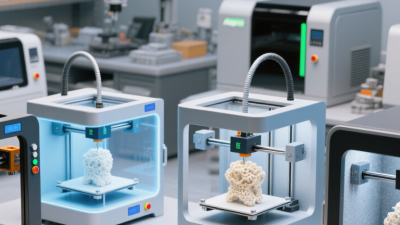
For global buyers, 3 d printing is more than a modern production method. It changes how companies design, source, test, and customize physical products. A digital model can become a functional prototype within hours, rather than weeks. This shorter cycle helps purchasing teams respond to market changes with greater confidence. It also supports local production, which may reduce shipping distance, storage needs, and excess inventory.
Chuck Hull, the inventor of stereolithography, described the technology clearly: “3D printing is a process of making three-dimensional solid objects from a digital file.” His explanation remains useful because it connects software with a real manufactured object. Buyers can use 3 d printing for medical models, industrial components, replacement parts, and customized consumer goods. However, the process is not automatically cheaper or better. Material quality, machine calibration, post-processing, and supplier experience can change the final result significantly. Small errors matter.
Global sourcing requires careful verification. Buyers should request material data, dimensional reports, sample parts, and documented quality procedures. They should also check whether the supplier understands relevant safety and product requirements in the destination market. A printed prototype may look impressive under bright showroom lighting, yet fail during heat, pressure, or repeated use. That possibility deserves attention.
The technology still has limits. Production speed may decline for large batches, and some surfaces require additional finishing. My view is cautious but positive: 3 d printing offers valuable flexibility, though it cannot replace every traditional manufacturing process. Responsible buyers should compare total cost, performance, reliability, and environmental impact before committing. Progress is real. Perfect results are not guaranteed.
Why Is 3D Printing Important for Global Buyers?
What 3D Printing Is and How It Works
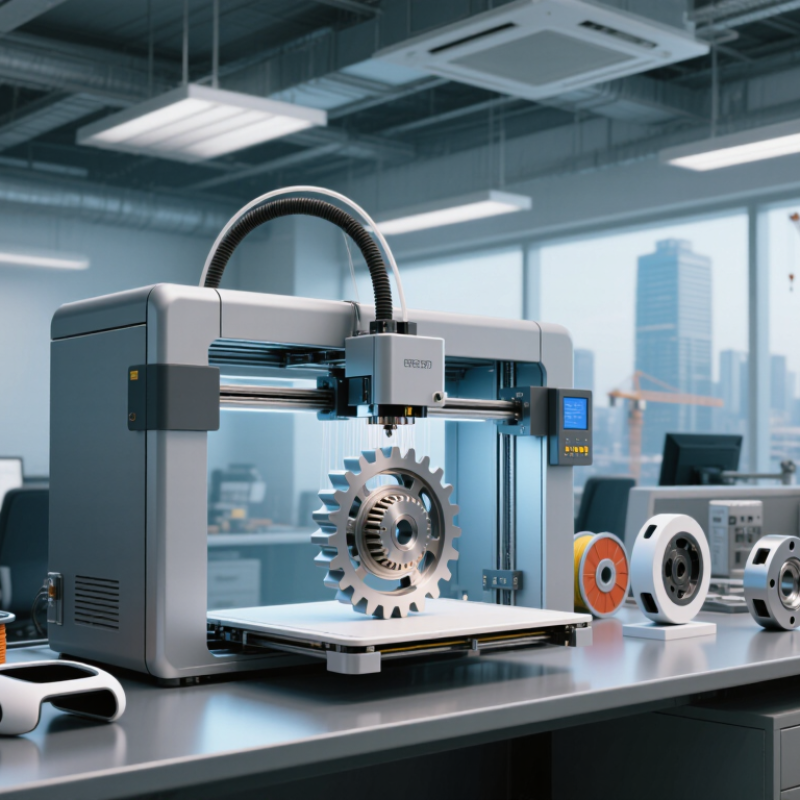
3D printing creates physical objects from digital designs. A computer model is divided into many thin layers. The printer then builds the object layer by layer. It may melt plastic filament, cure liquid resin, or fuse fine powder. The material and method depend on the part’s purpose.
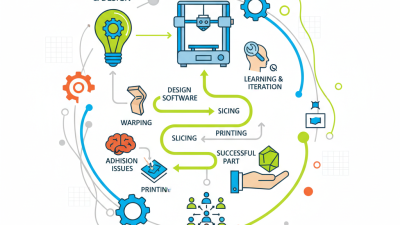
The process usually starts with a CAD file. Slicing software converts this file into movement instructions. The printer follows those instructions with careful passes across a build platform. Each layer must bond correctly with the previous one. Small errors can cause warping, weak walls, or rough surfaces. It is precise, but not effortless.
For global buyers, this method can support quick prototypes and limited production runs. Buyers can test a handle, housing, or fitting before ordering expensive tooling. It can also reduce international shipping needs for selected replacement parts. Local production may shorten delivery times, although printer capacity and material availability still matter.
Details decide success. Wall thickness, heat resistance, surface finish, and dimensional tolerance should be checked early. A printed sample may look excellent but fail under pressure. That is an easy mistake. Buyers should request test data, inspect samples, and confirm production controls. Even experienced teams sometimes underestimate post-processing, which can add labor and change the final dimensions.
| Data Dimension | What It Means | Typical Information | Why It Matters to Global Buyers |
|---|---|---|---|
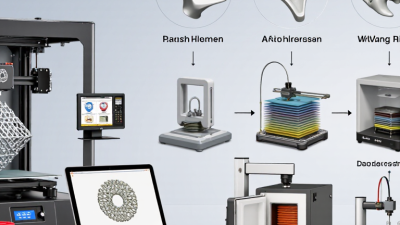
| Definition | 3D printing is an additive manufacturing process that creates a physical object by adding material layer by layer from a digital model. | Common workflow: 3D model preparation → slicing → layer-by-layer printing → post-processing. | Buyers can evaluate a product using a digital design before committing to large-scale production tooling. |
| Production Method | The printer deposits, cures, melts, or selectively fuses material according to digital instructions. | The material is usually added only where the design requires it, unlike subtractive methods that remove material from a larger block. | Material-efficient production can reduce waste and make complex or customized parts more practical. |
| Fused Filament Fabrication | A thermoplastic filament is heated and deposited through a nozzle. | Common material categories include thermoplastics such as PLA, ABS, PETG, and engineering-grade polymers. | Suitable for prototypes, fixtures, educational products, and some functional components; post-processing and dimensional accuracy should be checked. |
| Resin-Based Printing | Liquid photopolymer resin is selectively cured using light. | Produces fine details and smooth surfaces; printed parts generally require washing and additional curing. | Useful for detailed prototypes, visual models, dental-style models, and small intricate parts, but resin handling and durability must be considered. |
| Powder Bed Fusion | Thermal energy selectively fuses regions of a powder bed to form each layer. | Can process certain polymer or metal powders, depending on the specific system and material. | Supports complex geometries and internal channels, often with reduced need for traditional support structures. |
| Material Categories | 3D printing can use polymers, resins, metals, ceramics, and some composite materials. | Material selection depends on strength, heat resistance, flexibility, chemical exposure, surface finish, and intended use. | Global buyers should compare material specifications rather than judging parts only by appearance or price. |
| Typical Layer Height | Layer height is the vertical thickness of each printed layer. | Many consumer and professional processes commonly use approximate layer heights from 0.02 mm to 0.40 mm, depending on the technology and application. | Smaller layers can improve surface detail but generally increase printing time; larger layers can improve productivity but may show more visible stepping. |
| Design Complexity | 3D printing can produce shapes that are difficult or costly to manufacture with conventional machining or molding. | Examples include lattice structures, organic contours, lightweight internal geometries, and customized ergonomic forms. | Buyers can access design solutions that reduce part count, assembly work, or manufacturing constraints. |
| Customization | Each item can be produced from a modified digital file without changing a traditional mold. | Applications include personalized dimensions, replacement parts, anatomical models, and small-batch product variations. | Customization can support regional requirements and reduce the need to hold many standard configurations in inventory. |
| Prototype Lead Time | A design can often move from a digital file to a physical prototype without conventional tooling. | Prototype timing varies from several hours to several days, depending on size, technology, quantity, and post-processing. | Faster design iteration can help buyers verify fit, function, and appearance before mass production. |
| Production Volume | 3D printing is particularly useful for prototypes, replacement parts, customized products, and selected low-to-medium-volume runs. | Economic efficiency depends on geometry, machine utilization, labor, material cost, finishing, and order quantity. | Buyers should compare total unit cost with molding, machining, or other production methods at the required volume. |
| Tooling Requirement | Many 3D-printed parts can be produced without dedicated molds or dies. | Some parts still require build plates, support structures, fixtures, heat treatment, machining, or finishing tools. | Lower tooling requirements can reduce initial investment, especially for short product lifecycles or frequently changing designs. |
| Material Waste | Additive manufacturing generally places material near the final geometry instead of removing most of a solid block. | Waste can still come from support structures, failed builds, purge material, unused powder, and post-processing. | Buyers should request process-specific material utilization data instead of assuming zero waste. |
| Dimensional Accuracy | Accuracy depends on the printing process, machine calibration, material behavior, part orientation, and post-processing. | For many general applications, dimensional deviation may range from approximately ±0.1 mm to ±0.5 mm, but requirements must be confirmed for each process. | Critical interfaces should include specified tolerances, inspection methods, and acceptance criteria in the purchase agreement. |
| Surface Finish | Printed surfaces may show layer lines, support marks, powder texture, or resin-related artifacts. | Finishing options include sanding, bead blasting, polishing, coating, machining, dyeing, and additional curing. | Surface requirements affect appearance, function, delivery time, and total cost. |
| Mechanical Performance | Strength and durability can vary according to material, print direction, infill, porosity, layer bonding, and post-processing. | Some printed parts are anisotropic, meaning their properties differ between horizontal and vertical directions. | Buyers should request test data in the relevant loading direction and validate parts under real operating conditions. |
| Supply Chain Flexibility | Digital production files can be transferred and manufactured closer to the point of use when suitable equipment and quality controls are available. | Potential benefits include distributed production, shorter transport routes, and reduced dependence on centralized inventory. | Local or regional production may improve responsiveness, but logistics, certification, cybersecurity, and supplier capability still require evaluation. |
| Inventory Strategy | Digital inventories can complement or partially replace physical inventories for selected spare parts and low-demand items. | A qualified digital file can be stored, revised, and produced when demand occurs. | This may reduce warehousing pressure, but file version control and quality assurance are essential. |
| Quality Verification | Inspection may include dimensional measurement, visual inspection, material verification, density checks, and functional testing. | Quality documents can include certificates of analysis, inspection reports, process records, and traceability information. | Clear verification requirements help buyers compare suppliers across different countries and production sites. |
| Key Limitations | 3D printing is not automatically the fastest or cheapest option for every product. | Limitations may include restricted build size, slower production at high volumes, material constraints, visible layer lines, post-processing needs, and variable repeatability. | A balanced sourcing decision should compare performance, total cost, lead time, compliance, and scalability rather than focusing on printing speed alone. |