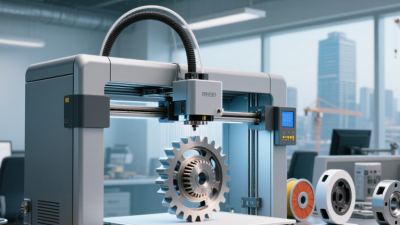
Choosing the best industrial 3D printer in 2026 is a production decision, not a spec-sheet contest. Global buyers must weigh repeatability, material options, build volume, service access, and the cost of keeping machines running. A large build chamber looks impressive. It is less useful if parts vary between batches or critical components take weeks to replace.
The market is expanding, but growth alone does not guarantee a good investment. Wohlers Associates’ Wohlers Report 2025 estimated that global additive manufacturing revenues reached $21.9 billion in 2024, a 9.1% increase over 2023. That figure includes services and materials, not only printer sales, so buyers should avoid treating it as a machine-market forecast. Terry Wohlers, the report’s longtime industry analyst, has consistently drawn attention to a practical distinction: additive manufacturing’s value depends on producing reliable parts, not merely impressive prototypes. That is a useful test.
For manufacturers, reliability shows up in details: stable dimensions across a run, qualified materials, documented process settings, and responsive technical support. A printer that handles a demanding polymer may still be the wrong choice for metal parts or high-volume production. Buyers should also examine installation requirements, operator training, maintenance intervals, and local service coverage. These details are easy to overlook. They shape the real cost of ownership.
This guide compares industrial 3D printer options through those production-focused criteria. It also considers regional availability and support, because a strong machine without dependable service can become an expensive bottleneck. No single model fits every factory. The best choice is the one that meets the buyer’s part requirements and performs consistently on the shop floor.
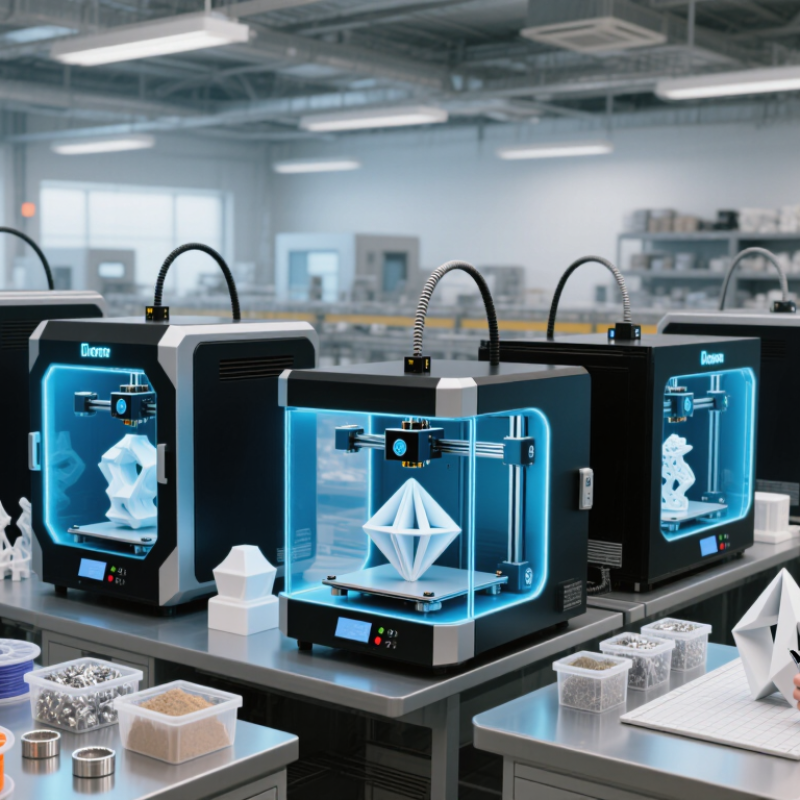
What Defines an Industrial 3D Printer in 2026
An industrial 3D printer is defined less by its footprint than by its ability to produce dependable parts repeatedly. Buyers should examine dimensional consistency, build-volume utilization, material control, and documented maintenance needs. A heated chamber helps manage warping in some polymers; calibrated sensors can flag temperature drift before a long build fails. These details matter on the factory floor. A large machine without stable process control may deliver expensive surprises.
Wohlers Report 2024 put global additive manufacturing industry revenue at $20.035 billion in 2023, an 11.1% increase from 2022. That growth signals wider adoption, but it does not prove every printer is ready for production. The ISO/ASTM 52920:2023 standard sets qualification principles for industrial additive manufacturing sites and processes, reinforcing the need for documented controls—not just impressive sample parts. Ask suppliers for repeatability data across multiple builds, plus realistic service and material costs. Then test your own geometry and production workflow. One awkward truth: a successful demo part can still hide a fragile process.
Typical layer-thickness ranges by additive manufacturing process
Layer thickness is one useful factor when evaluating an industrial 3D printer: thinner layers can support finer vertical detail, while print time, material compatibility, accuracy, throughput, and service support also matter. Ranges shown are representative process values; actual settings vary by machine, material, and application.
Industrial 3D printers differ less by cabinet size than by process control and material range. Fused filament fabrication melts thermoplastic through a heated nozzle, building parts layer by layer. It can suit sturdy fixtures and larger components, though layer lines may need finishing. Powder-bed polymer systems spread fine powder across a build area, then fuse selected regions with heat. They often produce complex shapes without support structures, but powder handling and cooling affect workflow. Vat photopolymerization cures liquid resin with light. It captures fine details, yet some resins can become brittle or change with prolonged exposure. Small details matter.
Metal powder-bed fusion uses a laser or electron beam to fuse metal powder into dense parts. It can make strong, intricate components, but requires controlled powder management and careful inspection. Materials are not interchangeable: a printer designed for polymers cannot simply process metal powder. Even within one process, different grades can behave differently during printing and post-processing. A spec sheet may list impressive temperatures or build volume, but those numbers alone do not predict repeatability. Ask for sample parts made with the intended material, then inspect surface finish, dimensional consistency, and support removal. That sounds simple. It isn't. In real production, maintenance, operator training, and reliable material supply can matter as much as peak speed. A fast machine that frequently needs recalibration may slow a line rather than improve it.
| Technology | Typical materials | Where it performs well | Key limitations and post-processing | Common industrial applications | Buyer checks |
|---|---|---|---|---|---|
| Laser Powder Bed Fusion (LPBF) | Metal powders such as stainless steel, aluminum alloys, titanium alloys, and nickel-based alloys. | Makes complex, detailed metal parts and internal channels; supports lightweight designs and consolidated assemblies. | Requires powder handling, support removal, and often heat treatment or machining. Build size, surface finish, and material properties depend on the system and process settings. | Aerospace components, medical implants, tooling inserts, and high-value functional parts. | Check qualified material data, process monitoring, inert-gas and powder-safety provisions, support strategy, and inspection requirements. |
| Directed Energy Deposition (DED) | Metal wire or powder, including stainless steel, titanium, and nickel-based alloys, depending on the equipment. | Deposits metal onto existing parts and can suit large parts, feature addition, and repair work. | As-deposited surfaces commonly need machining. Dimensional accuracy and fine detail are generally less suited to small intricate features than powder-bed processes. | Repair of high-value components, cladding, large metal structures, and adding material to existing parts. | Evaluate deposition rate, work-envelope access, substrate compatibility, machining allowance, and integration with robotic or CNC workflows. |
| Metal Binder Jetting | Metal powders combined with a liquid binder; the final material depends on the powder and sintering process. | Can produce many parts in a packed build without printing supports in the same way as laser powder-bed processes. | Printed parts are typically debound and sintered. Shrinkage must be managed, and final density, dimensional control, and properties depend on the validated process. | Batch production of smaller metal parts, tooling, and components suited to the qualified material and sintering route. | Assess the complete production cell, including debinding and sintering capacity, shrinkage compensation, batch yield, and final-part testing. |
| Polymer Powder Bed Fusion (SLS) | Commonly nylon-based powders; other polymers are available only where supported and qualified for the specific process. | Produces functional polymer parts without dedicated support structures; multiple parts can be nested within a build volume. | Parts usually require depowdering. Surface texture is often granular, and powder reuse or refresh rules affect material use and cost. | Functional prototypes, housings, ducts, fixtures, and low-to-medium-volume polymer parts. | Check material traceability, powder handling and recovery, nesting workflow, surface-finish needs, and repeatability across builds. |
| Material Extrusion (FFF/FDM) | Thermoplastics such as ABS, polycarbonate, nylon, and fiber-reinforced grades, subject to printer compatibility. | Offers a comparatively straightforward route to prototypes, jigs, fixtures, and larger polymer parts; material choices can include reinforced feedstocks. | Layer orientation can cause direction-dependent strength. Supports may be needed, and visible layer lines can require finishing. | Factory aids, housings, fit checks, prototypes, and selected end-use parts. | Verify material drying and storage needs, build-chamber capability, enclosure size, part orientation, and properties in the intended loading direction. |
| Vat Photopolymerization (SLA/DLP) | UV-curable photopolymer resins, including standard, tough, flexible, and castable formulations where available. | Suitable for fine features and smooth surfaces, particularly in detailed prototypes and patterns. | Parts generally need washing and post-curing; supports may be required. Resin properties and environmental durability vary, and some resins can be sensitive to UV exposure or heat. | Detailed prototypes, visual models, dental or medical models where appropriately qualified, and casting patterns. | Review resin safety documentation, post-processing equipment, aging requirements, and whether the material is certified for the intended application. |
| Selection note: There is no single best industrial 3D printer for every buyer. Compare the total qualified workflow—not just the printer—including materials, post-processing, inspection, operator training, service availability, spare parts, facility requirements, and applicable regional safety and regulatory requirements. Performance and material compatibility vary by machine, process parameters, and supplier qualification. | |||||
Global buyers should judge an industrial 3D printer by the parts they need to make, not its headline specifications. The Wohlers Report 2024 estimated the broader additive manufacturing industry at $20.0 billion in 2023, up 11.1% from 2022. That figure covers more than printer sales, but signals a maturing market where process choice matters. Compare build volume, material options, dimensional repeatability, and surface finish against real production parts. Request sample builds using your geometry, then inspect thin walls, holes, and support removal. Specs can mislead.
For cross-border purchasing, service access can matter as much as print speed. Ask about technician coverage, spare-parts locations, installation, training, and response times in your region. Downtime adds up. Calculate total ownership costs, including materials, electricity, post-processing, maintenance, and operator training. Check that the machine’s power, ventilation, and facility requirements suit your site. Review process documentation and relevant ISO/ASTM terminology with your quality team before committing. A polished demonstration is useful, but it cannot prove months of stable production. No single machine fits every factory; buyers should weigh a modest uncertainty in predicted uptime against the real cost of delayed orders.
Industrial printer categories solve different production problems; no single process wins every factory. The Wohlers Report 2024 valued the global additive manufacturing industry at $20.035 billion in 2023, up 11.1% year over year. That figure covers products and services, not printer sales alone. Market growth is not a machine ranking.
Polymer powder bed fusion suits complex nylon parts, such as ducted housings nested across a build chamber. It reduces support structures, but powder recovery and surface finishing add work. Material extrusion can make large fixtures and jigs with relatively accessible materials; layer lines remain visible, and production speed depends heavily on part geometry. Vat photopolymerization delivers fine details and smooth surfaces for prototypes, but part size and material durability can limit production use. Small details matter.
For metal, powder bed fusion builds intricate parts, but often requires supports, controlled powder handling, and heat treatment. Directed energy deposition fits larger near-net shapes and repair work, though its surfaces commonly need machining. Grand View Research estimated the wider 3D-printing market at $20.37 billion in 2023 and projected 23.5% annual growth through 2030. Its scope includes hardware, materials, and services, so it cannot be read as industrial-printer demand alone. Compare usable parts per shift, finishing hours, and qualified material options—not just advertised build volume. I would still test the intended geometry before choosing.
For global buyers in 2026, the best industrial 3D printer is the one that fits the work, not just the specification sheet. Define part size, weekly output, material requirements, and acceptable failure rates before comparing machines. A factory producing small fixtures has different needs from one making large, load-bearing components. Test representative files, including awkward geometries and thin walls, rather than relying only on sample parts supplied for demonstrations.
Check how the printer fits your actual production line. Record setup time, operator training needs, post-processing steps, and the space required for safe material handling. Ask for repeatability data and run several consecutive jobs. One successful print proves little. A short trial can also reveal maintenance tasks that brochures overlook, such as nozzle changes or calibration after a material switch. These details may seem minor, but they shape daily output.
Regional support deserves equal attention. Confirm local access to trained technicians, common spare parts, clear service hours, and practical training in your working language. Ask how a service request is handled across time zones, and verify the answer with a specific response-time commitment. Downtime is expensive. Still, no supplier can prevent every delay, and I would not treat a promised uptime figure as a guarantee. Compare support arrangements with your own staffing and backup capacity before choosing a machine.